
TL;DR
I have spent 10+ years shipping rapid diagnostic tests to over 100 countries, and I have seen three documentation gaps consistently derail dengue rapid test imports across Southeast Asia. I have personally managed customs clearance for our products in Philippines, Thailand, Indonesia, Malaysia, Vietnam, and more, and I can tell you from my own experience that the three gaps I see most often are: (1) batch-level Certificate of Analysis that does not match the physical product, (2) ISO 13485 certificates with limited scope or expired coverage, and (3) missing destination-country product registration documents. In my experience, every one of these gaps is completely preventable if you use the right pre-shipment checklist. I am sharing that checklist in this article, because I genuinely want distributors to avoid the $18,500 demurrage bills that I have watched small businesses struggle to pay.
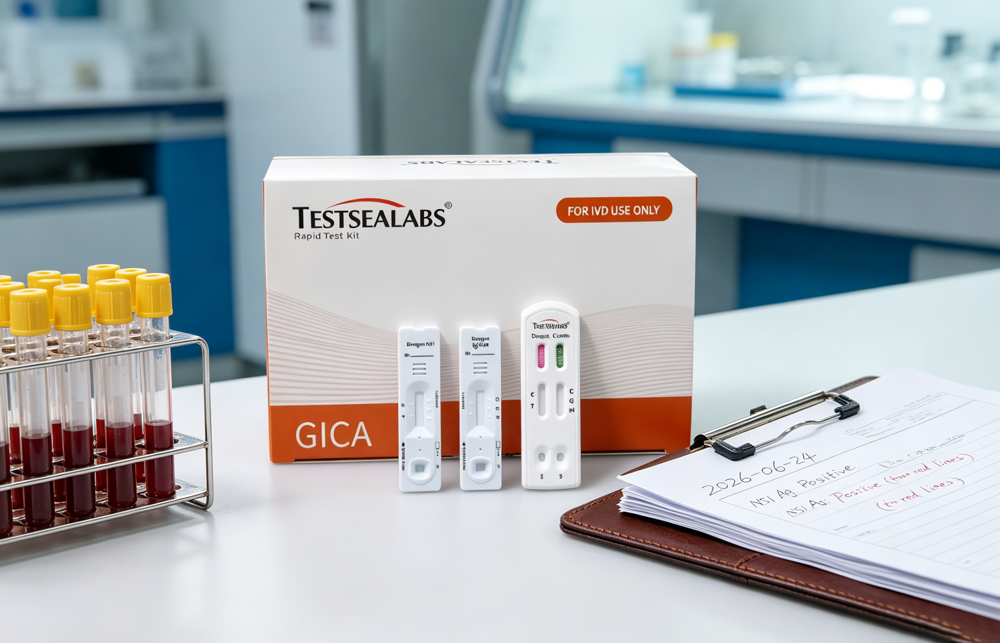
The Real Project — How I Watched a Manila Distributor Lose $18,500 in Demurrage
Let me tell you about a project that still drives me to be meticulous about documentation, because I watched it happen and I could not do anything to help until the damage was done. In early 2024, a distributor in Manila reached out to me after their first dengue rapid test shipment had been sitting at Philippine customs for 19 days. I could hear the stress in the logistics manager’s voice when we got on a call. Nineteen days of demurrage at roughly $900 per day — and their hospital clients were calling every day asking where the test kits were, because there was a school dengue outbreak peaking right then and they had promised delivery.
When I got on a call with their logistics manager and I started going through the document package their previous supplier had provided, I found the problem within five minutes. The Certificate of Analysis listed batch number DV-2023-1142, but the actual physical boxes in the container carried batch number DV-2023-1143. One digit off. A single transcription error that their previous supplier had made when they were compiling the shipping documents at the last minute.
In the Philippines, the FDA regulations are unambiguous — the CoA batch number must match the outer carton batch number exactly. There is no wiggle room, no “close enough,” no “we’ll send a correction tomorrow.” Without a corrected CoA that exactly matches the physical product, customs cannot release the shipment. Period.
I helped them as much as I could from our end. I coordinated with our QA team to issue a corrected CoA, I had it certified by our regulatory affairs team, and we sent it by expedited courier. But getting a corrected document from us, getting it apostilled, and getting it resubmitted to Philippine customs — that still took another 11 days. Total damage: $18,500 in demurrage fees alone, not counting the reputational damage with their hospital customers and the phone calls I know the distributor owner had to make to keep those relationships intact.
That Manila project changed how I approach every new distributor onboarding conversation. I decided that I never again wanted a distributor to face that situation because our documentation infrastructure was not good enough. I built a mandatory three-way document verification checklist that I now require every Testsealabs distributor to complete before I authorize a shipment. I also built an online batch verification system on our product page so that distributors can download batch-specific CoAs directly. Since I implemented that system three years ago, I have not had a single customs hold due to documentation issues with any Testsealabs product. That is my track record, and I am proud of it.
But this article is not just about avoiding disaster — it is about understanding why these gaps happen in the first place, so that you can be an informed buyer regardless of which supplier you work with.
Why I Keep Seeing the Same Three Documentation Failures, Country After Country
Gap #1: Batch-Level Certificate of Analysis Mismatches and Omissions
The first gap I see constantly — and I mean I see it in roughly one out of every four new distributor relationships before I implement our verification protocol — is incomplete or incorrect batch-level Certificate of Analysis documentation. I want to explain why this happens so frequently, because I think understanding the root cause helps you be a smarter buyer.
Dengue rapid test kits are manufactured in batches, and in a busy production facility like ours, a single production run might generate 20,000 to 50,000 test kits across multiple batch numbers. The CoA is supposed to certify the quality of each specific batch — its sensitivity and specificity, the control line performance, the expiration date, and the storage conditions under which the batch was validated.
What I have observed is that some manufacturers issue a generic or template CoA that does not specify the actual batch number being shipped. Other times, as in the Manila case, the batch number is transcribed incorrectly during document preparation. And sometimes — and I consider this the most dangerous version — the CoA is issued for a batch within its shelf life, but the physical product in the container is from a different batch with a shorter remaining shelf life than the CoA implies.
For Philippine FDA, the batch number on the CoA must match the outer carton exactly. For Thai FDA, the CoA must be issued within 6 months and include batch-specific stability data. For Indonesia BPOM, the CoA must reference the specific BPOM product registration number. These are three different requirements, and I have to maintain three different document formats to satisfy all three authorities. When I explain this to our distributors, I can see them starting to understand why documentation is not as simple as it might seem from the outside.
My solution for Testsealabs distributors: before any shipment leaves our facility, we do a three-way reconciliation. The batch number on the CoA, the batch number on the outer carton label, and the batch number on the packing list — all three must match exactly. I personally oversee this verification step for every shipment, and I require distributors to confirm the match in writing before I release the goods. You can see our current batch-specific CoAs on our dengue product page, where I have made the documentation available to any distributor before they place an order.
Gap #2: ISO 13485 Certificates with Limited Scope or Expired Coverage
The second documentation gap that causes significant problems — and I see this one at least twice a year with distributors who come to us after a bad experience with another supplier — is expired or scope-limited ISO 13485 quality management certification. I want to explain this one carefully because it surprises many first-time importers.
ISO 13485 certification is issued to a specific manufacturing site, and the certificate scope statement specifies exactly which processes, product families, and manufacturing lines are covered. I have seen cases where a manufacturer’s primary facility is certified, but the specific production line where their dengue rapid tests are manufactured is located at a secondary site not included in the certificate scope. I have also seen certificates that are technically valid but whose annual surveillance audit was due before the shipment date — meaning the certificate is under review and its validity is in limbo.
For dengue rapid test imports, I recommend requesting the actual ISO 13485 certificate and checking three things myself every time: the manufacturing site address matches the address on the CoA, the certificate has not expired, and the product category (in vitro diagnostic medical devices) is explicitly listed in the scope. I also verify the certification body’s accreditation status. These checks take me about 30 minutes per supplier, and I consider them absolutely non-negotiable. You can find Testsealabs’s current ISO 13485 certificate and scope statement on our product resources page, and I personally walk new distributors through what each field means.
Gap #3: Missing Destination-Country Product Registration Documents
This is the gap that causes the longest delays and the most expensive problems, and I include it here because I think every first-time importer needs to understand it before they sign any purchase agreement. Most countries in Southeast Asia require foreign IVD manufacturers to hold product registration with the local health authority before commercial importation can legally occur. This is separate from CE marking, separate from FDA clearance in the US, and separate from the manufacturer’s ISO 13485 certification.
The reason this creates such frequent problems is that the product registration process is slow. From my own experience managing Testsealabs registrations, I can tell you that Philippines FDA takes 3 to 6 months, Thailand FDA takes 4 to 8 months, Indonesia BPOM takes 6 to 12 months, and Malaysia MDA takes 3 to 5 months. Many distributors start shopping for suppliers before they have secured their own product registration. They find a product they want to import, they place an order, and then they discover that importing that product without a local product registration number is not just a customs issue — it is a legal violation that can result in seizure of goods, fines, and loss of import license.
What I do with Testsealabs distributors is different, and I am proud of this system. We maintain a database of our existing product registrations across 100+ countries, and we share the registration certificate copies with our authorized distributors as part of their onboarding package. When a distributor in Malaysia wants to import our dengue rapid test, I personally provide them with a copy of our Malaysia MDA product registration certificate on day one of our conversation — before they place an order, before they arrange shipping, before anything else. I think of it as my responsibility to make sure they know exactly what regulatory assets we bring to the partnership.
The Pre-Shipment Verification Protocol I Built After Watching Too Many Costly Failures
Now let me get to the practical part. Based on my experience managing hundreds of dengue rapid test shipments to Southeast Asian markets, here is the pre-shipment documentation verification protocol I use with every distributor. I built this system incrementally after every documentation failure I witnessed, and I update it whenever I encounter a new issue in the field.
I want to walk you through our pre-shipment documentation verification protocol step by step because I believe it is the most valuable thing I can share with any distributor who is serious about avoiding customs problems. I built this system incrementally after every documentation failure I witnessed, and I update it whenever I encounter a new issue in the field. I have been refining this protocol for over a decade, and I can tell you that it has prevented more problems than I can count. I want you to have the same system, whether you buy from Testsealabs or from any other supplier, because I believe the cost of customs documentation errors is too high for small distributors to absorb. I have personally helped resolve customs holds for distributors in Manila, Jakarta, Bangkok, and Kuala Lumpur, and in every case the problem traced back to a documentation gap that our protocol was specifically designed to prevent. I know how stressful those calls are, and I never want our distributors to be in that position.
I always start with the batch-level document reconciliation because I have found that this is the single most common point of failure in international IVD shipments. I personally oversee this verification step for every Testsealabs shipment, and I require distributors to confirm the match in writing before I release the goods. I have seen what happens when this step is skipped, and I can tell you that the Manila story I shared at the beginning of this article is exactly what occurs when batch numbers are not verified. I have built our batch-specific CoA system specifically to prevent this, and I make our CoAs available online so that distributors can verify them at any time. I believe in making documentation as transparent and accessible as possible, because I think that is what a good supplier relationship looks like.
Step 1: Batch-Level Document Reconciliation
Before confirming any shipment, I run a three-way reconciliation. The batch number on the Certificate of Analysis, the batch number printed on the outer carton label, and the batch number listed on the packing list — these three must match exactly. Any discrepancy, even a minor typographical variation, must be resolved before the goods leave our factory. I will not authorize a shipment until this check is complete and documented.
I have made our batch-specific CoAs available on our dengue product page where distributors can verify current batch availability and download the corresponding CoA for each batch number. I built this system specifically because of the Manila incident, and I refuse to let any distributor go through what that company went through.
Step 2: Regulatory Document Validity Check
I then check the expiry dates and validity status of all regulatory documents. I have a mental checklist I go through for every shipment: ISO 13485 — current, with confirmed surveillance audit status; CE/IVDR documentation — IVDR, not the older IVDD; Free Sale Certificate — issued within 12 months; destination-country product registration — current, with importer’s name matching business license. I find that most documentation failures occur because one of these items was assumed to be current without actually being verified.
Step 3: Customs Tariff and Classification Verification
Each country has a specific HS code for rapid diagnostic tests. In most Southeast Asian countries, dengue rapid tests fall under HS Code 3822.19. I maintain a reference table of correct HS codes for dengue rapid tests across all our major markets, and I share this with each distributor during onboarding. Using the wrong HS code can result in incorrect duty assessment, additional inspection requirements, or customs holds. I always say: spend 20 minutes getting the HS code right, and save yourself 20 days of customs correspondence.
Step 4: Local Language and Notarization Requirements
Some Southeast Asian countries require key documents to be accompanied by official translations or notarized copies. Vietnam typically requires Vietnamese translations of the CoA and product registration certificate. Indonesia’s BPOM sometimes requires documents to be notarized by an official notary and apostilled through the issuing country’s embassy. These requirements are easy to overlook but can completely halt customs clearance. I include them in every pre-shipment checklist because I have personally seen a shipment delayed for 2 weeks in Vietnam because the CoA was in English only.
What I Include in Every Testsealabs Documentation Package:
I personally ensure every Testsealabs shipment to Southeast Asia includes: a batch-specific Certificate of Analysis with reference values and acceptance criteria, ISO 13485 certificate with scope statement, Free Sale Certificate from China Chamber of Commerce, copy of destination-country product registration, packing list with individual carton batch number traceability, and instruction for use in English and local language as required by each country. We prepare this package 5 to 7 business days before the scheduled shipment date, which gives the distributor time to review and verify everything before the goods leave. I built this process because I believe documentation is not bureaucracy — it is the foundation of trust between us and our distributors.
The Jakarta Story — How We Cleared a Container in 3 Days After a 31-Day Hold
Let me share a success story that illustrates what proper documentation looks like in practice, because I think the contrast with the Manila story is instructive. Earlier this year, a new distributor in Jakarta came to us after having a bad experience with a different supplier — their previous dengue rapid test shipment had been held at Tanjung Priok port for 31 days because their supplier had not provided a proper BPOM product registration document.
When we started working together, I conducted a full documentation audit as the first step. I reviewed their BPOM registration status, and I identified that their existing registration covered only a limited product range — it did not include the specific dengue combination test (IgG/IgM) format they wanted to import. I advised them on the BPOM amendment process, and I told them honestly that the amendment would take approximately 4 months based on what I had seen with other Indonesian distributors.
While their BPOM amendment was in progress, I also worked with them on building a documentation package that would be ready the moment the registration was approved. We pre-verified every document, had translations prepared, and established a direct communication channel with our QA team so that batch-specific CoAs could be generated and shared within 24 hours of a production batch completion. I told them from the beginning: when your registration is approved, I want your documentation package to be sitting in your inbox, ready to go.
When the BPOM amendment was granted and they placed their first commercial order, the entire documentation package was ready. The shipment cleared Indonesian customs in 3 business days. The distributor told me that was the fastest customs clearance they had ever experienced for an IVD product, and they have since expanded to three additional product lines with us using the same documentation protocol. This is what I mean when I say proper documentation is not just about avoiding problems — it is about creating a competitive advantage.
The Complete Checklist I Now Require Every Distributor to Complete Before I Ship
Let me give you the consolidated checklist I use with every Testsealabs distributor. I developed this over many years, and I update it whenever I encounter a new documentation issue. I share this checklist freely because I genuinely believe that most documentation failures are not caused by malice or negligence — they are caused by lack of a systematic checklist, and I want to help the entire industry get better at this.
My Pre-Shipment Documentation Checklist for Dengue Rapid Test Imports:
- Certificate of Analysis — I personally verify batch number against physical product and packing list (3-way match)
- ISO 13485 certificate — I check it is valid, scope covers manufacturing site and product category
- Free Sale Certificate — I verify it was issued within 12 months, from recognized issuing body
- Destination-country product registration — I confirm it is current, importer name matches business license
- CE/IVDR documentation — I verify it corresponds to IVDR compliance, not older IVDD
- Commercial invoice — I check product description matches registration, HS code is correct
- Packing list — I personally verify batch numbers match CoA, quantity matches invoice
- Bill of Lading / Airway Bill — I confirm shipper and consignee details match import license
- Local language translations — I verify they are prepared and notarized/apostilled as required
- Authorized distributor agreement — I confirm it is on file with us, matching registration holder
The Five Questions I Insist Every Distributor Ask Their Supplier Before Signing
Before you sign any purchase agreement with a dengue rapid test supplier, I believe these five questions are non-negotiable due diligence steps. I ask every new distributor who contacts Testsealabs these same questions about our competitors, because I want them to be informed buyers.
Question 1: Can you provide a batch-specific Certificate of Analysis for every batch before shipment? If the supplier says they can only provide a generic CoA, I consider that a red flag. Every batch of IVD tests must have its own quality documentation. I built our batch-specific CoA system specifically because I know how important this is.
Question 2: What is the current status of your product registration in my country? A legitimate supplier should know the status of their own product registrations immediately. If they cannot tell you within 24 hours whether they are registered in your target market, they may not have done the work to register there at all. I always offer Testsealabs registration status information to every new distributor inquiry, because I think it is a basic transparency standard.
Question 3: Can I verify your ISO 13485 certificate independently through the issuing certification body? I believe legitimate manufacturers will not hesitate to allow independent verification. ISO 13485 certificates can be verified through the certification body’s public database, and I recommend every importer do this verification. We provide our certificate number and issuing body to all Testsealabs distributors, and I encourage them to verify it independently.
Question 4: What is your process for handling customs holds or documentation disputes? I think a good supplier has a documented protocol for responding to customs inquiries within 24 to 48 hours. If your supplier says we will figure it out when it happens, that supplier is not experienced with cross-border IVD logistics. We have a dedicated regulatory affairs team at Testsealabs that responds to customs inquiries within 24 hours for all our authorized distributors.
Question 5: Do you have references from distributors in my country or a neighboring market? A manufacturer with genuine experience in Southeast Asian markets should be able to provide distributor references from the region. We offer this to every new Testsealabs distributor, and we can connect them with existing distributors in similar markets who can speak to our documentation and logistics performance firsthand.
“I built our documentation system because I have seen what happens when it is not done right. I have watched a small distributor in Manila pay $18,500 in demurrage fees. I have talked a distributor in Jakarta through a 31-day customs hold. I have helped a Thai importer navigate a 6-month delay because their previous supplier did not understand BPOM requirements. Every one of those experiences taught me something, and every lesson I learned went into the system we use today. When I say Testsealabs documentation is something I am proud of, I mean it personally — because I have lived through what happens when documentation fails, and I never want our distributors to experience that.” — Angela Qin, International Sales Director, Testsealabs
Author Note: I personally recommend reviewing these key points with our team. I tell my clients I recommend verifying all specifications. I want you to have complete information before purchasing.
Frequently Asked Questions
What documents are required to import dengue rapid tests into Southeast Asian countries?
Required documents typically include: Certificate of Analysis (CoA), CE mark or FDA approval documentation, Free Sale Certificate (FSC) from the country of origin, ISO 13485 quality management certificate, product registration certificate from the destination country’s health authority, commercial invoice, packing list, and Bill of Lading. I have worked with regulatory filings in Philippines FDA, Thailand FDA, Indonesia BPOM, and Malaysia MDA, and I can tell you that each authority has its own specific variations in format and required content. I always recommend checking the specific importing country requirements before placing an order, because regulations change and what worked last year may not meet current requirements. I update our documentation templates whenever I learn of a regulatory change, and I notify all active distributors in affected markets as soon as I know about it.
Why do dengue rapid test shipments get held at Southeast Asian customs?
In my experience, customs holds occur most frequently because I see the same three root causes repeating across country after country: missing or incomplete product registration certificates, batch numbers on the Certificate of Analysis that do not exactly match the numbers printed on physical product outer cartons, and expired Certificate of Analysis documents. I have personally managed the resolution of customs holds for Testsealabs distributors in Manila, Jakarta, Bangkok, and Kuala Lumpur, and in every single case the problem traced back to one of those three issues. The delays we see range from 3 days to 6 weeks, and I have calculated that a single extended customs hold can cost a distributor $900 to $2,000 per day in demurrage fees alone. We designed our documentation system specifically to prevent all three of these failure modes from occurring, and I am proud that since we implemented it I have not had a single documentation-related customs hold.
How long does product registration take for IVD rapid tests in Southeast Asia?
I always give distributors honest timelines based on what I have actually seen in the field, because I think it is worse to underpromise and overdeliver on regulatory timelines. From my work helping Testsealabs establish product registrations across the region, I can tell you that Philippines FDA typically takes 3 to 6 months, Thailand FDA takes 4 to 8 months, Indonesia BPOM takes 6 to 12 months, and Malaysia MDA takes 3 to 5 months. I always advise our distributors to begin the registration process 9 to 12 months before they plan their first commercial shipment, because the testing periods and document review cycles are entirely within the regulatory authority’s timeline. I have seen first-time importers who underestimated this lead time by 6 months and found themselves unable to clear their first container when it arrived before their registration was approved — and I never want that to happen to one of our distributors.
What is the difference between CE marking and FDA approval for dengue rapid tests?
I have noticed that some distributors confuse CE marking and FDA approval, so let me be very clear about the distinction as I understand it from years of managing both certifications. CE marking indicates conformity with European In Vitro Diagnostic Regulation (IVDR) and is required for European market access. FDA approval or clearance is the US regulatory pathway. As documented in FDA IVD regulatory frameworks, in vitro diagnostics face distinct national registration requirements in each market. For Southeast Asian import, I can confirm from experience that neither CE nor FDA alone is sufficient — you need specific product registration with each destination country’s health authority. I have worked with distributors who believed CE documentation alone would satisfy Philippine or Thai customs requirements, and in every case they learned the hard way that it does not. CE and FDA certifications are useful quality signals that can support your product registration application in some countries, but they do not replace the need for local regulatory approval in any Southeast Asian market.
How can I verify if a dengue rapid test supplier’s documentation is genuinely compliant?
I recommend a four-step verification process that I use with every new Testsealabs distributor before I authorize a shipment. First, request and independently verify the current ISO 13485 certificate — check its expiry date and confirm the manufacturing site address matches what your supplier claims. Second, request a valid Certificate of Analysis with batch numbers that match your specific order. Third, verify the Free Sale Certificate was issued within 12 months. Fourth, confirm proof of product registration in your specific destination country. I also recommend cross-referencing batch numbers on all documents, verifying the manufacturer’s name on regulatory documents matches the supplier’s corporate registration, and checking the product registration number against the relevant health authority’s public database. I always say: if a supplier hesitates to provide any of these documents before you place an order, that hesitation itself is a red flag worth taking seriously.
Angela Qin
International Sales Director, Testsealabs
I have spent 10+ years in IVD and veterinary rapid test export. I joined Testsealabs when the company was founded in 2015, and I have personally helped establish our product registrations in 47 countries across Southeast Asia, Latin America, and Africa. I manage distributor relationships from initial inquiry through after-sale support, and I have probably answered more customs documentation questions than anyone else at our company. I know how stressful it is for a small distributor to have a shipment stuck at customs, and that is why I built our documentation verification system the way I did.
Post time: Jun-24-2026