
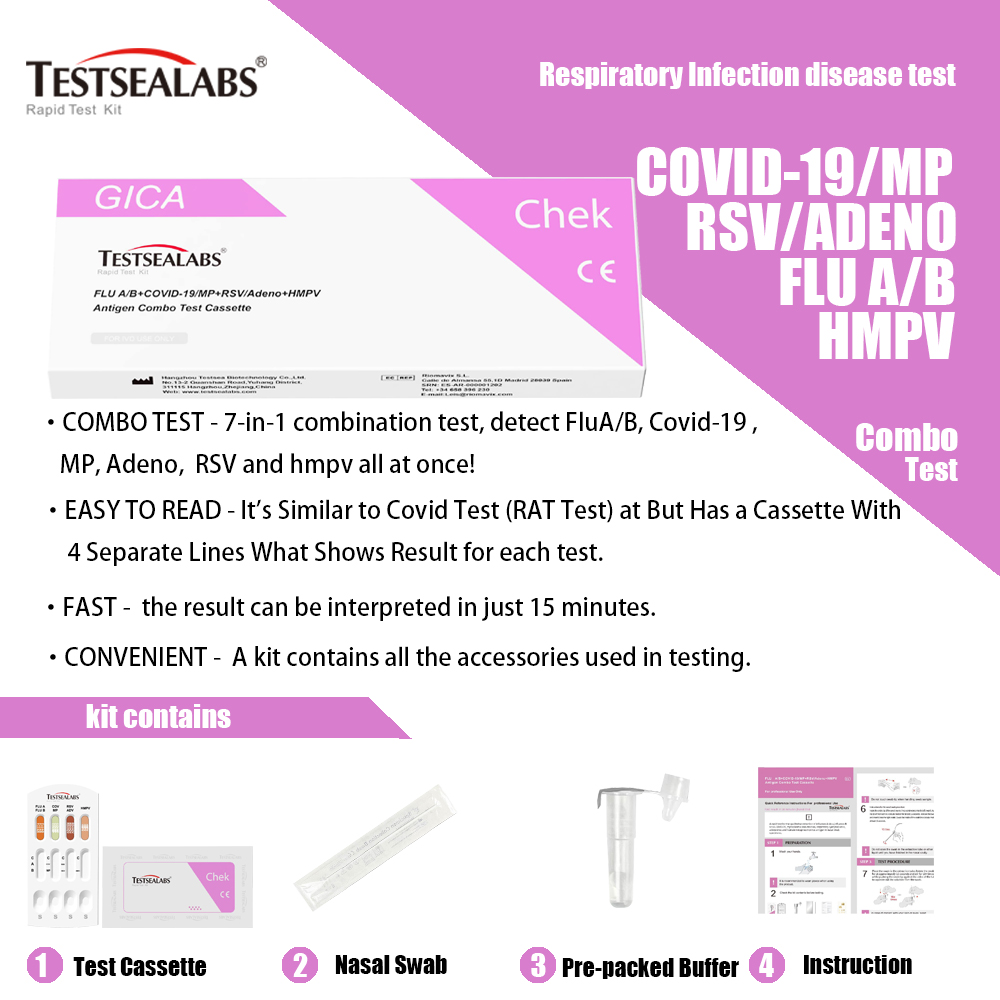
Testsealabs 6‑in‑1 Respiratory Antigen Combo Test Cassette – Meeting the Shift from Single‑Pathogen to Multiplexed Screening
I have spent the past decade helping clinical laboratories and diagnostic distributors in more than 100 countries match their screening requirements with the right rapid test configuration. My name is Angela Qin, and I am the International Sales Director at Hangzhou Testsea Biotechnology Co., Ltd., known globally as Testsealabs.
Over the years, I have seen the diagnostic procurement landscape shift from single‑pathogen tests toward multiplexed panels that differentiate respiratory infections which present with nearly identical clinical symptoms. The Testsealabs 6‑in‑1 Respiratory Antigen Combo Test Cassette – detecting Influenza A, Influenza B, Respiratory Syncytial Virus, Adenovirus, COVID‑19, and Human Metapneumovirus from a single nasal swab – is the product of that shift. This article explains what this means for clinics and distributors evaluating multiplexed screening options.
Why Multiplexed Respiratory Testing Matters for Clinics
In my experience working with clinical buyers, the operational bottleneck during respiratory season is not test availability – it is test selection. A clinic seeing 80 patients per day in January cannot run six separate single‑pathogen rapid tests on every patient with cough and fever. The cost per patient in consumables alone would be prohibitive, and the staff time to perform six individual tests and document six results would overwhelm front‑line personnel.
I have watched clinics default to testing only for COVID‑19 and influenza, leaving RSV, adenovirus, and HMPV undiagnosed – meaning they cannot distinguish patients who need supportive care from those who may require antiviral intervention or hospitalisation monitoring.
This is where the 6‑in‑1 combo test changes the operational equation. One cassette, one nasal swab, one result line per pathogen – six answers from a single testing event. The test uses our lateral‑flow immunochromatographic platform, the same proven technology Testsealabs has deployed for millions of diagnostic kits. It delivers ISO 13485‑certified quality standards and MDSAP‑compliant manufacturing processes, ensuring high specificity and high sensitivity for each of the six targets. The clinician can identify the causative pathogen within minutes without sending the sample to a central laboratory.
Visit Testsealabs’ diagnostic product platform to see the full respiratory range.
The Clinical Utility of Each Target in the Panel
I often hear from distributor procurement teams that they understand the value of influenza and COVID‑19 screening but question whether adding adenovirus and HMPV justifies the incremental cost. In my view, this question misses the point of multiplexed testing. The value is not in the cost of adding targets to the cassette – it is in the clinical certainty of knowing what the patientdoes not have, which directly affects treatment decisions and infection control protocols.
- Influenza A and B – Early differentiation allows timely neuraminidase inhibitor therapy within the 48‑hour efficacy window. Without rapid antigen confirmation, clinicians often prescribe antibiotics empirically for influenza‑like illness, contributing to antimicrobial resistance.
- RSV – In elderly and immunocompromised adult populations, RSV causes pneumonia rates comparable to influenza. WHO data on RSV burden highlights its significance as a cause of severe respiratory disease globally. Identifying RSV‑positive patients enables appropriate isolation protocols.
- Adenovirus – Particularly relevant in paediatric populations, adenovirus can cause severe respiratory disease that mimics bacterial pneumonia. A positive result avoids unnecessary antibiotic courses.
- COVID‑19 – Remains critical for infection control protocols in healthcare settings and long‑term care facilities.
- HMPV – Clinically indistinguishable from RSV but requires different infection control measures. HMPV is frequently the missing diagnosis in what clinicians label “unknown viral respiratory infection.”
Triple‑Platform Manufacturing: Quality at the Raw Material Level
Testsealabs was founded in 2015 by a team combining expertise from the Chinese Academy of Sciences and Zhejiang University. Today, we operate a 56,000‑square‑metre IVD reagent production base with three proprietary technology platforms, employing 889 staff members.
- Immunological Detection Platform – Lateral‑flow immunochromatographic technology for the 6‑in‑1 combo test. Requires no equipment, no electricity, and no cold chain – critical for point‑of‑care settings worldwide.
- Molecular Biology Detection Platform – PCR‑based diagnostic kits for laboratories requiring higher analytical sensitivity. Supports confirmatory testing for multiplex antigen‑positive results.
- Protein Core Sheet Inspection Platform – Our proprietary raw material technology for conjugate pad manufacturing. Unlike many diagnostic manufacturers who purchase pre‑coated membranes from suppliers, we produce our own protein core sheets, giving us direct control over the critical reagent components that determine test performance.
For distributors and clinicians, this vertical integration means the 6‑in‑1 combo test is manufactured under ISO 13485 and MDSAP‑certified quality systems. I have personally overseen shipments to distributors in regions where ambient warehouse temperatures exceed 35°C, and the stability data confirms performance remains within specification throughout the stated 24‑month shelf life at 4–30°C storage.
Explore our other respiratory test configurations for comparison with the 6‑in‑1 panel.
Testing Workflow: From Swab to Result in Minutes
Let me describe the testing workflow as it will be experienced by the clinic staff performing it, because this is where the practical advantages of the 6‑in‑1 format become most apparent.
- The healthcare worker collects a nasal swab specimen from the patient using the provided sterile swab.
- The swab is inserted into the extraction buffer tube and mixed according to the instruction.
- Three drops are dispensed into the sample well of the test cassette.
- Within 15–20 minutes, up to six coloured lines appear in the result window – one control line confirming the test is valid, plus up to five patient result lines indicating which pathogens are detected.
At Testsealabs, we have optimised the membrane coating process to ensure that the test lines for all six targets resolve clearly without cross‑reactivity. Our R&D team validated the test against known positive clinical specimens for each target, and against panels of cross‑reactive organisms including common respiratory bacteria and other viruses, to confirm that the test reads each target correctly. The result is a test that delivers clear visual readout without the ambiguity that sometimes arises when multiple antigens are competing for detection in a single cassette format.
View our Flu A/B + RSV + MP combo test configuration for a smaller‑panel alternative.
For distributors focused on women’s health and hormonal testing, Testsealabs also offers the FSH rapid test kit as part of our broader diagnostic portfolio.
Regulatory Approvals and Market Access Strategy
I frequently advise distributor partners on the regulatory pathway for bringing the 6‑in‑1 combo test into their target markets, because the registration requirements vary significantly by country and determine the timeline to first sale.
Testsealabs holds CE marking for our respiratory product line (in compliance with IVDR requirements) and maintains an ISO 13485 quality management system certification. These provide a solid regulatory foundation and quality assurance for international distribution. Our products are manufactured to these international standards, ensuring consistent performance, reliability, and suitability for clinical screening needs in markets around the world.
For distributors entering a new market with the 6‑in‑1 test, I recommend starting the registration process at least 12 weeks before the intended product launch date. The documentation package my team provides includes:
- CE Declaration of Conformity
- ISO 13485 certificate
- Performance evaluation reports
- Stability study data
For markets that require local clinical evaluation or registration testing, we coordinate sample shipments and technical documentation translation to support the distributor’s submission. The regulatory pathway is a collaborative process between our quality team and the distributor’s regulatory affairs team, and early communication about the target market’s specific requirements saves significant time compared to submitting a generic dossier that must be supplemented later.
Comparing Multiplex vs. Single‑Target Testing Economics
From a procurement perspective, the decision between multiplex and single‑target testing involves comparing the per‑test unit cost against the number of tests required to reach a clinical diagnosis. If a clinic using single‑target tests routinely runs two or three separate tests per respiratory patient (for example, influenza A/B plus COVID‑19, and then RSV if negative), the total test cost quickly exceeds the per‑test cost of a single multiplex cassette that covers all relevant targets in one run.
I have worked with procurement managers who calculated that transitioning from a three‑test protocol to the 6‑in‑1 combo reduced their per‑patient consumable cost by approximately 30% while eliminating the need to stock and manage three separate SKUs with different expiration dates and storage requirements.
For distributors serving public tenders, the multiplex format also offers an administrative advantage: one product line item in the tender submission covers the full respiratory panel requirement, simplifying the evaluation process for the procurement committee compared to a bid that lists five or six separate product codes with individual pricing.
Storage and Logistics Advantage for Distributors
One of the recurring challenges I hear from distributor partners is inventory management complexity caused by varying storage requirements across diagnostic products. A distributor managing 50+ SKUs from multiple manufacturers must maintain separate cold‑chain and ambient storage zones, track expiration dates across different storage conditions, and absorb the cost of spoiled inventory when cold‑chain failures occur.
The Testsealabs 6‑in‑1 combo test is designed to simplify this burden. Storage at 4–30°C with a 24‑month shelf life means the product can be warehoused in the same ambient zone as the majority of the distributor’s existing inventory. No refrigerator monitoring, no cold‑chain transport verification, no temperature excursion investigations.
For distributors serving multiple countries in tropical and subtropical regions, this single specification can reduce logistics cost per unit by a meaningful margin compared to cold‑chain‑dependent alternatives. Our products are designed for stable room‑temperature distribution, giving procurement managers flexibility in warehouse allocation and reducing the risk of temperature‑related losses.
Procurement Considerations for Distributors and Clinics
When I work with a distributor evaluating the 6‑in‑1 test for their product portfolio, I recommend they assess four specific factors before committing to an initial order:
- Regulatory compliance for your target market – Testsealabs holds CE marking and ISO 13485 certification. Please confirm the specific import and registration requirements of your country; our team can provide technical documentation to support your local registration process.
- Private label and OEM capability – We support private‑label packaging including custom cassette labelling, kit inserts in the local language, and carton branding. MOQ for OEM private‑label is 50,000 units.
- Order lead time and MOQ – Standard lead time is 15–20 working days for stock packaging, 25–30 working days for private‑label. MOQs start at 5,000 tests for standard packaging.
- Post‑shipment technical support – My team provides remote troubleshooting for any performance or handling questions. We prepare translated instructional materials for end‑user markets where English is not the primary language.
Quality Assurance Across the Full Manufacturing Chain
Our 56,000‑square‑metre production base includes dedicated purification workshops for IVD reagents and instruments. The quality system covers the complete chain from raw material incoming inspection (nitrocellulose membrane flow rate, antibody‑conjugate activity, cassette dimensional accuracy) through in‑process checks (coating uniformity at the dispensing stage) to finished product QC sampling per ISO 13485 requirements against internal reference panels – covering conjugate pad coating, membrane lamination, cassette assembly, pouch sealing, and final release.
Our 5,000‑square‑metre public experimental platform supports continuous R&D and quality activities, staffed by a team where over 50% hold bachelor’s degrees or higher qualifications. The company holds53 patents across its diagnostic technology portfolio.
Let me share a practical example from a recent project. A distributor in Southeast Asia approached us with a requirement to supply respiratory test kits to a network of 150 rural health clinics across three provinces. The clinics had no refrigeration, limited laboratory infrastructure, and nursing staff with minimal diagnostic training. We supplied the 6‑in‑1 combo test in private‑label packaging with illustrated, pictogram‑based instructions that minimised language‑related usage errors.
After the first six months of deployment, the distributor reported a 40% reduction in the number of patients referred to district hospitals for respiratory diagnosis, because the clinics could identify the causative pathogen on site and initiate the appropriate treatment protocol or isolation measure immediately.
Our team is currently developing expanded multiplex panels that will incorporate additional respiratory targets based on the epidemiological trends we track through our distributor feedback network.
The Distributor’s Perspective: Building a Multiplexed Test Portfolio
From a distributor’s procurement strategy perspective, adding a 6‑in‑1 respiratory combo test to the portfolio offers a practical advantage over managing five or six individual SKUs for the same clinical utility. One SKU replaces multiple single‑target tests in the inventory management system. One product registration application covers all six targets in the regulatory filing. One customs clearance code and one warehouse bin location serve the entire respiratory panel requirement, reducing the administrative overhead associated with product master data management in the distributor’s ERP system.
I have observed that procurement teams often underestimate the cost of SKU proliferation in diagnostic distribution. Each additional SKU requires its own registration renewal timeline, its own minimum stock level calculation, its own batch record and quality documentation management, and its own expiry date monitoring process. When a distributor replaces five individual respiratory test SKUs with one 6‑in‑1 combo SKU, the reduction in hidden management cost across procurement, warehousing, and regulatory compliance functions often offsets the slightly higher per‑unit cost of the multiplex format compared to the sum of single‑target tests.
Add to this the clinical benefit of complete panel results from a single patient encounter, and the economic argument for multiplexed testing becomes difficult to ignore for any distributor serving the respiratory diagnostics market.
One sales training session equips the distributor’s sales team to position the product across multiple clinical segments. I have seen distributor partners reduce their respiratory test inventory SKU count by 30% or more by transitioning from single‑target to multiplexed panels, while actually expanding the total addressable market because the combo test’s ease of use attracts clinics that previously sent respiratory samples to reference laboratories.
Frequently Asked Questions
Q: What pathogens does the 6‑in‑1 test detect?
A: Influenza A, Influenza B, RSV, Adenovirus, COVID‑19, and HMPV from a single nasal swab.
Q: How should the test be stored?
A: 4–30°C with a 24‑month shelf life. No cold chain required.
Q: What manufacturing platforms does Testsealabs use?
A: Immunological detection, molecular biology, and protein core sheet inspection, housed in a 56,000m² ISO 13485‑certified base.
Q: What specimen type is required?
A: Nasal swab. No complex equipment needed, clear visual readout within minutes.
Q: Is the test suitable for distributor procurement?
A: Yes. Room‑temperature stability, 24‑month shelf life, private‑label packaging options available.
About the Author
Angela Qin
International Sales Director, Hangzhou Testsea Biotechnology Co., Ltd. (Testsealabs)
With 10+ years of experience in the in vitro diagnostic industry, Angela helps global distributors, hospitals, and public health institutions source reliable diagnostic solutions from China. Testsealabs, founded in 2015, serves customers in over 100 countries worldwide.
Facebook: Testsealabs on Facebook
Website: www.testsealabs.com
Post time: Jul-16-2026