
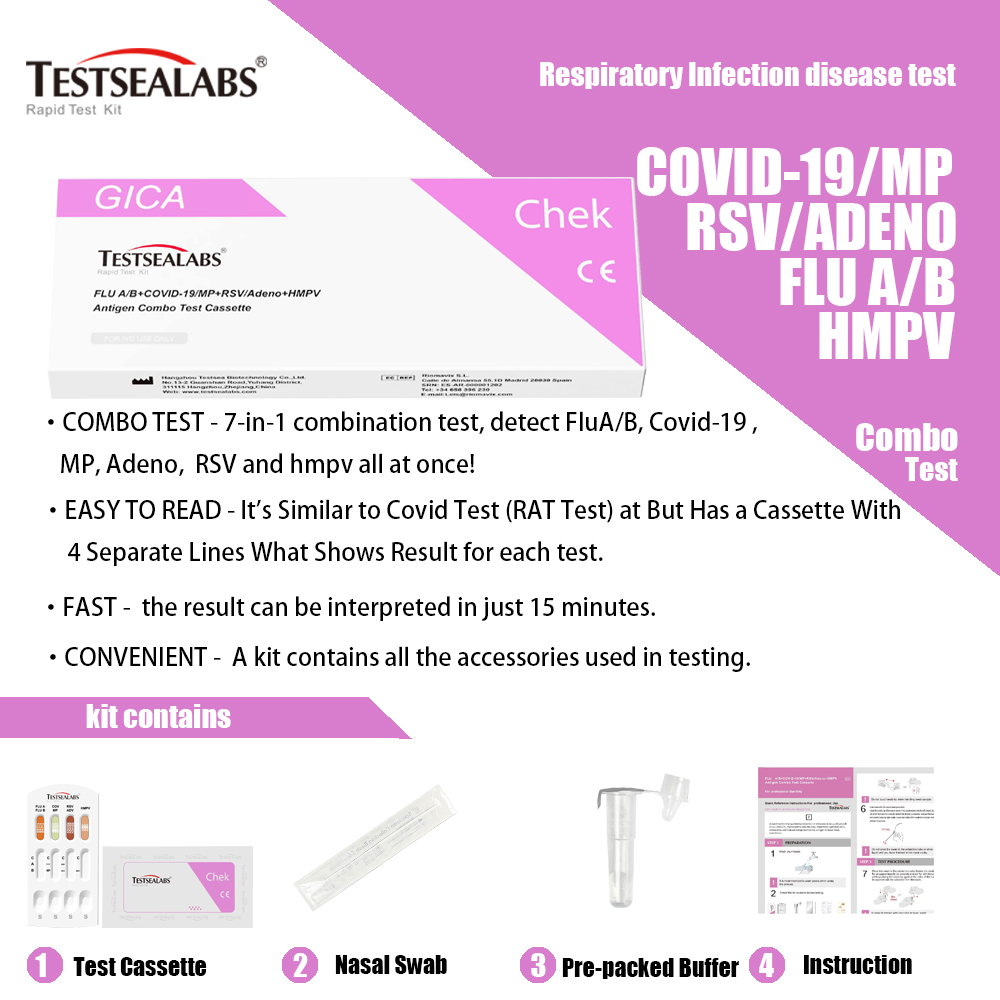
Testsealabs respiratory virus combo rapid test — suitable for Africa CDC APPM tender specifications and multi-pathogen screening protocols.
In February 2024, the Assembly of the African Union made a decision that quietly reshaped how medical diagnostics are bought and sold across the continent. They formally established the African Pooled Procurement Mechanism (APPM) under the Africa CDC, tasked with consolidating demand across 55 member states to negotiate better pricing and more reliable supply of health products — including in vitro diagnostic tests. For IVD manufacturers and distributors serving African markets, this was not just another policy announcement. It marked a structural shift from fragmented, country-by-country procurement to a coordinated continental purchasing framework.
What does this mean for respiratory rapid diagnostic test suppliers? In short: the rules of engagement have changed. Tenders that once accepted single-pathogen tests are now requiring multi-target combo formats. Quality certifications that were “nice to have” are now baseline requirements. And the window for suppliers to align with the new framework is closing fast.
As the International Sales Director at Hangzhou Testsea Biotechnology Co., Ltd. (Testsealabs), I have spent more than a decade working with distributors and public health buyers across more than 100 countries. The APPM framework represents the most significant procurement modernization I have seen in the African diagnostics space, and suppliers who understand its implications — and adapt their product strategy accordingly — will be the ones winning contracts in 2026 and beyond.
What the Africa CDC Pooled Procurement Mechanism Actually Changes
Before the APPM, a diagnostics manufacturer seeking to supply public health programs across multiple African countries had to navigate an alphabet soup of regulatory bodies and procurement agencies — Ghana FDA, Nigeria NAFDAC, Kenya PCA, Tanzania TMDA, South Africa SAHPRA, and so on — each with its own registration requirements, evaluation timelines, and tender cycles. The result was a market where only the largest multinational diagnostics companies could afford the overhead of multi-country compliance, while smaller but capable manufacturers were effectively locked out of the public health channel.
The APPM changes this by creating a centralized framework agreement mechanism. Instead of each country running its own tender for respiratory diagnostics, Africa CDC negotiates a framework agreement with pre-qualified suppliers. Individual member states can then place orders under these pre-negotiated terms without running their own full tender process. This model — proven effective by the Global Fund, UNICEF, and PAHO’s Revolving Fund — reduces duplication, accelerates procurement timelines, and leverages continental demand volume to achieve better pricing.
For IVD suppliers, the practical implication is clear: being selected for an APPM framework agreement opens access to 55 national markets simultaneously. Being left out of the framework means competing for residual country-level procurement opportunities that are increasingly thin. The Africa CDC’s Supply Chain Division has been tasked with operationalizing this mechanism, and the initial framework agreements for health products were published in late 2025.
Why Respiratory Combo Tests Became the Procurement Standard Under APPM
The APPM’s product specification approach reflects a deliberate shift from single-target testing to multiplex solutions. The rationale is rooted in both clinical and operational logic that is specific to the African public health context.
The Clinical Case for Multiplex Respiratory Testing
Across Africa, respiratory infections are among the top five causes of mortality — but the specific pathogen responsible is rarely identified at the point of care. Influenza A, influenza B, RSV, COVID-19, adenovirus, and HMPV all present with overlapping clinical symptoms: fever, cough, sore throat, and difficulty breathing. Without pathogen-specific diagnosis, clinicians cannot make informed treatment decisions — whether to prescribe oseltamivir for influenza, manage a COVID-19 case, or distinguish viral from bacterial infection to avoid unnecessary antibiotic use.
A multi-pathogen combo test that detects all six of these viruses simultaneously from a single nasal swab addresses this diagnostic gap directly. From a procurement perspective, the APPM evaluation team looks at the diagnostic yield per procurement dollar — and a single combo cassette that costs marginally more than a single-target test but delivers six results clearly wins that calculation.
The Operational Advantage for African Health Systems
Managing six separate single-target RDT products across a national supply chain is logistically complex. It requires six SKUs, six storage allocations, six expiry date tracking systems, and six ordering cycles. For ministries of health operating with limited warehouse capacity and lean supply chain teams, this overhead is significant. A single 6-in-1 combo test collapses all of this into one SKU, simplifying every step from central medical store to rural health post.
The Testsealabs 6-in-1 Respiratory Antigen Combo Test Cassette was designed with exactly this procurement logic in mind. It detects influenza A, influenza B, RSV, adenovirus, COVID-19, and HMPV from one specimen, delivers results within 15 minutes, requires no instrumentation, and stores at room temperature (4–30°C) with a 24-month shelf life — specifications that align directly with the operational reality of African public health distribution networks.
The Five Compliance Checkpoints Every Supplier Must Pass
Based on the APPM framework evaluation criteria I have reviewed, and my direct experience supporting distributors in African tender submissions, five compliance areas determine whether a respiratory combo test product qualifies for framework inclusion:
1. Manufacturing Quality System Certification
ISO 13485 certification is the baseline. The APPM framework requires evidence that the manufacturer operates a quality management system compliant with international medical device standards. MDSAP certification — which consolidates regulatory audits from five participating countries into a single assessment — provides additional credibility. Testsealabs is certified to both ISO 13485 and MDSAP standards, meeting this requirement at the highest level.
2. Regulatory Approvals for the Target Market
CE marking remains the most widely accepted regulatory benchmark for APPM-qualified products. However, individual member states may require local registration even when purchasing through the APPM framework. Suppliers should be prepared to provide complete technical files, including clinical performance data, stability studies, and manufacturing process documentation, to support in-country registration where required.
3. Clinical Performance Data by Pathogen
For a six-pathogen combo test, APPM evaluators expect to see sensitivity and specificity data presented individually for each of the six targets — not a single composite performance claim. The technical file must demonstrate that the combo test meets or exceeds WHO-recommended performance thresholds for each individual respiratory pathogen, not just in aggregate.
4. Environmental and Thermal Stability
Ambient temperatures across much of Africa routinely exceed 35°C, and cold chain infrastructure is limited outside major urban centers. APPM product specifications prioritize room-temperature stability, with a minimum 24-month shelf life and accelerated stability data demonstrating performance after exposure to elevated temperatures during transport and storage.
5. Packaging for Bulk Public Health Distribution
APPM framework agreements typically involve large-volume procurement — 500,000 to 5 million test units per contract cycle. Product packaging must be suitable for bulk distribution, with clear labeling, lot number traceability, and individual test integrity maintained through last-mile delivery to peripheral health facilities. Labeling requirements under the APPM framework also specify that package inserts must be available in multiple languages — including French and Portuguese — to accommodate the linguistic diversity of the African Union member states. Suppliers who proactively provide IFU translations in these languages demonstrate market readiness that APPM evaluators recognize as a signal of serious commitment to the African market.
Three Procurement Mistakes That Disqualify Bids — and How to Avoid Them
Having reviewed unsuccessful tender submissions from multiple manufacturers, I have identified three recurring mistakes that consistently result in disqualification under the APPM framework:
Mistake #1: Submitting incomplete performance data for each pathogen individually. Many manufacturers submit a single sensitivity/specificity number for the entire combo test. APPM evaluators need to see that each of the six targets independently meets the performance threshold. A test with excellent influenza and COVID-19 performance but weak HMPV or adenovirus detection may be disqualified despite strong overall numbers.
Mistake #2: Omitting stability data for tropical conditions. Room-temperature stability claims backed only by standard 2–8°C accelerated studies are insufficient. APPM evaluators look for real-time stability data at 30°C and 40°C, covering the full two-year shelf life projection, to validate the product’s suitability for African distribution environments.
Mistake #3: Underestimating the regulatory documentation package. A CE certificate alone is not enough. The technical file must include the CE declaration of conformity, ISO 13485 certificate, MDSAP certificate (if available), product specification sheets, IFU, clinical study reports, stability study data, and manufacturing flow diagrams. Missing any of these documents can delay evaluation or trigger disqualification.
For distributors preparing APPM tender submissions, I recommend reviewing the complete Testsealabs respiratory diagnostics product line — all products in this category are manufactured under ISO 13485 quality systems with CE marking, and we maintain comprehensive technical documentation packages ready for tender submission.
The Documentation Roadmap: Building a Tender-Ready Technical File
One of the most frequently underestimated aspects of APPM framework qualification is the depth and completeness of the technical documentation file required. Based on direct feedback from procurement officers who have evaluated APPM submissions, I recommend that suppliers organize their technical documentation into a structured file covering seven distinct sections:
Section 1 — Manufacturer Qualification Documents. This section must include the ISO 13485 certificate showing the specific manufacturing site address and scope of certification, the MDSAP certificate (if held), and the CE certificate of conformity for the specific product being submitted. These documents should be current (within the certification validity period) and clearly legible. Procurement officers report that unreadable scanned certificates are a common reason for documentation requests that delay evaluation.
Section 2 — Product Specification and Intended Use. A clear product specification sheet describing the test format, target analytes, specimen type(s), reading time, storage conditions, shelf life, and packaging configurations. The intended use statement must be precise and should include the specific clinical setting in which the test is intended to be used — for example, “for professional use in clinical laboratories and point-of-care settings” rather than a vague claim of use.
Section 3 — Clinical Performance Data. For a six-pathogen combo test, this section must present sensitivity and specificity data for each of the six targets individually. The data should be derived from clinical studies conducted in the intended-use population, not from laboratory spiking experiments. If clinical studies were conducted in a specific geographic region, the report should discuss the generalizability of the findings to African populations, where circulating strains of influenza, RSV, and other respiratory viruses may differ from the study population.
Section 4 — Analytical Performance Data. This section covers cross-reactivity studies, interference testing, hook effect evaluation, and precision/reproducibility data. APPM evaluators look for evidence that the test does not produce false-positive results in the presence of common respiratory commensals or other pathogens that may co-circulate in the target population.
Section 5 — Stability Documentation. Both real-time and accelerated stability studies should be included, covering transport stability (simulated shipping conditions at 40°C for up to one week), storage stability (covering the full 24-month shelf life claim), and opened-vial stability (how long test cassettes remain usable after the pouch is opened). For the African market, stability data at 30°C and 40°C is particularly important.
Section 6 — Manufacturing Process Documentation. A high-level description of the manufacturing process, including the antibody sourcing strategy (monoclonal vs. polyclonal, bioreactor vs. ascites), the production flow diagram, and the in-process and final QC testing protocols. APPM evaluators want to confirm that the product is manufactured in a controlled, reproducible process.
Section 7 — Regulatory Submission Status. A clear statement of the product’s regulatory status in the target market countries. This should include the CE certificate, any existing country-level registrations in African markets, and the status of any pending registrations. Transparency about regulatory status is valued more than optimistic but unsubstantiated claims about registration timelines.
Suppliers who prepare this documentation package in advance — rather than scrambling to assemble it when a tender is announced — can respond to procurement opportunities within days rather than weeks, a competitive advantage that APPM evaluators recognize and reward.
APPM vs. Traditional Tenders: A Comparison for Suppliers
Understanding how the APPM framework differs from the traditional country-by-country tender model helps suppliers allocate resources effectively:
| Factor | Traditional Country Tenders | APPM Framework |
|---|---|---|
| Market access per award | Single country | 55 member states |
| Contract volume | 10,000–500,000 units | 500,000–5M+ units |
| Supplier qualification | Per-tender basis | Pre-qualification for 2–3 years |
| Quality requirements | Varies by country | Harmonized framework standard |
| Regulatory acceptance | Country-specific registration | CE+ ISO 13485 as baseline |
| Payment terms | Variable | Harmonized through framework |
The Distributor Opportunity Under the APPM Model
For IVD distributors serving African markets, the APPM framework creates both urgency and opportunity. The urgency comes from the fact that once a manufacturer is listed on the APPM framework agreement, they effectively have preferred access to 55 national procurement channels. Distributors who partner with APPM-listed manufacturers early gain a competitive advantage that becomes harder to replicate as the framework matures.
The opportunity lies in the expanded diagnostic coverage that the APPM enables. With harmonized quality standards and pooled procurement volumes, member states can afford to introduce respiratory combo testing at the primary health center level — a goal that was economically out of reach under the fragmented procurement model. This means distributors who can supply APPM-compliant products are positioned to serve a rapidly expanding market, not just compete for share in a static one.
This expanded market access has practical implications for how distributors structure their procurement agreements. Under the traditional model, a distributor in Kenya would negotiate separate supply agreements for each manufacturer and submit separate tender bids for each national procurement cycle. Under the APPM model, a distributor who partners with a framework-listed manufacturer can participate in procurement across East Africa without duplicating the qualification process for each country. The cost savings in terms of regulatory compliance overhead, tender preparation labor, and inventory management are significant — distributors who have modeled this estimate a 30-40% reduction in the cost of doing business across multiple APPM-participating markets compared to the traditional country-by-country approach.
Conclusion
The Africa CDC’s APPM represents a structural transformation of how medical diagnostics are procured across the continent. For respiratory combo test suppliers, the message is clear: product portfolios that align with APPM specifications — multi-pathogen detection, ISO 13485/MDSAP quality certification, CE marking, room-temperature stability, and comprehensive technical documentation — are positioned for the largest public health procurement opportunity in Africa’s diagnostic sector. Products that do not meet these standards will face increasingly limited access to the public health channel.
At Testsealabs, our 6-in-1 respiratory combo test cassette was developed with exactly this procurement evolution in mind. Every aspect of the product — from the six-pathogen panel design to the room-temperature storage specification to the ISO 13485 and MDSAP quality certifications — was built to meet the requirements that the APPM framework now demands. If you are a distributor preparing for APPM framework submissions or seeking to align your product portfolio with Africa CDC’s evolving procurement standards, I would welcome the opportunity to discuss how our products can support your strategy.
For authoritative guidance on the APPM and Africa CDC procurement standards, the WHO’s Global Influenza Surveillance and Response System (GISRS) provides authoritative guidance on respiratory diagnostic surveillance, and the WHO Regional Office for Africa publishes procurement-related resources for member states.
About the Author
Angela Qin is the International Sales Director at Hangzhou Testsea Biotechnology Co., Ltd. (Testsealabs), with 10+ years of experience in the IVD industry working with public health buyers and distributors across more than 100 countries. Testsealabs is an ISO 13485 and MDSAP-certified manufacturer of rapid diagnostic products, including multi-pathogen respiratory combo tests, infectious disease RDTs, drug abuse test cups, and more. Founded in 2015, Testsealabs operates a 56,000-square-meter production facility with an annual production capacity exceeding 3 billion diagnostic kits.
Facebook: Testsealabs on Facebook
Post time: Jun-24-2026