
As autumn arrives, respiratory infections are once again in focus
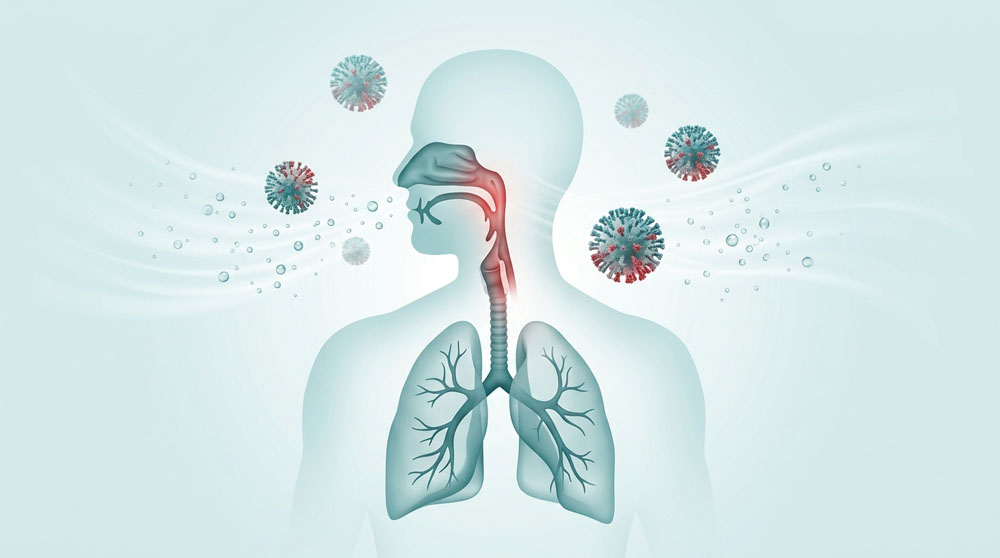
As the Northern Hemisphere enters autumn, changing temperatures, increased time spent indoors, and seasonal circulation of respiratory pathogens make respiratory infections an important global health concern once again.
From influenza and COVID-19 to Respiratory Syncytial Virus (RSV), Human Metapneumovirus (HMPV), and Adenovirus, different respiratory viruses can cause similar symptoms such as fever, cough, nasal congestion, and runny nose. Symptoms alone are often insufficient to distinguish between them.
The World Health Organization (WHO) continues to monitor global activity of influenza, SARS-CoV-2, and RSV. Global surveillance reports from the summer of 2026 show that respiratory virus activity varies by region, with elevated influenza activity reported in some areas. As different regions enter their respective respiratory infection seasons, the need for accessible and rapid pathogen testing remains relevant.
So instead of simply asking, “Is it a cold?”, a more important question is: Which pathogen may be responsible?
Which Respiratory Pathogens Are Drawing Attention in Global Markets?
Respiratory infections are not caused by a single virus.
For healthcare providers, pharmacies, clinics, and everyday health management in international markets, the following pathogens are among the key targets of respiratory testing.
01 Influenza A & B
Influenza viruses are strongly seasonal and remain among the most common causes of acute respiratory infections worldwide.
Influenza often has a relatively sudden onset and may cause fever, cough, sore throat, headache, muscle aches, and fatigue. Because many of these symptoms overlap with other respiratory viruses, symptoms alone may not reliably distinguish influenza from other infections.
Why testing matters: Testing after the onset of relevant symptoms can provide additional information for clinical assessment and help healthcare professionals determine appropriate next steps together with symptoms and other clinical findings.
02 COVID-19
Although the global focus on COVID-19 has evolved, SARS-CoV-2 continues to circulate internationally.
According to U.S. CDC data from September 2026, COVID-19 activity in the United States was elevated at that time, while seasonal influenza and RSV activity remained low. This highlights an important point: respiratory virus activity can vary significantly by region and over time.
Like influenza and RSV, COVID-19 may present with fever, cough, sore throat, nasal congestion, and fatigue. When symptoms overlap, testing can provide additional information about the possible pathogen involved.
03 RSV: An Important Consideration for Infants and Older Adults
Respiratory Syncytial Virus (RSV) is a common respiratory virus that can infect people of all ages.
It deserves particular attention in infants, older adults, and people with weakened immune systems.
Symptoms may include runny nose, cough, fever, and wheezing, and some infections can progress to lower respiratory tract disease.
This is one reason why respiratory assessment in children and other higher-risk populations may require more than simply determining whether influenza is present.
04 HMPV: An Increasingly Recognized Respiratory Pathogen
Human Metapneumovirus (HMPV) is not a newly emerging virus, but increased use of diagnostic testing has expanded awareness of its role in respiratory infections.
According to the U.S. CDC, HMPV can cause respiratory illness in people of all ages, with symptoms commonly including cough, fever, nasal congestion, and shortness of breath. Young children, older adults, and people with weakened immune systems may require particular attention.
Because HMPV symptoms overlap with RSV, influenza, and COVID-19, including HMPV in respiratory testing can provide a broader picture of the possible pathogen involved.
05 Adenovirus: More Than Just “A Common Cold”
Adenoviruses can cause several types of infection, including respiratory illness.
Because symptoms may overlap with influenza, COVID-19, and other respiratory viruses, fever, cough, and runny nose alone may not be sufficient to identify the specific pathogen.
For healthcare settings that need rapid respiratory pathogen screening, including Adenovirus in a multiplex panel can broaden the range of pathogens assessed.
Why Do Similar Symptoms Require Broader Testing?
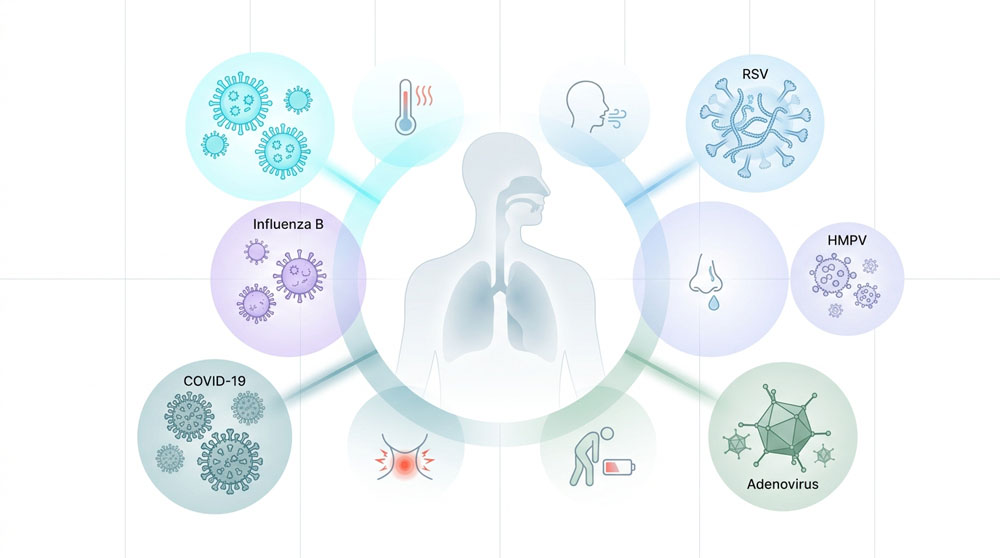
Fever, cough, nasal congestion, runny nose, sore throat, and fatigue are common across multiple respiratory infections.
| Common Symptom | Influenza | COVID-19 | RSV | HMPV | Adenovirus |
|---|---|---|---|---|---|
| Fever | ✓ | ✓ | ✓ | ✓ | ✓ |
| Cough | ✓ | ✓ | ✓ | ✓ | ✓ |
| Nasal congestion / runny nose | ✓ | ✓ | ✓ | ✓ | ✓ |
| Sore throat | ✓ | ✓ | ✓ | ✓ | ✓ |
| Respiratory symptoms | ✓ | ✓ | ✓ | ✓ | ✓ |
This means: Having respiratory symptoms does not necessarily tell you which pathogen is responsible.
Traditional single-pathogen tests may require separate testing for different targets.
For rapid initial assessment, a single specimen collection and multiplex testing approach can reduce repeated sampling and streamline the testing workflow.
One Sample. Six Respiratory Targets.
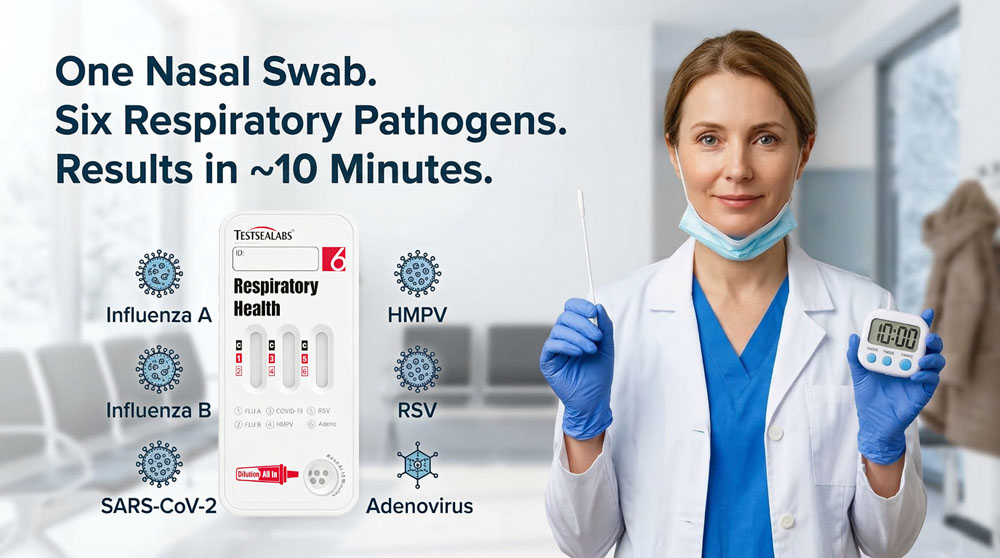
To address this need, TESTSEALABS offers the: Flu A/B + COVID-19/HMPV + RSV/Adenovirus Antigen Combo Test Cassette
This is a 6-in-1 respiratory antigen combo test designed to simultaneously detect:
- Influenza A
- Influenza B
- SARS-CoV-2 (COVID-19)
- Human Metapneumovirus (HMPV)
- Respiratory Syncytial Virus (RSV)
- Adenovirus
The six targets are specified in TESTSEALABS’ official product information.
Unlike a 5-in-1 panel, this product covers six respiratory targets: 6 Targets. 1 Nasal Swab.
Rapid Results in Approximately 10 Minutes
The test uses a lateral-flow immunoassay format with nasal swab specimens.
It does not require complex nucleic acid extraction or large laboratory equipment, and results can be interpreted in approximately 10 minutes.
This streamlined workflow can be useful for outpatient settings, primary care facilities, pharmacies, POCT environments, and rapid screening during periods of increased respiratory infections.
According to TESTSEALABS’ product information, the assay is a rapid chromatographic immunoassay intended for qualitative detection of the six respiratory pathogen antigens in nasal swab specimens.
Why Does 6-in-1 Testing Matter?
01 One Sample
Reduce the need for repeated specimen collection.
02 Six Targets
Influenza A, Influenza B, COVID-19, HMPV, RSV, and Adenovirus.
03 Rapid Results
Results can be interpreted in approximately 10 minutes, providing additional information for rapid screening and clinical assessment.
04 Streamlined Workflow
One multiplex test covers multiple common respiratory pathogens, helping simplify the testing workflow.
Colloidal Gold: The Technology Behind the Test, Not the Whole Story
Colloidal gold immunochromatography is a well-established rapid testing technology.
In this product, specific antigen-antibody interactions generate visible test signals, allowing qualitative detection of the targeted pathogen antigens.
Compared with molecular testing methods that require nucleic acid extraction, amplification, and specialized laboratory equipment, lateral-flow antigen testing offers a relatively simple workflow and rapid turnaround.
However: Rapid antigen testing does not replace molecular testing such as PCR in every situation.
When viral load is low, testing is performed outside the optimal testing window, or clinical findings do not match the test result, additional molecular testing or professional medical assessment may be appropriate.
Respiratory Health Is About More Than Testing
In daily life, it is still recommended to:
- Improve indoor ventilation.
- Wash hands regularly and practice good respiratory hygiene.
- Reduce close contact with others when experiencing respiratory symptoms.
- Seek medical attention promptly when high-risk individuals develop significant symptoms.
- Follow healthcare professionals’ recommendations for additional testing when appropriate.
When Should You Seek Medical Care?
Seek medical attention promptly if there is significant difficulty breathing, persistent or severe chest pain, altered mental status, persistent high fever, or worsening symptoms.
Infants, older adults, and people with underlying conditions or weakened immune systems should receive particular attention when respiratory symptoms are significant or persistent.
The value of rapid testing is to provide timely pathogen information to support healthcare and health-management decisions—not to replace professional diagnosis.
TESTSEALABS
6 Targets. 1 Nasal Swab. Approximately 10 Minutes.
When symptoms caused by different respiratory viruses overlap, obtaining timely information about potential pathogens becomes increasingly valuable.
From Influenza A/B to COVID-19, HMPV, RSV, and Adenovirus, the TESTSEALABS 6-in-1 respiratory antigen combo test brings six major respiratory targets into a single testing workflow.
One Sample. Six Targets. One Streamlined Testing Workflow.
Post time: Sep-24-2026