
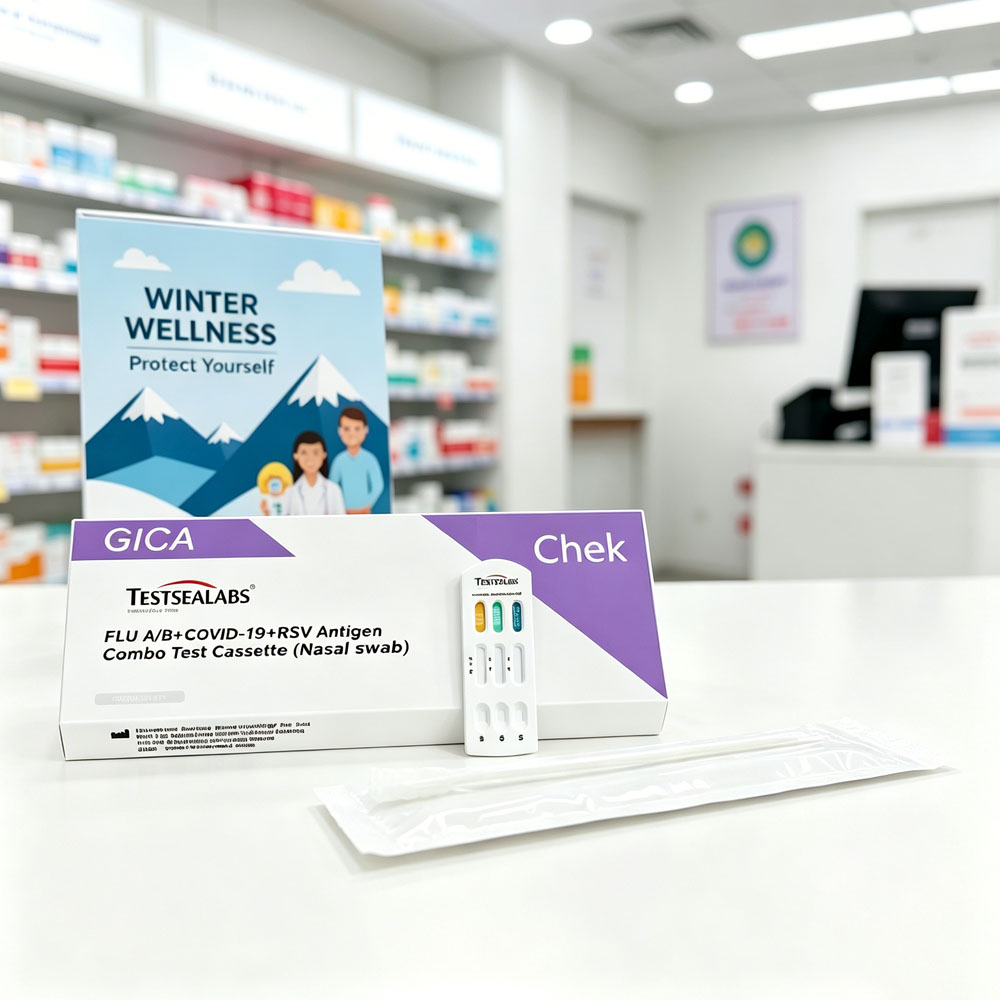
Why Australian Pharmacies Are Moving to Multiplex Rapid Tests
For the past several years, Australian pharmacists have been on the front lines of respiratory health — and I mean that quite literally. During peak winter seasons, patients walk into my pharmacy presenting with fever, sore throat, body aches, and nasal congestion. These symptoms look identical across COVID-19, influenza, RSV, and a handful of other respiratory viruses. Historically, distinguishing between these pathogens required sending a specimen to a laboratory and waiting 24–48 hours. That delay mattered enormously. It meant patients went untreated for two days, families got infected in the interim, and pharmacy teams fielded the same questions repeatedly without a clear answer to give.
Multiplex rapid antigen combo tests change that equation entirely. When I look at what’s driving adoption right now, three factors stand out clearly. First, therecord 2025 Australian flu season — which saw more than 500,000 laboratory-confirmed infections — made it brutally clear that single-pathogen tests don’t serve patients well when multiple viruses are circulating simultaneously. Second, the TGA has cleared the regulatory pathway for combination RAT devices, meaning pharmacies can now source legitimately approved products rather than navigating a grey market full of questionable imports. Third, the economics are genuinely compelling: stocking a single multiplex cassette that covers six pathogens replaces what would otherwise be three or four separate test lines in a pharmacy’s product range, and that matters when shelf space is finite and winter staff are stretched.
From my conversations with wholesale buyers across Victoria and New South Wales over the past year, the pattern is consistent — pharmacies that added combo tests last winter saw fewer repeat visits for the same symptoms, and higher per-transaction revenue from patients who previously would have left empty-handed. If you’re still stocking only individual COVID-19 or influenza A/B tests, I think you’re leaving real value on the table. The question is no longer whether combo tests belong in pharmacy — it’s how fast you can get them into your ordering pipeline.
What Exactly Is a FLU/COVID/RSV Combo Rapid Test?
A FLU/COVID/RSV combo rapid antigen test is a lateral flow immunoassay device that detects multiple viral antigens from a single nasal swab specimen. Think of it as bundling three, five, or six individual rapid tests into one plastic cassette, each running in parallel from the same extracted sample. The two most relevant products for Australian pharmacy wholesale buyers are the Flu A/B + COVID-19 Antigen Combo Test Cassette and the broader Flu A/B + COVID-19/HMPV+RSV/Adeno Antigen Combo Test Cassette.
The three-panel test — Flu A, Flu B, and COVID-19 — targets influenza A virus nucleocapsid protein, influenza B virus nucleocapsid protein, and COVID-19 nucleocapsid protein simultaneously. The five-panel version adds human metapneumovirus (HMPV), respiratory syncytial virus (RSV), and adenovirus to the detection panel. Both tests use the same nasal swab workflow: a healthcare provider or trained pharmacy staff member collects the specimen, elutes it into an extraction reagent tube, and applies three to five drops of the resulting solution into the cassette sample well. A control line (C) must appear for the result to be valid — if the control line doesn’t show, the test is invalid and must be repeated. Individual test lines for each pathogen indicate the presence of that pathogen’s antigen in the specimen.
Because these arequalitative tests (yes/no rather than a measured concentration), the visual readout is straightforward: a line appears in the relevant region if that pathogen’s antigen is detected at or above the limit of detection. One important caveat worth flagging: the tests do not differentiate between SARS-CoV and COVID-19 viruses, and they are not designed to detect influenza C antigens. This matters for patient counselling — a positive result tells you and your patient which pathogens are present, but clinical judgment is still required on next steps, particularly for high-risk groups.
How Fast Are Results? 15 Minutes Is the Industry Standard
When pharmacy teams ask me one question above all others about these combo tests, it’s this: how long does the test take? The answer is approximately 15 minutes from specimen collection to visual result. That turnaround time is precisely what makes combo rapid tests practically useful in a busy pharmacy setting. A patient presenting with symptoms at 9 AM can have a clear, actionable result before they leave the store — and that same result is information your pharmacist can use immediately for guidance on isolation, over-the-counter treatment, or GP referral.
To put that in concrete terms: a standard laboratory PCR panel for respiratory pathogens typically requires 24–48 hours of turnaround under normal conditions, and that timeline can stretch during peak winter periods when labs are overloaded. A monoplex rapid antigen test (single pathogen) delivers results in 10–20 minutes. The combo tests described here sit at the fast end of that range — around 15 minutes for up to six pathogens simultaneously, all processed from the same single swab. That is a meaningful clinical advantage when you’re managing a busy dispensary during a winter surge and every minute of pharmacist time counts.
The Australian Winter 2025–2026 Respiratory Picture: Why Planning Now Matters
Australia’s 2025 flu season was historically bad — more than 500,000 confirmed infections, with a fast-spreading H3N2 variant driving significant hospitalizations through August. That experience has profoundly shaped how pharmacists and wholesalers are thinking about the 2025–2026 winter season. The Guardian reported in June 2026 that both influenza and COVID-19 infections remain at relatively low levels so far this season — a pattern that mirrors the typical trough after a severe outbreak year. But I want to be very clear about this: low baseline is not the same as low risk. Australia’s experience with the 2025 H3N2 variant demonstrated how quickly a new strain can accelerate transmission when population immunity wanes, and the same dynamic could emerge at any point during the 2026 winter period.
Health authorities including the CDC have noted that the combined peak hospitalization rate from COVID-19, influenza, and RSV for 2025–2026 is expected to be similar to or higher than the 2024–2025 season. The Australian Respiratory Surveillance Report has documented simultaneous circulation of influenza, RSV, and SARS-CoV-2 creating genuine “tripledemic” pressure during recent winter periods — and that co-circulation pattern is precisely what makes combo tests so clinically valuable compared to single-pathogen alternatives.
What does this mean for your wholesale ordering? Because combination RATs detect six pathogens from one swab, they give pharmacists and patients more actionable information faster — without requiring multiple test purchases or laboratory referrals. The 2025 Australian flu season proved conclusively that when multiple respiratory viruses circulate at once, single-pathogen tests create dangerous clinical blind spots. The multiplex approach eliminates those blind spots and gives pharmacy teams the diagnostic confidence to act immediately on whatever pathogen is causing a patient’s symptoms.
TGA Status and Pharmacy Compliance: What Every Wholesale Buyer Must Verify
Before adding any rapid antigen test to your wholesale order, Australian pharmacy buyers need to verify TGA approval status — and I cannot stress this enough. The TGA maintains a public register of approved COVID-19 self-tests, and the category has been actively expanding to include multiplex combination devices. The TGA register explicitly shows that COVID-19/RSV/ADV/Flu A&B Antigen Combo Rapid Test Kits have received approval for supply in Australia, which is the regulatory green light you need before committing to any supplier relationship.
For wholesale pharmacy buyers, I’ve distilled the compliance checklist to these four non-negotiable items:
1. TGA inclusion for the specific product. Confirm the exact product — by description and ideally by model — appears on the TGA’s approved self-test register. Some suppliers advertise “TGA-approved” broadly but the specific SKU you want isn’t on the register. Always verify the exact product before placing a wholesale order.
2. ISO 13485 certification. This is the quality management system standard for medical device manufacturers, and it is non-negotiable for any legitimate supplier. Many reputable manufacturers also carry MDSAP (Medical Device Single Audit Program) certification, which is an added assurance of consistent manufacturing quality. Ask for copies of both certificates and verify them against the issuing registrars if possible.
3. Instructions for use (IFU) quality. The product must include clear, step-by-step instructions suitable for use by trained pharmacy staff or healthcare professionals. If the IFU is poorly translated, missing critical steps, or designed exclusively for layperson self-testing rather than professional use, that is a red flag about the supplier’s overall quality approach.
4. Storage and stability claims. Most quality combo test cassettes are validated for room-temperature storage at 4–30°C, which means no cold chain is required for shipping, storage, or distribution. This is a significant practical advantage for regional and rural pharmacies that may not have climate-controlled storage facilities. If a supplier requires refrigerated shipping, I would ask why — and carefully evaluate whether that adds logistical complexity you’re prepared to manage.
How to Evaluate Wholesale Suppliers for Combo Test Stock
Not every supplier advertising combo rapid tests has the certifications, quality systems, or inventory reliability that pharmacy wholesale buyers need. I’ve seen real damage come from ordering from a supplier with no verifiable ISO 13485 track record — expired reagents arriving in shipments, inconsistent control line behavior on otherwise valid tests, and products that TGA has subsequently flagged as non-compliant. None of those outcomes are acceptable when patient safety is on the line.
Here’s my practical supplier evaluation framework, built from several years of working with pharmacy buyers on this category:
Step 1 — Request quality certificates upfront. ISO 13485 is the baseline. Ask for a copy of the certificate and verify it against the issuing registrar’s database. If a supplier can’t produce these documents within 48 hours of your request, I would treat that as a serious warning sign and move on to the next candidate.
Step 2 — Verify TGA inclusion for the specific product you intend to order. Some suppliers hold ISO 13485 for one product range but the specific combo test cassette you want isn’t part of that certification scope. Always cross-check the specific product against the TGA register before placing an order.
Step 3 — Ask about minimum order quantities and realistic lead times. Winter surge purchasing should be planned months in advance — you do not want to discover in mid-July that your supplier has a three-week production lead time when your stock has already run low. I recommend building a buffer order in April or May before the seasonal surge typically begins, with a standing delivery schedule through August.
Step 4 — Evaluate packaging and labeling quality. Products destined for pharmacy shelves need professionally printed, clearly legible packaging with expiry dates, batch numbers, storage instructions, and CE/FDA/TGA markings as applicable. Suppliers who rely on sticker-label printing or handwritten batch codes are operating below the quality standard that Australian pharmacy buyers should accept.
Step 5 — Ask about shelf life at delivery. Some manufacturers ship product with only three to four months of shelf life remaining, which creates real problems for pharmacy buyers who hold stock across an entire winter season. Requesting a minimum of 12 months shelf life remaining at delivery is a reasonable and standard wholesale term in this category.
Clinical Use Cases: Where Combo Tests Fit in the Pharmacy Workflow
I think it’s worth being very specific about where combo rapid tests actually fit in a pharmacy’s clinical workflow, because the value isn’t always immediately obvious to pharmacy teams who are accustomed to thinking about tests as individual products for individual suspected conditions.
Consider the patient who walks in on a Thursday evening with a sore throat, fever, and body aches. Historically, your pharmacist might have recommended rest, fluids, and a GP visit if symptoms were severe — because without a confirmed diagnosis, it was genuinely impossible to know whether this was influenza, COVID-19, RSV, or something else entirely. That clinical uncertainty left both the pharmacist and the patient in an frustrating position. With a combo test, you can now deliver a same-day result that completely changes the clinical conversation. If influenza A is positive, you can discuss oseltamivir (Tamiflu) within the 48-hour treatment window where it is most clinically effective. If COVID-19 is positive, you can advise on isolation protocols and escalate high-risk patients appropriately. If RSV is positive in a young child or elderly patient, you have documented evidence for a prompt GP referral with a clear suspected diagnosis.
Because these tests detect multiple pathogens in a single workflow, they give pharmacists clinical information that was previously completely inaccessible without a laboratory referral. That is the core value proposition for this entire product category — and it is precisely why the TGA has been actively reviewing and approving combination devices as the clinical evidence base for their utility has grown substantially over the past two years.
Storage, Handling, and Shelf Life: Practical Notes for Pharmacy Teams
One of the genuinely practical advantages of the combo test cassettes available through certified suppliers like Testsea is room-temperature storage stability. Products manufactured under ISO 13485 quality management systems are validated for storage at 4–30°C, which means no refrigeration is required during shipping, storage in your dispensary, or distribution to other stores within your network. This simplifies logistics considerably compared to cold-chain products and materially reduces the per-test handling cost across a large pharmacy group.
From a stock management perspective, I recommend implementing FIFO (first-in, first-out) rotation with particular attention to batch tracking. If your pharmacy stocks multiple rapid test products from the same supplier, ensure that each batch of combo test cassettes is clearly labeled and physically separated from other test product lines to prevent dispensing errors. The individual foil pouches containing each test cassette should remain sealed until the moment of use — exposure to humidity or temperatures outside the validated range can degrade the nitrocellulose strip and produce invalid or unreliable results.
The Business Case: Combo Tests as a Revenue Stream for Australian Pharmacies
Let me be direct about the financial picture, because I’ve found that many pharmacy buyers genuinely underestimate the revenue potential of the multiplex rapid test category. A single combo test cassette that covers six pathogens from one specimen effectively replaces the equivalent of three to four individual monoplex tests. When you factor in the per-test time savings — one swab, one extraction, one run — the operational efficiency is substantially better than running separate tests sequentially, and the per-test revenue from a combo test typically exceeds the combined revenue of equivalent monoplex tests.
For pharmacy groups and banner groups negotiating wholesale contracts, I strongly encourage buyers to request volume-based pricing from suppliers who can demonstrate consistent quality and reliable supply history. The category is growing quickly enough that reputable suppliers are willing to be competitive on pricing for buyers who can commit to regular replenishment orders — particularly when those orders are placed before the winter surge period rather than as emergency restocking requests mid-season.
My recommendation is straightforward: build your combination test stock plan in Q2 (April through June) before the winter surge, negotiate a standing order with monthly deliveries through August, and track sell-through by pathogen to inform your 2026–2027 seasonal ordering cycle. This approach ensures you enter winter with adequate stock on hand, helps you avoid the emergency ordering premiums that always appear in July when demand peaks, and gives your pharmacy teams the inventory confidence to actively recommend combo testing to every patient who presents with overlapping respiratory symptoms.
Conclusion
Australian pharmacies that stock FLU/COVID/RSV and FLU/COVID/HMPV/RSV/Adeno combo rapid antigen tests are meaningfully better positioned to serve their patients during the winter respiratory surge. These multiplex cassettes deliver laboratory-quality diagnostic information in approximately 15 minutes from a single nasal swab, enabling pharmacists to make faster and more informed clinical decisions that genuinely change patient outcomes. The TGA has cleared the regulatory pathway for combination devices, ISO 13485-certified suppliers offer consistent, verifiable quality, and room-temperature storage removes cold-chain complexity from logistics in a way that benefits urban and regional pharmacies alike.
Wholesale buyers who plan their seasonal stock in Q2, verify TGA inclusion for the specific products they intend to order, and establish volume pricing contracts before winter arrives will find that this category delivers both measurable clinical value and a meaningful revenue contribution to their pharmacy’s respiratory health service offering. The question for2026 is not whether multiplex combo tests belong in Australian pharmacy — that debate is over. The question is how quickly your competitors will move to stock them, and whether your wholesale pipeline is ready before the winter surge begins.
Post time: Jun-09-2026