
EBOLA VIRUS: Understanding the Disease, Transmission and the Importance of Early Detection
A public health awareness feature by TESTSEALABS
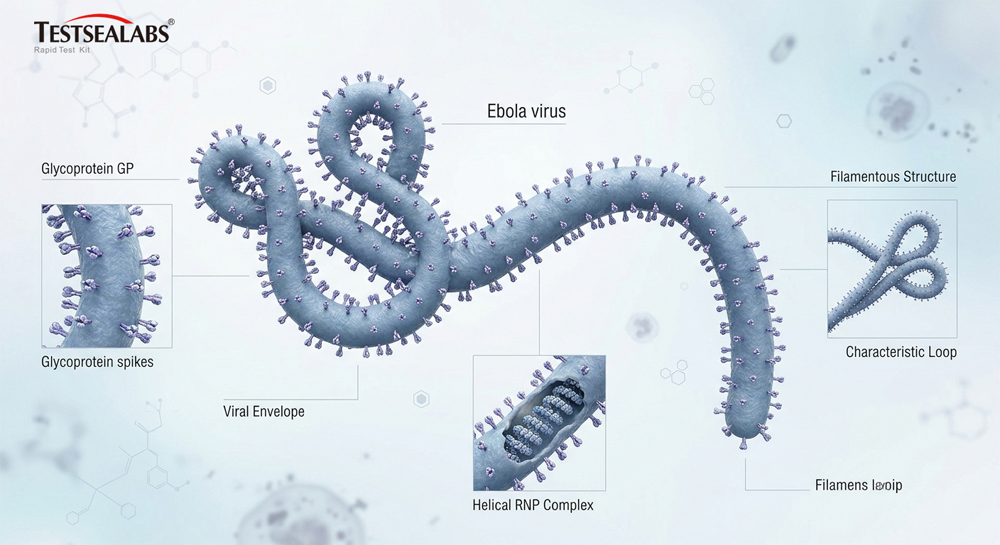
Ebola virus disease (EVD) remains a serious public health concern, particularly during outbreaks in regions where access to timely diagnosis and healthcare resources may be limited.
Recent Ebola-related developments have once again highlighted the importance of public awareness, effective infection prevention and control, and accessible diagnostic solutions.
Understanding how the virus spreads, recognizing its symptoms, and knowing the available diagnostic approaches are essential steps in strengthening public health preparedness.
Understanding Ebola Virus Disease
Ebola virus disease is a severe illness caused by viruses belonging to the genus Orthoebolavirus within the family Filoviridae.
Several viruses within this group are associated with human disease, including:
- · Ebola virus (EBOV)
- · Sudan virus (SUDV)
- · Bundibugyo virus (BDBV)
- · Taï Forest virus (TAFV)
Ebola virus disease can cause severe illness and requires prompt medical attention. The severity and outcome of infection may vary depending on the virus species, patient condition, and availability of appropriate medical care.
How Does Ebola Spread?
Ebola is primarily transmitted through direct contact with the blood, secretions, organs, or other bodily fluids of an infected person or animal.
Common routes of transmission include:
- · Animal-to-human transmission: contact with infected wild animals or their bodily fluids.
- · Human-to-human transmission: direct contact with the bodily fluids of an infected person, particularly when symptoms are present.
- · Contaminated materials: contact with objects or surfaces contaminated by infected bodily fluids.
- · Healthcare and funeral-related exposure: insufficient infection prevention measures during patient care or handling of deceased individuals.
Ebola is not generally spread through ordinary casual contact or routine airborne transmission. Appropriate infection prevention and control measures are essential to reduce the risk of exposure.
Recognizing the Symptoms
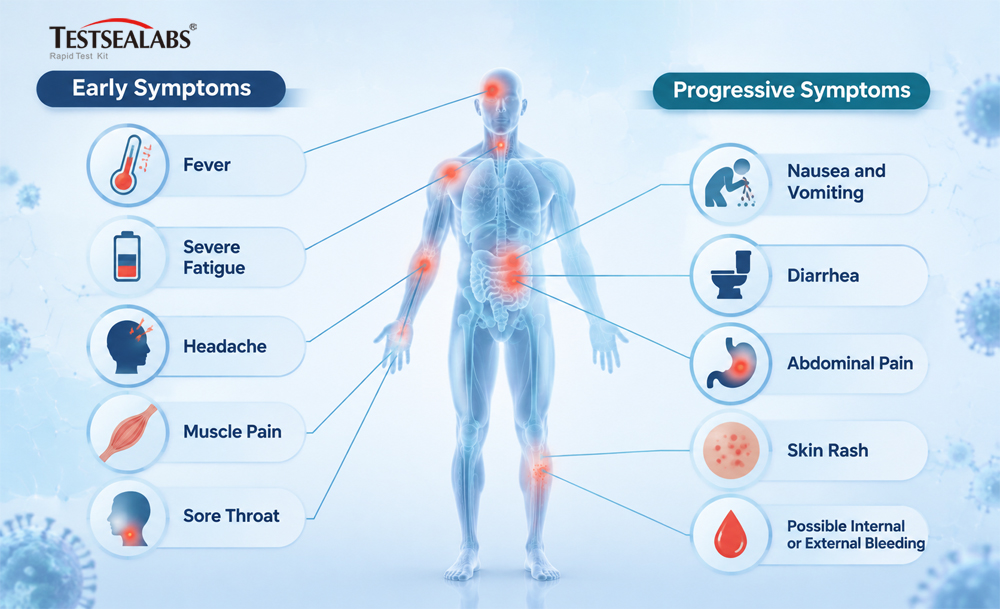
The incubation period for Ebola virus disease typically ranges from 2 to 21 days.
Early symptoms may be non-specific and can include:
- · Fever
- · Severe fatigue
- · Headache
- · Muscle pain
- · Sore throat
As the disease progresses, additional symptoms may develop:
- · Nausea and vomiting
- · Diarrhea
- · Abdominal pain
- · Skin rash
- · Unexplained bleeding or bruising in some cases
Because early symptoms can resemble those of other infectious diseases, clinical assessment and appropriate laboratory testing are important for accurate diagnosis.
Prevention and Public Health Measures
Preventing Ebola transmission requires coordinated efforts at both individual and community levels.
Key preventive measures include:
- · Avoiding direct contact with individuals suspected or confirmed to have Ebola without appropriate protective measures.
- · Practicing proper hand hygiene.
- · Following established infection prevention and control protocols in healthcare settings.
- · Ensuring safe handling of potentially infectious samples.
- · Strengthening disease surveillance, laboratory testing, and public health response systems.
Early recognition and appropriate isolation of suspected cases can help reduce further transmission.
The Role of Diagnostic Testing

Laboratory diagnosis plays an important role in identifying Ebola virus infection and supporting public health responses.
Different diagnostic methods serve different purposes:
Molecular Testing
Nucleic acid amplification tests (NAAT), including RT-PCR, are widely used to detect viral genetic material and support laboratory confirmation.
Antigen Testing
Antigen tests detect specific viral proteins and can provide an additional diagnostic approach in appropriate testing settings.
Antibody Testing
Antibody tests detect the immune response to infection. Their interpretation depends on the timing of testing and the individual’s immune response.
These methods are not interchangeable. Test selection and interpretation should follow applicable clinical guidelines and laboratory protocols.
TESTSEALABS Ebola Virus Antigen Test Cassette
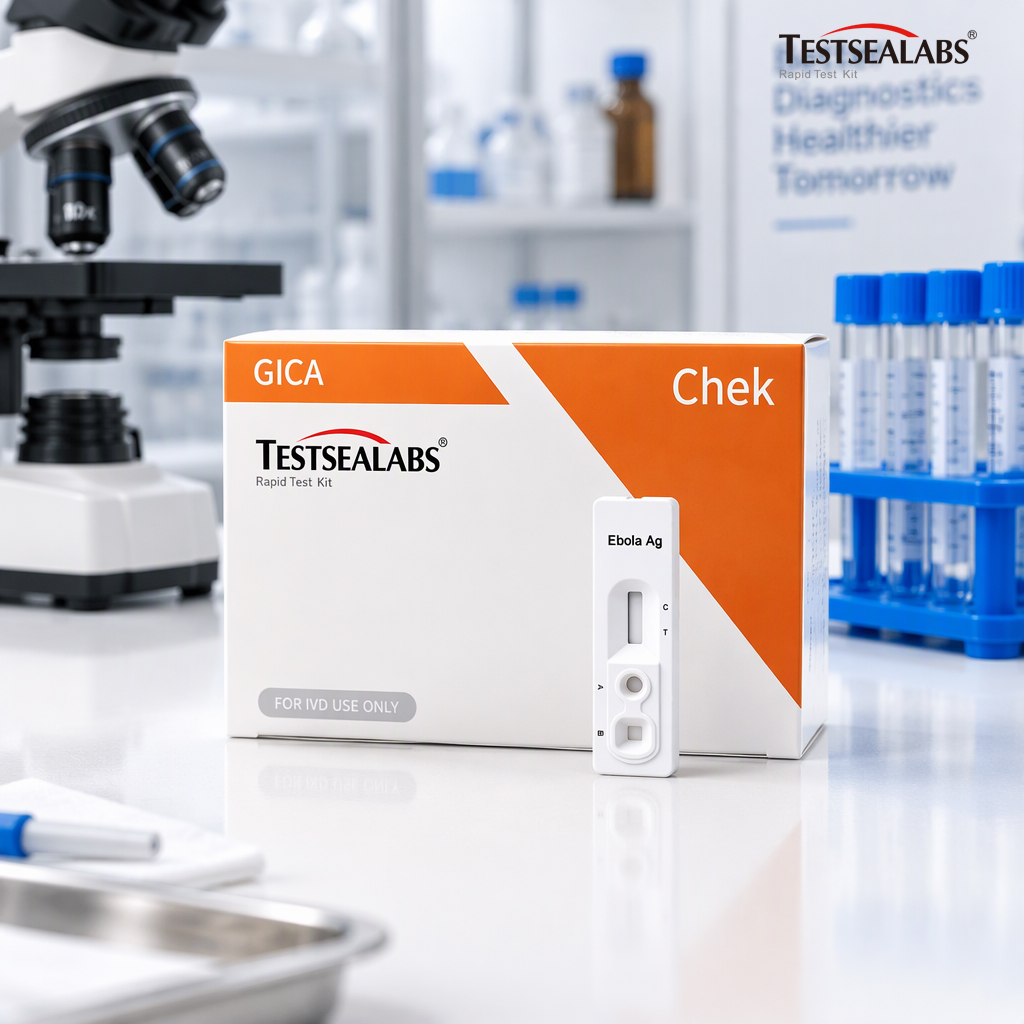
As part of its rapid diagnostic portfolio, TESTSEALABS offers the Ebola Virus Antigen Test Cassette (Fingerstick Whole Blood), designed for the qualitative detection of Ebola virus antigens in human fingerstick whole blood samples.
The test uses a chromatographic immunoassay method and is intended to support the assessment of suspected Ebola virus infection in professional testing settings.
Key Product Information
TESTSEALABS Ebola Virus Antigen Test Cassette — key product information
|
Item |
Details |
| Product | Ebola Virus Antigen Test Cassette |
| Specimen | Fingerstick whole blood |
| Test Method | Chromatographic immunoassay |
| Result Reading Time | 10 minutes |
| Intended Use | Professional in vitro diagnostic use |
The test is intended to support clinical assessment and should not be used as the sole basis for diagnosis. A negative result does not completely exclude infection. Results should be interpreted alongside clinical information and other appropriate diagnostic methods.
The applicability of the product to specific Ebola virus species or outbreak strains should be determined according to validated product documentation and applicable regulatory requirements.
Strengthening Diagnostic Preparedness
Ebola outbreaks highlight the importance of preparedness, timely detection, and coordinated public health action.
Reliable diagnostic strategies, appropriate biosafety practices, and accessible testing solutions all contribute to a stronger response to emerging infectious disease threats.
At TESTSEALABS, we remain committed to developing rapid diagnostic solutions that support healthcare professionals and global public health needs.
Post time: Nov-17-2026