
TL;DR — Key Takeaways
- HPV types 16 and 18 alone account for approximately 70% of all cervical cancer cases worldwide, according to the World Health Organization — yet most rapid screening tools test for either viral DNA or a single antigen marker, leaving dangerous diagnostic gaps that compound across high-volume settings.
- The Testsealabs HPV L1 + 16/18 E7 Antigen Combo Test Cassette detects HPV 16 E7 oncoprotein, HPV 18 E7 oncoprotein, and HPV L1 capsid protein simultaneously from one cervical swab — transforming a detection tool into a risk-stratification tool that identifies which infections are most likely progressing toward malignancy.
- The triple-marker approach delivers a strong clinical and economic case: the total cost per correctly triaged patient is significantly lower than single-analyte testing, because fewer missed precancers means fewer late-stage treatments.
- Testsealabs HPV combo cassettes store at 4–30°C with a 24-month shelf life, carry CE-IVDR marking, and are backed by over a decade of manufacturing consistency from our ISO 13485-certified Hangzhou facility.
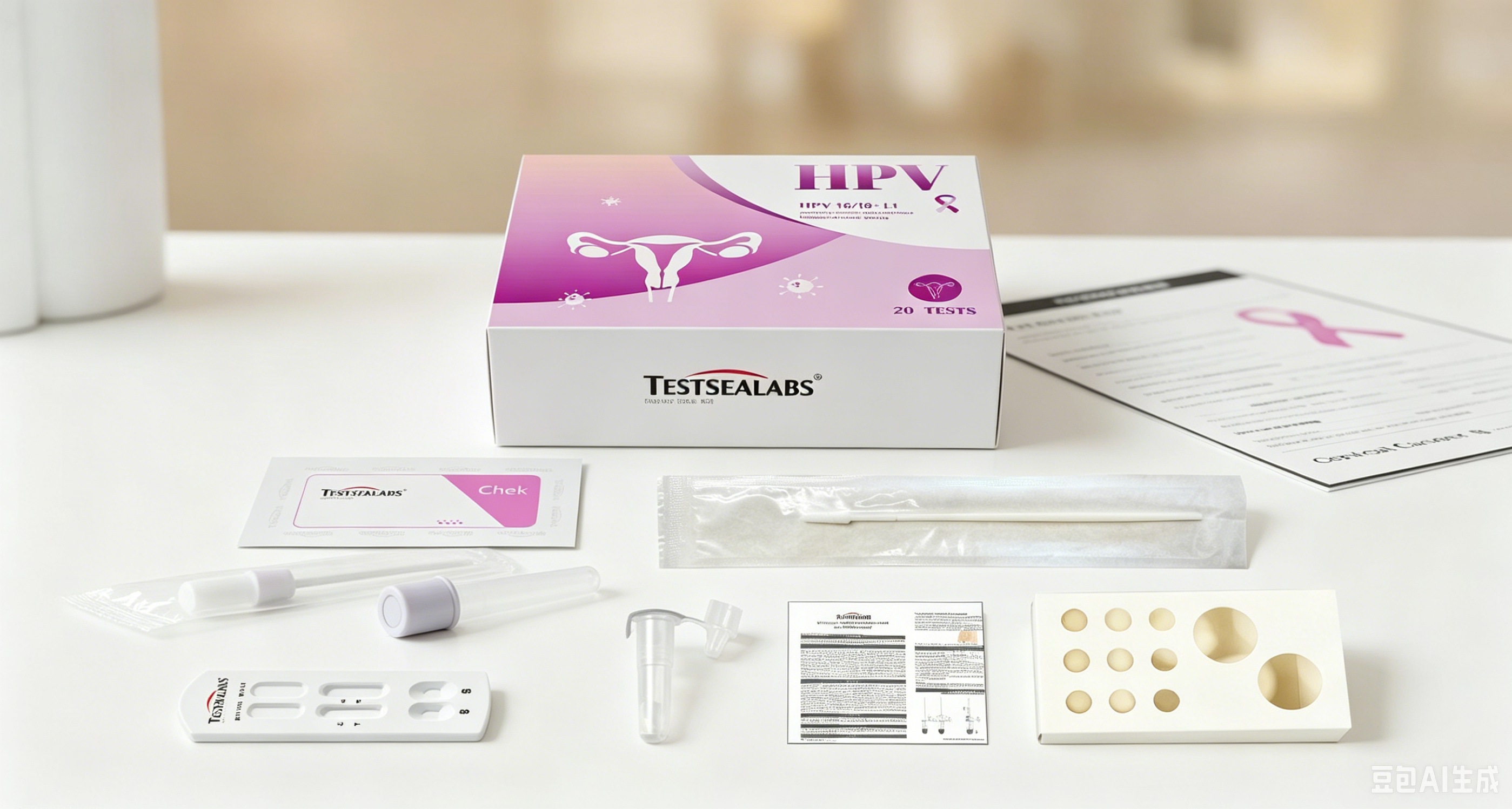
Why HPV 16/18 + L1 Triple-Marker Screening Matters Now
Cervical cancer remains the fourth most common cancer in women globally, with approximately 660,000 new cases and 350,000 deaths recorded in 2022, per the WHO fact sheet on cervical cancer. More than 90% of those deaths occur in low- and middle-income countries — precisely the markets where rapid, instrument-free diagnostic tools have the greatest impact.
I’ve visited screening camps in rural Indonesia and Nigeria where the nearest PCR lab is a six-hour drive away. In those settings, the choice isn’t between a rapid test and a molecular test — it’s between a rapid test and nothing at all. The WHO’s 90-70-90 elimination strategy explicitly calls for 70% of women to be screened by ages 35 and 45 with a high-performance test. Rapid antigen tests that deliver results in 10–15 minutes are the realistic pathway to achieving that target in resource-limited settings.
The U.S. Preventive Services Task Force now recommends primary HPV screening every 5 years for women aged 30–65, and ASCCP’s 2025 guidelines for self-collected HPV screening specifically flag HPV 16/18 positive results as requiring direct colposcopy referral — bypassing intermediate triage. When screening guidelines single out two genotypes for immediate action, it makes clinical and economic sense to build your procurement strategy around tests that detect exactly those markers.
The L1 Capsid Protein: The Missing Piece in Routine Screening
Most procurement professionals understand HPV 16/18 genotyping. Far fewer understand why the L1 capsid protein deserves an equal seat at the table — and why this third marker is what separates a competent screening program from an exceptional one.
What L1 Actually Tells You Clinically
The HPV L1 capsid protein is the major structural protein that forms the viral shell. During productive HPV infection — when the virus is actively replicating but has not yet integrated into the host genome — L1 expression is high. When integration occurs and the infection progresses toward malignancy, L1 expression drops or disappears entirely as the E2 gene is disrupted and E6/E7 oncoproteins are overexpressed.
A landmark 2018 study published in the Journal of Gynecologic Oncology was the first to validate HPV L1 capsid protein expression as a predictive marker for CIN2+ cervical lesions. The researchers found that L1 positivity was significantly lower in CIN2/3 specimens than in normal tissue, and that combining L1 immunocytochemistry with the E2/E6 ratio produced strong predictive accuracy. When L1 is absent, the probability of high-grade lesions increases dramatically.
Clinical takeaway: A positive HPV 16/18 E7 result alone tells you what virus is present. Adding L1 status tells youwhether that infection is likely progressing toward malignancy — transforming a detection tool into a risk-stratification tool.
I’ve seen this play out in practice. A women’s health chain in Southeast Asia that switched from single-analyte HPV 16/18 testing to our triple-marker combo reported that L1-negative / E7-positive results triggered colposcopy referrals that caught five CIN3 cases in the first quarter alone — cases their previous screening protocol would have categorized as “HPV positive, monitor” and likely missed until they became invasive.
This is why I describe L1 as the “progression sensor” in our test architecture. HPV 16/18 E7 tells you the enemy is present. L1 tells you whether that enemy is winning. A screening program that cannot distinguish transient infection from progressive disease will inevitably over-treat some patients and under-treat others. The L1 marker helps solve that allocation problem directly — something no single-analyte HPV test on the market can offer at this price point.
Triple-Marker vs. Single-Analyte Testing: The Clinical and Economic Case
Let’s move from science to spreadsheet. Here’s the comparison I walk procurement directors through when they ask whether the incremental cost of a triple-marker test justifies itself.
| Parameter | Single-Analyte HPV 16/18 E7 Test | Triple-Marker HPV 16/18 + L1 Combo |
|---|---|---|
| Markers detected | 2 (HPV 16 E7 + HPV 18 E7) | 3 (HPV 16 E7 + HPV 18 E7 + L1 capsid) |
| Risk stratification | Detect only — binary positive/negative | Detect + stratify — L1 status indicates progression risk |
| False negative risk | Higher — misses L1-negative progressing infections | Lower — L1 absence flags high-risk scenarios |
| Colposcopy referral accuracy | Moderate — all positives referred | High — L1-negative cases prioritized for immediate referral |
| Per-test consumable cost | Lower unit price | A moderate premium depending on volume |
| Per correct diagnosis cost | Higher — downstream costs of missed cases | Lower — fewer missed precancers = fewer late-stage treatments |
| Screening throughput | Same workflow: 1 swab, 1 cassette, 10–15 min | Same workflow: 1 swab, 1 cassette, 10–15 min |
The economic argument isn’t about the per-unit cassette price — it’s about the total cost per correctly triaged patient. A missed CIN2/3 case that progresses to invasive cervical cancer costs a health system anywhere from $5,000 to $30,000 in treatment, depending on stage and setting. Multiply that by even a small improvement in detection rate across 50,000 annual screenings, and the triple-marker approach pays for itself many times over.
I’ve negotiated bulk contracts where the price difference between single-analyte and triple-marker cassettes was modest at volumes above 500,000 units per year. At that scale, the clinical upside is essentially free.
Complementary Value with TCT (Liquid-Based Cytology)
No single test catches everything. The HPV 16/18 + L1 antigen combo test is not a replacement for liquid-based cytology (TCT/ThinPrep) — it’s a strategic complement that, when deployed together, closes the diagnostic gap that either method leaves open alone.
How the Two Methods Work Together
TCT examines cervical cells for morphological abnormalities. It detects cellular changes that havealready occurred. HPV antigen testing detects the oncoproteins and capsid proteins driving those cellular changes before they become visible under a microscope. One looks backward at damage done; the other looks forward at damage in progress.
A 2025 study on TCT + HPV DNA screening found that the combined screening approach demonstrated significantly higher diagnostic accuracy for detecting HSIL or above compared to either TCT or HPV testing alone. Each method catches cases the other might miss, and the combined protocol provides significantly higher diagnostic accuracy than either modality alone.
Recommended screening protocol for women’s health centers: Primary screening with the HPV 16/18 + L1 triple-marker cassette (10–15 minute result). Patients who are L1-negative / E7-positive → immediate colposcopy referral. Patients who are HPV E7-positive / L1-positive → reflex TCT for cytological grading. HPV-negative patients → routine rescreening per national guidelines. This triage pathway maximizes resource allocation by directing colposcopy capacity to the highest-risk patients.
I’ve helped several large diagnostic chains implement exactly this protocol. The feedback is consistent: colposcopy wait times drop because referrals are better targeted, and patient satisfaction improves because women with low-risk results avoid unnecessary invasive procedures.
Bulk Procurement Strategy for Women’s Health Centers
Drawing from ten years of managing international IVD supply chains, here’s a structured framework I use with procurement teams planning large-scale HPV screening deployments.
Volume Tier Planning
Your annual test volume determines not just your per-unit price, but your supply chain architecture. Based on our experience shipping to 100+ countries, here’s how I frame the tiers:
- Entry tier (10,000–50,000 tests/year): Suitable for single-site women’s hospitals or regional clinics. Standard packaging, monthly air freight shipments. Per-unit pricing at standard wholesale rates.
- Growth tier (50,000–300,000 tests/year): Multi-site clinic networks or provincial health programs. Volume discount applies. Quarterly sea freight with buffer stock minimizes logistics cost per unit.
- Enterprise tier (300,000–1,000,000+ tests/year): National screening programs, large diagnostic chains, or government tenders. Maximum volume discount, dedicated production batches, OEM customization included. Sea freight with bonded warehouse options.
Why Testsealabs for Bulk Orders
We’ve been manufacturing rapid diagnostic tests since 2015 from our ISO 13485-certified facility in Hangzhou, China. That’s over a decade of batch-to-batch consistency. Our production capacity supports multi-million unit monthly output across our IVD portfolio — meaning we don’t just quote delivery dates, we hit them.
For procurement directors evaluating suppliers, I recommend requesting these three documents in your RFQ: (1) ISO 13485 certificate with current scope, (2) batch release testing protocols for HPV cassettes, and (3) stability study data covering your target climate zone. I’ll provide all three within 24 hours of a serious inquiry — it’s standard practice for us.
Inventory Management for High-Volume Programs
One operational detail that often gets overlooked in procurement planning is shelf-life management. Our HPV combo cassettes carry a 24-month shelf life from date of manufacture, with a recommended storage temperature of 4–30°C. For programs ordering 100,000+ units quarterly, I always recommend a first-expiry-first-out (FEFO) inventory rotation and suggest maintaining a three-month safety stock buffer. This buffer accounts for both shipping variability (customs clearance delays are a reality in many of our markets) and unexpected demand spikes during screening campaigns. The most cost-effective procurement isn’t the one with the lowest unit price — it’s the one with the lowest total delivered cost, including waste from expired inventory, emergency air freight charges, and stock-out penalties.
OEM Customization: Your Brand, Your Market, Your Specifications
One of the questions I field most frequently from distributors and health chains is about OEM capabilities. Here’s exactly what we offer.
Customization Dimensions
- Branding & Packaging: Your logo, brand name, and color scheme on individual pouches, kit boxes, and shipping cartons. We’ve executed OEM packaging for brands now recognized across 40+ markets.
- Instructions for Use (IFU): Full translation and localization into any language — we regularly produce IFUs in English, French, Spanish, Portuguese, Arabic, Russian, Swahili, Bahasa Indonesia, Vietnamese, Thai, and Hindi. Regulatory-format IFUs for specific market registrations are standard.
- Kit Configuration: Cassette-only bulk packs, or complete kits including extraction buffer, sterile swabs, droppers, and workstation. Your choice.
- Box Size & Unit Count: 1T, 20T, 25T, or 40T per box. Custom counts available for tender specifications.
- Regulatory Support: Technical dossiers, Certificate of Free Sale, Certificate to Foreign Government, and stability data packages to support your local market registration.
OEM Workflow Timeline
- Week 1–2: Artwork and IFU draft exchange, regulatory document review
- Week 3–4: Pre-production sample approval (we ship physical samples with your branding)
- Week 5–8: Production run (dependent on volume and queue)
- Week 9–10: QC release testing, packing, and shipment
I personally oversee OEM project kickoffs to ensure no detail gets lost between your design team and our production line. After ten years, I’ve learned that the distance between a specification document and a finished product box is filled with small decisions — label adhesive type, pouch tear-notch position, desiccant sachet size — and those decisions matter when the product reaches a clinic shelf in Mombasa or Manila.
CE/ISO Quality Backed by Global Distribution Experience
Every Testsealabs product shipped carries the weight of certifications earned over a decade of manufacturing.
Our HPV combo test cassettes are manufactured under an ISO 13485:2016 quality management system and carry CE marking for the European market. We hold additional certifications including ISO 9001 and MDSAP, reflecting multi-market compliance readiness.
Our distribution footprint now spans more than 100 countries across Asia, Africa, the Middle East, Latin America, and Europe. That reach isn’t just a vanity metric — it means our products have been reviewed by dozens of national regulatory authorities, each with their own import requirements and quality expectations. When a procurement director in Nigeria asks whether our cassettes hold up in tropical storage conditions, I can point to stability data from actual shipments to Lagos, not just lab simulations.
For context on our broader IVD portfolio serving women’s health — including pregnancy tests, gynecological infection panels, and tumor marker tests — visit our Human Products overview page. The same quality infrastructure that produces millions of pregnancy test cassettes annually also produces our HPV combo tests, with the same batch traceability and QC rigor.
What to verify with any IVD supplier: Ask for their notified body number (for CE marking), the scope of their ISO 13485 certificate (verify it explicitly covers in-vitro diagnostic rapid tests), and whether they maintain a post-market surveillance system per ISO 13485 Clause 8.2. These are not negotiable for serious procurement — and we provide all three as standard documentation.
Frequently Asked Questions
What specimen type is required for the HPV 16/18 + L1 combo test?
The test uses a female cervical swab specimen. A sterile swab is used to collect cells from the cervical transformation zone — the same sample collection procedure used for conventional Pap smears. No venous blood draw, no centrifugation, no lab equipment required. The swab is mixed with the provided extraction buffer, and 3–4 drops are applied to the cassette sample well.
How long does it take to get a result?
Results are read at 10–15 minutes after sample application. The cassette displays control and test lines — a visible control line (C) confirms the test is valid, and colored lines in the HPV 16, HPV 18, and/or L1 test regions indicate positivity for each respective marker. The test can be performed at room temperature without any instrumentation.
What’s the minimum order quantity for wholesale orders?
Our standard wholesale MOQ for the HPV combo test starts at 5,000 test cassettes. For OEM or custom-branded orders, the minimum is typically higher depending on packaging complexity and customization requirements. I work directly with each client to structure an initial evaluation order followed by a long-term supply agreement. Contact me for a tailored quotation based on your projected annual volume.
Is the test CE marked and suitable for import into my country?
Yes, our HPV combo test cassettes are CE marked under the In Vitro Diagnostic Medical Devices Regulation (IVDR) and manufactured under ISO 13485:2016 QMS. We provide a full registration support package including Certificate of CE Marking, ISO 13485 certificate, Certificate of Free Sale, product technical file summary, and stability study data. We can advise on typical timelines and documentation needs for your specific market.
How should the HPV combo test be used alongside TCT screening?
The recommended protocol is complementary: use the HPV 16/18 + L1 combo test as a primary screening tool with rapid on-site results. Patients who test L1-negative / E7-positive should receive immediate colposcopy referral due to high progression risk. Patients who test E7-positive / L1-positive benefit from reflex TCT for cytological grading — since L1 presence suggests viral production without full integration. HPV-negative patients follow routine rescreening intervals per national guidelines. This layered approach reduces unnecessary colposcopies while ensuring high-risk cases are caught early.
Post time: Jun-11-2026