
What is Malaria?
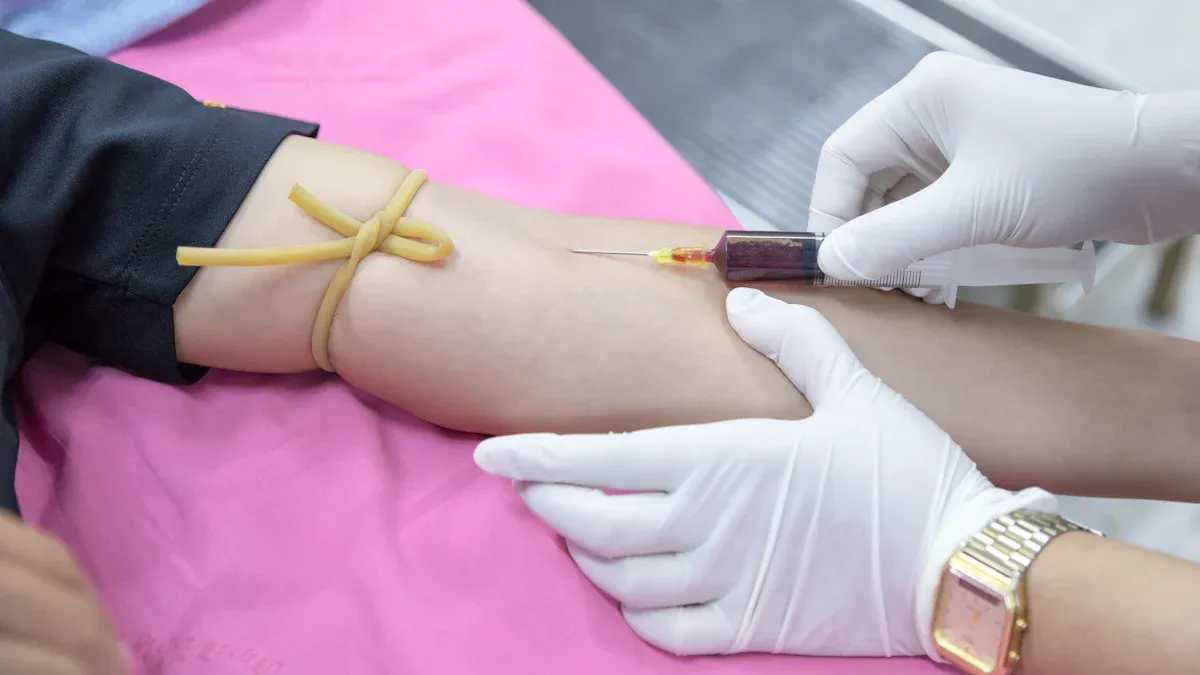
Malaria is a life-threatening disease caused by Plasmodium parasites, transmitted to humans through the bites of infected female Anopheles mosquitoes. The parasites follow a complex life cycle: upon entering the body, they first invade liver cells to multiply, then release sporozoites that infect red blood cells. Within red blood cells, the parasites reproduce rapidly; when the cells rupture, they release toxins into the bloodstream, triggering severe symptoms such as sudden chills, high fever (often reaching 40°C), fatigue, and in severe cases, organ failure or death.
Children under 5 years old, pregnant women, and individuals with weakened immune systems are at the highest risk. While antimalarial drugs like chloroquine remain critical for treatment, early and accurate diagnosis is key to effective management and preventing transmission. Mosquito control measures (e.g., bed nets, insecticides) also play a vital role in prevention, but timely detection remains the cornerstone of malaria control.

Immune Colloidal Gold Technique: Revolutionizing Malaria Rapid Tests
Malaria rapid test kits, including the Malaria Ag P.f/P.v Tri-line Test Cassette, Malaria Ag P.f/Pan Test, Malaria Ag P.f/P.v/Pan Combo Test, Malaria Ag P.v Test Cassette, and Malaria Ag P.f Test Cassette, now leverage the immune colloidal gold technique for improved accuracy. This technology has emerged as a leading method for malaria rapid test kits, using colloidal gold particles conjugated with antibodies to detect malaria antigens in whole blood.
How It Works
The immune colloidal gold technique operates on the principle of antigen-antibody interaction:
- Colloidal gold particles (with uniform sizes ranging from 24.8 to 39.1 nm) are bound to antibodies targeting malaria-specific antigens (e.g., histidine-rich protein II for P. falciparum).
- When a blood sample is applied to the test cassette, these gold-antibody complexes bind to any malaria antigens present, forming visible colored lines on the test strip.
Key Advantages
- Speed: Delivers results in 10–15 minutes, with preliminary lines appearing within 2 minutes.
- Accuracy: Achieves a detection accuracy of nearly 99%, minimizing false negatives.
- Multi-species detection: Identifies antigens from major Plasmodium species, including P. falciparum, P. vivax, P. ovale, and P. malariae.
- Robustness: Consistent performance across batches and sample types, with minimal background interference, even in resource-limited settings.
Our Product Portfolio: Tailored for Diverse Scenarios
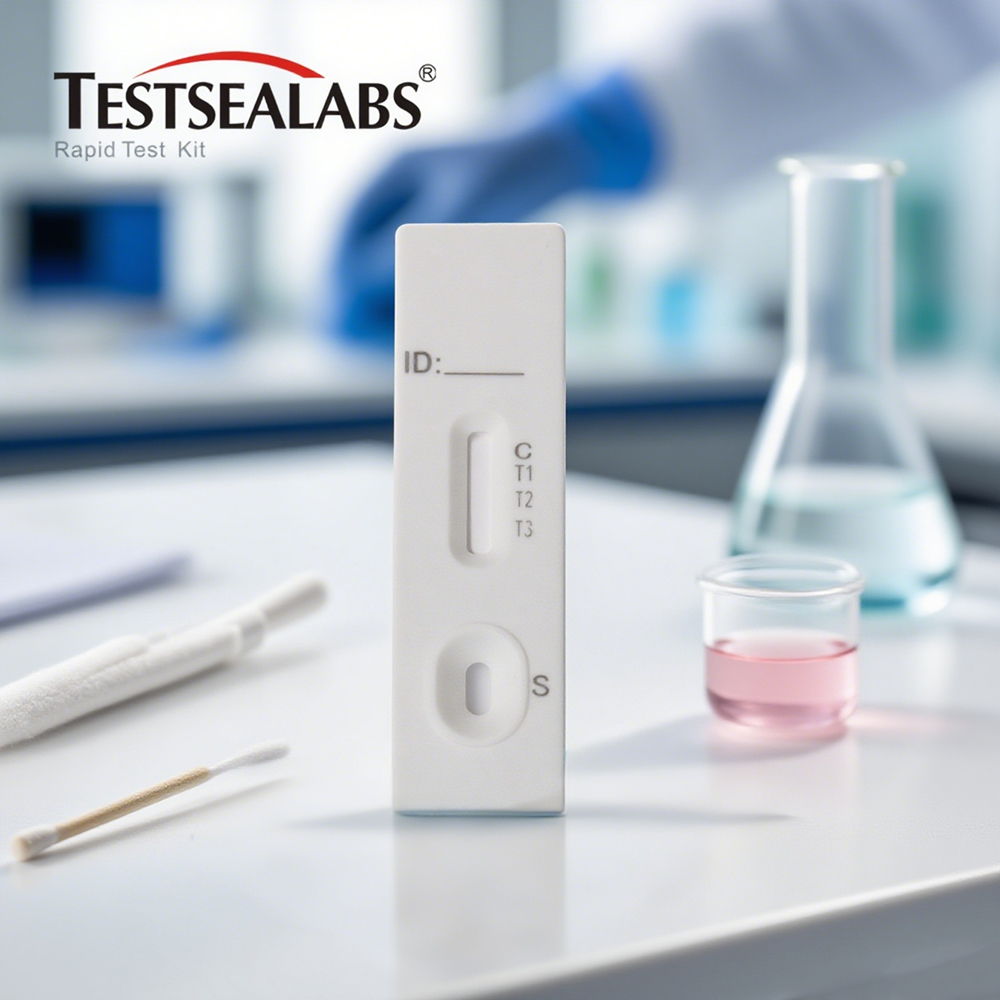
We offer a range of malaria rapid test kits based on the immune colloidal gold technique, designed to meet the needs of early protection, home testing, and large-scale screening. The table below summarizes their key features:
| Product Name | Target Plasmodium Species | Key Features | Ideal Scenarios |
| Malaria Ag P.f Test Cassette | P. falciparum (most deadly species) | Single-species detection; high specificity | Home testing in P. falciparum-endemic areas |
| Malaria Ag P.v Test Cassette | P. vivax (relapsing infections) | Focused on relapsing species; easy to use | Early protection in regions with P. vivax |
| Malaria Ag P.f/P.v Tri-line Test Cassette | P. falciparum + P. vivax | Dual-species detection in one test | Community clinics; mixed-transmission areas |
| Malaria Ag P.f/Pan Test | P. falciparum + All major species | Detects P. falciparum + pan-species antigens | Routine screening in diverse endemic regions |
| Malaria Ag P.f/P.v/Pan Combo Test | P. falciparum + P. vivax + All others | Comprehensive multi-species detection | Large-scale surveys; national malaria programs |
| Malaria Ag Pan Test | All major Plasmodium species | Broad coverage for unknown or mixed infections | Epidemic response; border screening |
Clinical Validation of Tri-line Kits
A field study in Tanzania evaluated the clinical effectiveness of tri-line kits using the immune colloidal gold technique:
| Aspect | Details |
| Study Design | Cross-sectional field evaluation with symptomatic patients |
| Sample Size | 1,630 participants |
| Sensitivity/Specificity | Comparable to standard SD BIOLINE mRDT |
| Performance | Consistent across parasite densities and blood sample types |
| Clinical Relevance | Effective for malaria diagnosis in endemic field settings |
Applications Across Scenarios
- Early protection: Kits like the Malaria Ag P.v Test Cassette enable individuals in high-risk areas to detect infections at the earliest stage, preventing progression to severe disease.
- Home testing: User-friendly designs (e.g., Malaria Ag P.f Test Cassette) allow families to self-test without specialized training, ensuring timely intervention.
- Large-scale screening: Combo and pan-species tests (e.g., Malaria Ag P.f/P.v/Pan Combo Test) streamline mass testing in schools, workplaces, or during outbreaks, supporting rapid containment.
FAQ
1. How does the immune colloidal gold technique ensure accurate results?
The technique uses uniformly sized colloidal gold particles (24.8 to 39.1 nm) conjugated with specific antibodies, ensuring consistent antigen-antibody binding. This reduces false negatives and background interference, achieving an accuracy rate close to 99%.
2. Can these test kits detect all types of malaria parasites?
Our kits cover major Plasmodium species: P. falciparum, P. vivax, P. ovale, and P. malariae. The Malaria Ag Pan Test and combo kits (e.g., Malaria Ag P.f/P.v/Pan Combo Test) are designed for broad detection of all major species.
3. How quickly do the kits deliver results?
Results are available within 10–15 minutes, with test lines often appearing within 2 minutes, making them ideal for rapid decision-making in clinical or home settings.
4. Are the kits suitable for use in remote or low-resource areas?
Yes. The immune colloidal gold technique is robust and requires no specialized equipment. Kits function reliably in hot climates and with minimal training, making them suitable for remote regions with limited resources.
5. What makes tri-line/combo kits better than single-species kits?
Tri-line and combo kits allow simultaneous detection of multiple species in one test, reducing the need for repeated testing. This is especially valuable in regions with mixed malaria transmission (e.g., areas with both P. falciparum and P. vivax).
Conclusion
The immune colloidal gold technique has transformed malaria diagnostics, offering speed, accuracy, and versatility. Our product portfolio, tailored for early protection, home use, and large-scale screening, empowers individuals, healthcare workers, and public health programs to detect malaria promptly—critical for reducing transmission and advancing global malaria elimination goals.
Post time: Aug-13-2025