
Understanding the current measles situation, recognizing the warning signs, and protecting communities through vaccination and appropriate antibody testing.
1. A Growing Public Health Concern: Measles Cases Rise Across the United States
Measles, one of the most contagious vaccine-preventable diseases, is once again drawing international attention as outbreaks continue to affect communities across the United States.
According to the U.S. Centers for Disease Control and Prevention (CDC), 4,080 confirmed measles cases had been reported in the United States as of October 8, 2026, with cases reported across 47 jurisdictions. This represents a substantial increase compared with the 285 cases reported in 2024 and the 2,289 cases reported in 2025. The 2026 figures remain preliminary and may be revised as surveillance continues.
The resurgence highlights a critical public health challenge: measles can spread rapidly when the virus reaches communities where vaccination coverage is insufficient or immunity is uncertain.
Although measles was declared eliminated from continuous endemic transmission in the United States in 2000, elimination does not mean the disease has disappeared. Imported infections and subsequent community transmission can still trigger outbreaks.
In an increasingly connected world, international travel, population movement, and gaps in routine immunization make measles prevention a shared global responsibility.
Source: CDC, Measles Cases and Outbreaks, updated October 9, 2026.
2. Why Is Measles So Contagious?
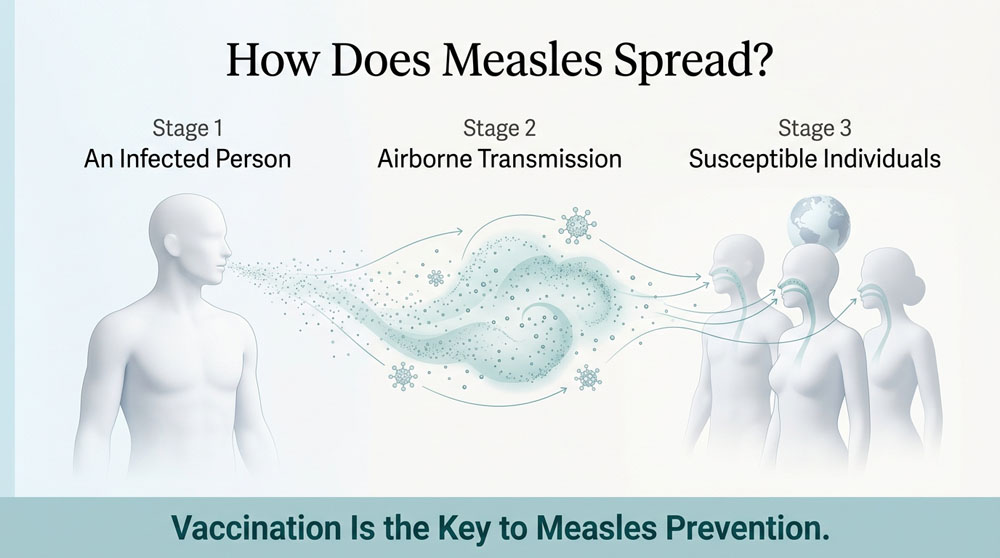
Measles is caused by the measles virus and spreads primarily through the air when an infected person breathes, coughs, or sneezes.
The virus can remain infectious in the air or on contaminated surfaces for up to two hours under certain conditions. According to the World Health Organization (WHO), as many as 90% of susceptible close contacts may become infected.
An infected person can transmit measles from four days before the rash appears until four days afterward. This means transmission may occur before the disease is recognized.
Several factors can contribute to outbreaks:
- Incomplete vaccination: People who have not received the recommended vaccine doses may remain susceptible.
- Waning community protection: When vaccination coverage falls, the virus has more opportunities to spread.
- International travel: Infected travelers can introduce measles into communities with limited immunity.
- Delayed recognition: Early symptoms resemble those of other respiratory illnesses, making timely identification important.
Measles is not simply a childhood rash. It is a serious infectious disease that can affect people of different ages and may lead to severe complications.
3. Recognizing the Symptoms: When Should You Be Concerned?
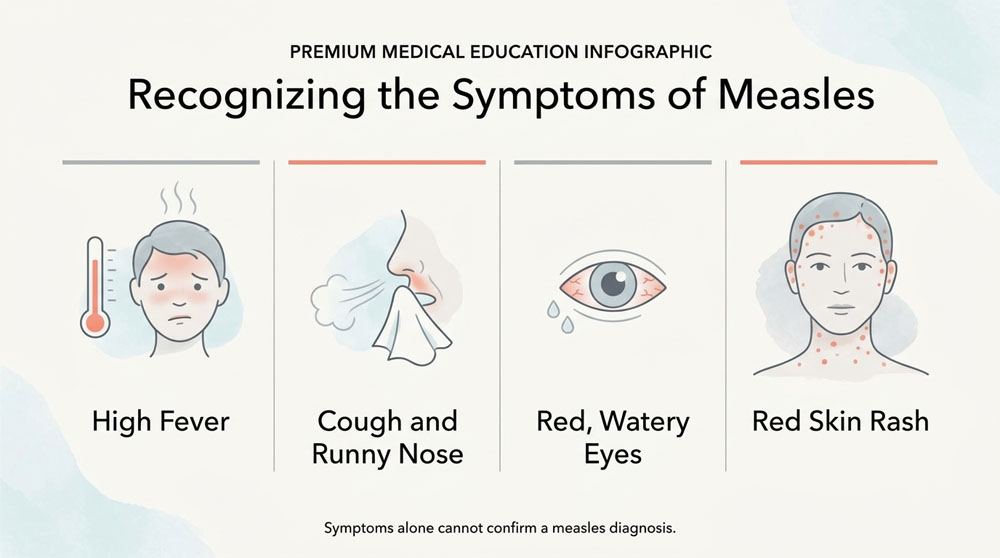
Symptoms typically develop around 7–14 days after exposure, although the timing can vary.
Early symptoms may include:
- High fever
- Cough
- Runny nose
- Red, watery eyes
- Small white spots inside the mouth, known as Koplik spots
A characteristic red rash usually develops several days after the initial symptoms, beginning on the face or upper neck before spreading down the body.
Why early recognition matters
Most people recover, but measles can cause serious complications, including:
- Pneumonia and severe respiratory illness
- Ear infections and possible hearing complications
- Severe diarrhea and dehydration
- Encephalitis, which can cause brain injury
- Pregnancy-related complications, including premature birth
Children under five, adults over 30, pregnant people, and individuals with weakened immune systems may face a higher risk of severe outcomes.
Anyone who develops symptoms after a known exposure or recent travel to an affected area should contact a healthcare professional promptly. Call ahead before visiting a healthcare facility to reduce the risk of exposing other people.
Source: WHO, Measles Fact Sheet, July 15, 2026.
4. Prevention Starts with Vaccination
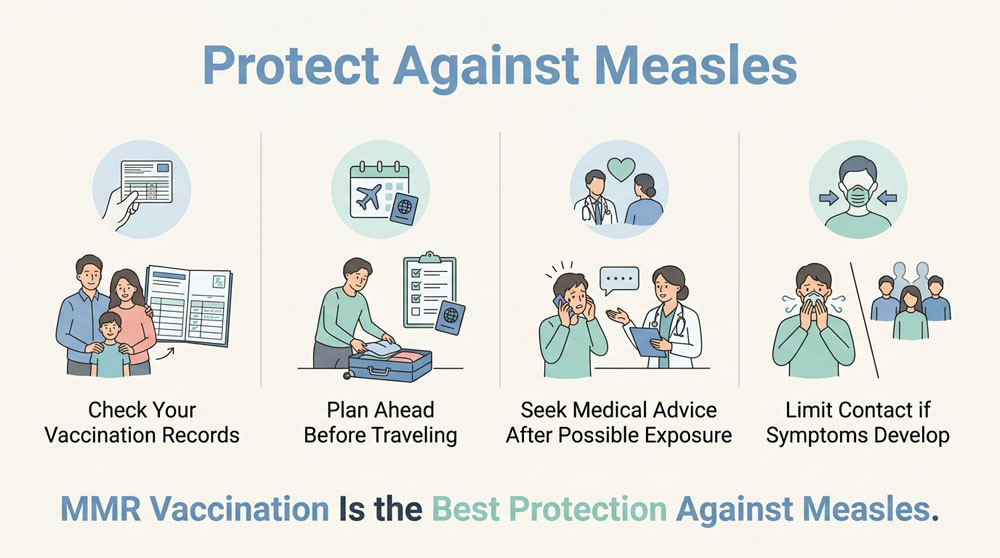
Vaccination remains the most effective way to prevent measles and limit community transmission.
The measles, mumps, and rubella (MMR) vaccine provides protection against measles. In the United States, the routine childhood schedule generally includes two doses: the first at 12–15 months of age and the second at 4–6 years.
People should review their vaccination records and consult a healthcare professional if their vaccination status is uncertain. Recommendations may differ for international travelers, outbreak exposures, and other specific circumstances.
Practical prevention measures include:
- Check vaccination records. Confirm that children and eligible adults have received the recommended doses. Healthcare professionals can advise whether additional vaccination is appropriate.
- Seek advice before high-risk travel. Travelers should review destination-specific health guidance and allow sufficient time for vaccination when indicated.
- Respond promptly to possible exposure. Contact a healthcare provider or local public health department for advice. Post-exposure vaccination or other interventions may be time-sensitive and depend on individual circumstances.
- Reduce opportunities for transmission. If measles is suspected, avoid public gatherings and do not visit healthcare facilities without calling ahead. Follow instructions from healthcare professionals and public health authorities.
- Avoid relying on symptoms alone. Fever and rash can have many causes. Suspected measles requires appropriate clinical and public health evaluation.
Vaccination protects individuals while helping build the community-level immunity needed to prevent outbreaks.
5. What Role Does Measles Antibody Testing Play?
Vaccination history is an important indicator of protection, but healthcare professionals may sometimes need additional laboratory information to help assess a person’s measles antibody status or investigate a suspected infection.
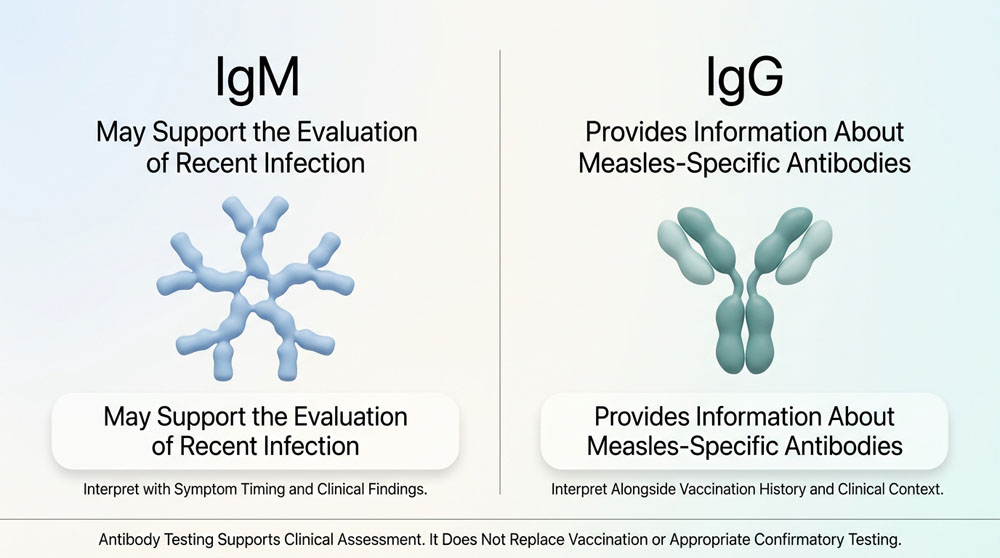
Measles antibody testing can detect two important antibody classes: IgM and IgG.
IgM: A clue in the evaluation of recent infection Measles-specific IgM may appear during a recent infection and can support the evaluation of suspected measles. However, timing matters: IgM may not yet be detectable during the first few days after rash onset, and false-positive results are possible.
IgG: Information about measles-specific antibodies Measles-specific IgG can provide evidence of an antibody response associated with previous infection or vaccination. Laboratory evidence of immunity is generally assessed using appropriately validated IgG testing, interpreted alongside vaccination records and clinical context.
A positive IgG result does not, by itself, establish that a person is currently infected. Likewise, a negative antibody result does not always exclude an infection, particularly when testing is performed too early.
An important distinction: Rapid IgG/IgM antibody tests are not interchangeable with molecular tests such as real-time RT-PCR. When measles is suspected, healthcare professionals and public health authorities should select the appropriate diagnostic approach based on symptoms, exposure history, timing, and applicable reporting requirements.
Antibody testing should complement—not replace—vaccination, clinical assessment, or recommended public health procedures.
Source: CDC, Laboratory Testing for Measles and Measles Serology Testing.
6. TESTSEALABS Measles Virus Antibody IgG/IgM Test Cassette
Supporting timely and appropriate laboratory assessment is an important part of infectious disease management.
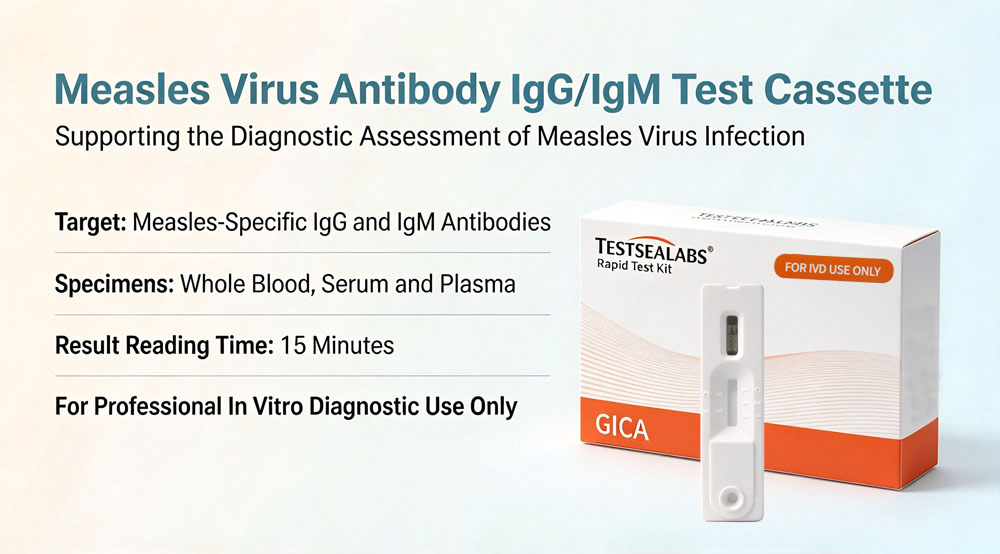
The TESTSEALABS Measles Virus Antibody IgG/IgM Test Cassette is a rapid chromatographic immunoassay designed for the qualitative detection of measles virus-specific IgG and IgM antibodies in whole blood, serum, or plasma.
Key product features
- Dual antibody detection: Detects measles-specific IgG and IgM.
- Multiple specimen options: For use with whole blood, serum, or plasma.
- Rapid results: Read results at 15 minutes, according to the instructions for use.
- Visual interpretation: A control line and separate IgG/IgM test lines support interpretation of the qualitative result.
Designed for professional in vitro diagnostic use The product is intended for professional in vitro diagnostic use as an aid in the diagnosis of measles virus infection. Results should be interpreted together with clinical findings and other relevant laboratory information.
It does not determine the exact concentration of antibodies, independently establish protective immunity, or replace confirmatory testing when indicated. A negative result does not rule out measles infection.
Healthcare providers should follow the product instructions for use, local diagnostic guidelines, and applicable public health requirements.
7. Raising Awareness, Supporting Better Diagnostic Decisions
The resurgence of measles in the United States is a reminder that vaccine-preventable diseases can re-emerge when immunity gaps persist.
Prevention begins with vaccination, awareness, and timely medical advice. Appropriate laboratory testing can provide additional information to support healthcare professionals in evaluating suspected infections and antibody status.
At TESTSEALABS, we are committed to supporting healthcare professionals and diagnostic partners with rapid diagnostic solutions for evolving healthcare needs.
Post time: Oct-13-2026