
evolutionary 3-in-1 Gastrointestinal Test Kits: Fast, Pain-Free Screening for Early Disease Detection

For millions worldwide, digestive discomfort has become a quiet, persistent concern. A late-night stomachache brushed off as “indigestion,” occasional bloating dismissed as a “bad meal,” or fatigue attributed to a “busy schedule”—these small, everyday symptoms often hide a more serious reality: gastrointestinal (GI) diseases are on the rise, with colorectal cancer now ranking as the third most common cancer globally, and Helicobacter pylori (H. pylori) infections affecting over 50% of the world’s population.
The biggest challenge? Most GI conditions show no obvious warning signs in their early stages. By the time symptoms like persistent abdominal pain, blood in stool, or unexplained weight loss appear, treatment options become more limited, and survival rates drop dramatically. According to the World Health Organization, early screening for GI diseases can increase colorectal cancer survival rates by up to 90%—yet less than 40% of at-risk individuals undergo regular screening. The barrier? Traditional tests often require invasive procedures (like endoscopies), long lab wait times (up to a week for results), or costly clinic visits—making them inaccessible or unappealing for many.
Today, that barrier is being torn down. Two innovative 3-in-1 gastrointestinal test kits are entering the global market, designed to transform how we approach GI health screening. Built to address the core pain points of traditional methods, these kits turn complex, intimidating screening into a simple, fast, and private process—empowering individuals to catch early warning signs before symptoms escalate.
Breakthrough Design: One Step, Three Critical Results
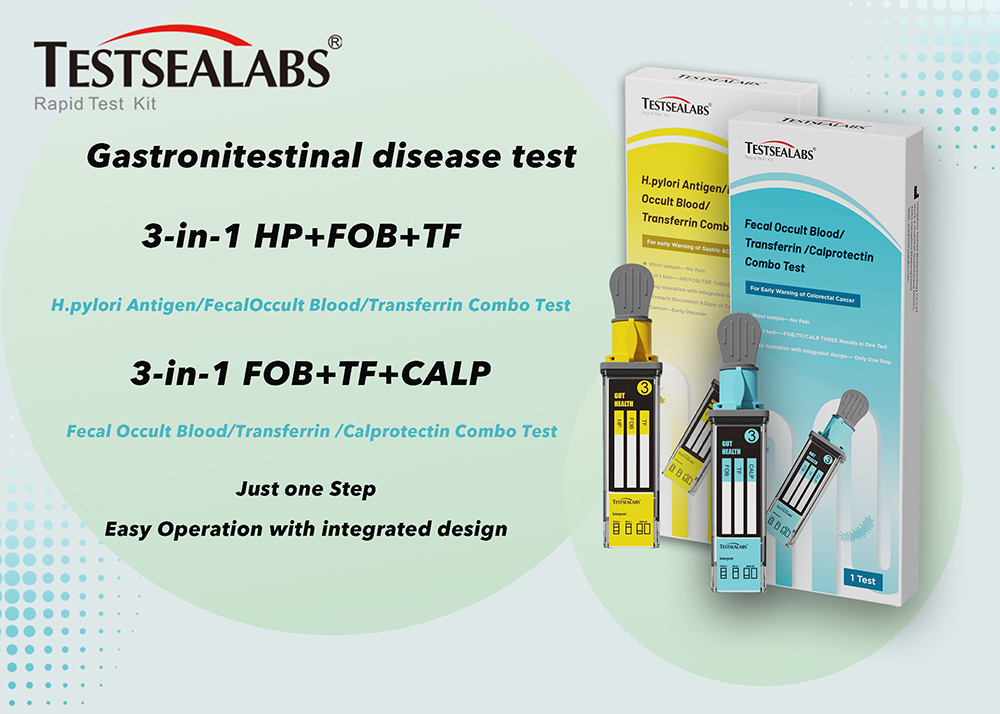
Developed with both personal and professional use in mind, the new test kits leverage an integrated, user-friendly design that eliminates the complexity of traditional screening. Unlike lab tests that require multiple samples, paperwork, or follow-up appointments, these kits deliver three accurate results in a single test—all within just 5 minutes. Whether used at home after a bout of unexplained stomach discomfort or in a clinic to triage patients, they make GI screening accessible to anyone, anywhere.
Notably, the 3-in-1 HP+FOB+TF Test Kit (Helicobacter Pylori+Fecal Occult Blood+Transferrin Combo Test) adopts advanced technology: it is a rapid chromatographic immunoassay—a cutting-edge method that enables qualitative detection of three key targets in feces: H. pylori (Helicobacter pylori), human hemoglobin (a marker for fecal occult blood), and human transferrin. This technical design ensures high accuracy while maintaining the kit’s simplicity of use.
Below is a detailed comparison of the two 3-in-1 test kits, highlighting how each targets specific GI health needs while sharing game-changing advantages:
| Feature | 3-in-1 HP+FOB+TF Test Kit (Helicobacter Pylori+Fecal Occult Blood+Transferrin Combo Test) | 3-in-1 FOB+TF+CALP Test Kit | Shared Advantages |
| Key Biomarkers Tested | Helicobacter Pylori (HP), Fecal Occult Blood (FOB, detected via human hemoglobin), Transferrin (TF) Technology: Rapid chromatographic immunoassay (qualitative detection in feces) | Fecal Occult Blood (FOB, detected via human hemoglobin), Transferrin (TF), Calprotectin (CALP) | - Rapid 5-minute results (no week-long waits)- One-step operation (no technical training needed)- No pain or invasive procedures (no needles or endoscopies)- Confidential at-home use (privacy without clinic visits)- Cost-controllable (a fraction of lab test costs) |
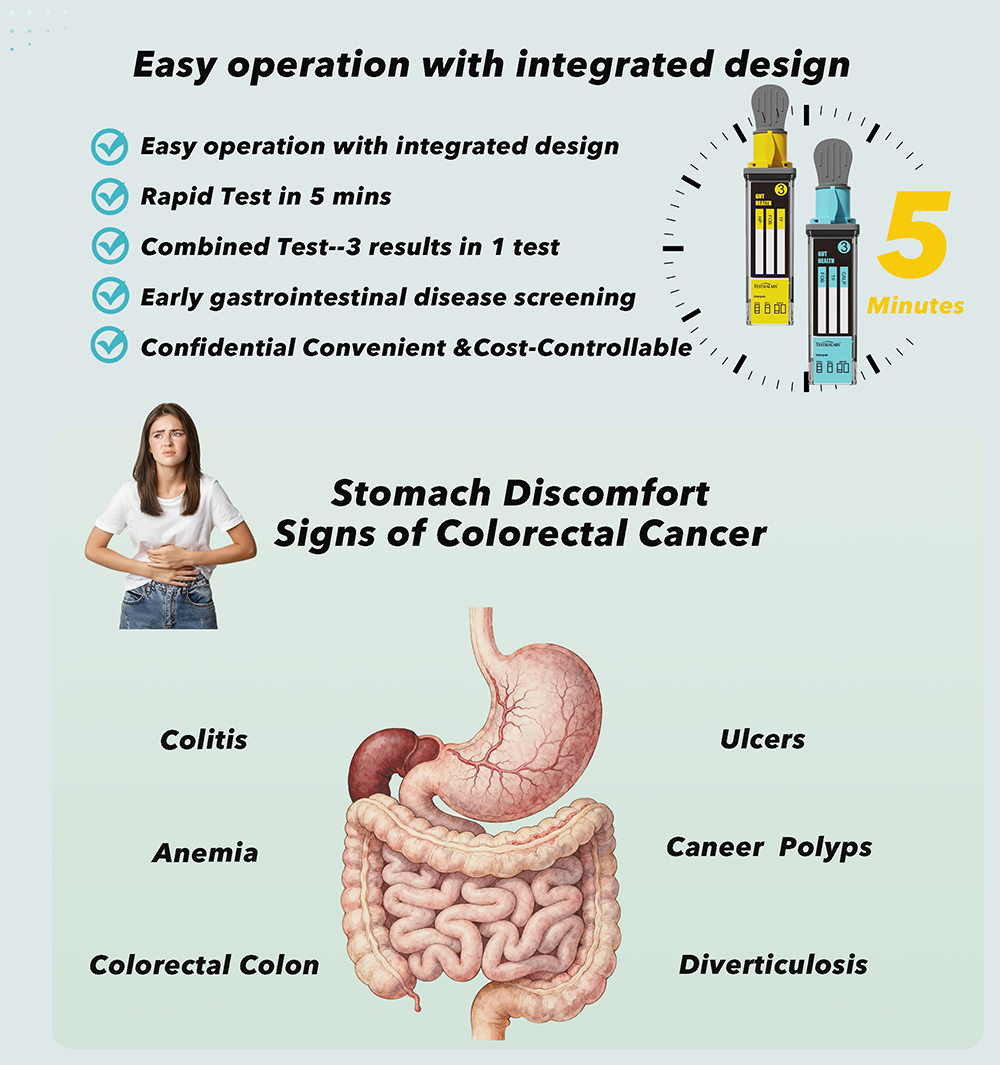
| Primary Use Case | Ideal for anyone dealing with recurring stomach discomfort—think persistent bloating, burning pain after meals, or unexplained fatigue. It detects H. pylori (the bacteria behind 90% of duodenal ulcers) alongside early signs of GI bleeding (via FOB/TF), which often causes hidden anemia. | Perfect for individuals with a family history of colorectal cancer, or those experiencing changes in bowel habits (like diarrhea/constipation) or mild abdominal cramping. It identifies intestinal inflammation (via CALP)—a red flag for colitis or Crohn’s disease—and GI bleeding (via FOB/TF) to catch early colorectal polyps or cancer. | |
| Target Conditions | Stomach ulcers, gastritis, H. pylori infection, anemia caused by silent GI bleeding. | Early-stage colorectal cancer, inflammatory bowel disease (IBD), diverticulosis, colorectal polyps, anemia from GI bleeding. | |
| Sample Type | Fecal sample (collected with a small, discomfort-free probe included in the kit) | Fecal sample (collected with a small, discomfort-free probe included in the kit) |
Why These Kits Fill a Critical Gap in GI Health
For Maria, a 42-year-old working mom from Madrid, the kits would have changed everything. “I had stomach pain for months but kept putting off a doctor’s visit—between work and the kids, I couldn’t spare the time for a lab test, let alone an endoscopy,” she says. By the time she was diagnosed with an H. pylori infection, it had already led to a gastric ulcer. “If I’d had a way to test at home, I could have treated it earlier and avoided the pain.”
Maria’s story is far from unique. The 3-in-1 kits directly address these real-world struggles by focusing on the markers that matter most for early detection—especially the HP+FOB+TF kit, whose rapid chromatographic immunoassay technology ensures that even trace amounts of H. pylori, human hemoglobin, or transferrin in feces are detected accurately, without the need for complex lab equipment:
- FOB (Fecal Occult Blood): Catches hidden blood in stool—an early sign of colorectal cancer, ulcers, or polyps that’s often invisible to the naked eye.
- TF (Transferrin): Confirms GI bleeding even in small amounts, ensuring no subtle signs are missed (critical for detecting slow, chronic bleeding that causes anemia).
- HP (Helicobacter Pylori): Identifies the bacteria linked to most stomach ulcers and gastritis—conditions that often go undiagnosed until they cause severe pain.
- CALP (Calprotectin): Measures intestinal inflammation, helping distinguish between temporary upset and chronic issues like colitis or Crohn’s disease.
How to Use: Simple Steps for Peace of Mind
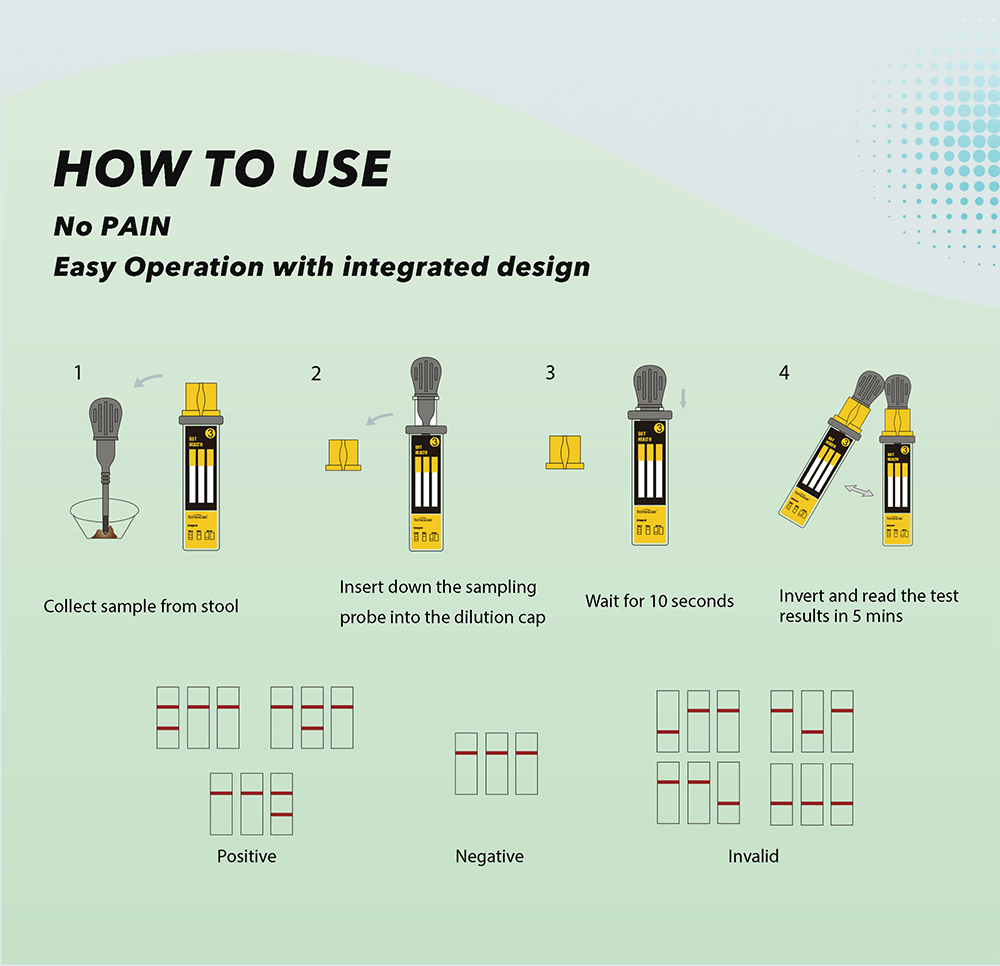
Neither kit requires specialized training or medical knowledge—just four straightforward steps that take less than 5 minutes total:
- Collect a tiny fecal sample: Use the small, disposable probe included in the kit (no discomfort, no mess).
- Mix with the dilution solution: Insert the probe into the pre-filled cup provided—no measuring or extra tools needed.
- Wait 10 seconds: Let the sample blend with the solution (just enough time to check your phone or pour a glass of water).
- Read your results: The test strip shows clear “Positive” or “Negative” indicators for each biomarker—no lab drop-off, no waiting for a call from a clinic.
Who Benefits Most?
For individuals searching for answers to persistent digestive issues, the kits offer a first step toward clarity without the stress of traditional testing. For busy parents, remote workers, or anyone who struggles to fit clinic visits into their schedule, at-home testing means no more rearranging days for appointments. For healthcare providers, the kits act as a “first line” tool—helping prioritize patients who need urgent care while reducing unnecessary lab work for those with mild symptoms.
Note: This product is for screening purposes only. Positive results should be followed up with a licensed healthcare provider for official diagnosis and personalized treatment.
Post time: Oct-29-2025