
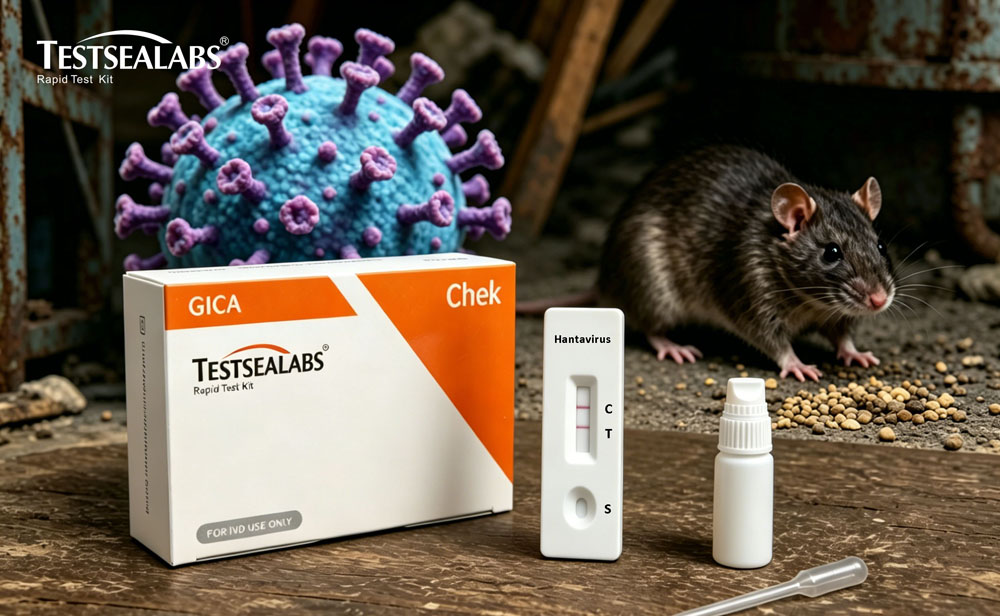
Testsealabs infectious disease rapid serological test — designed for hantavirus and emerging pathogen screening in remote and travel medicine settings.
In late 2024, a small cruise ship exploring the Antarctic Peninsula reported a cluster of passengers presenting with fever, myalgia, and respiratory distress. Within days, the ship’s medical officer — equipped with a basic formulary and limited diagnostic capability — found himself managing a situation that none of the standard onboard protocols covered. The patients had no response to antibiotics for community-acquired pneumonia. Influenza and COVID-19 rapid tests came back negative. It was only after emergency evacuation and reference laboratory testing in Punta Arenas that the diagnosis was confirmed: hantavirus cardiopulmonary syndrome.
The Antarctic outbreak made international headlines not because hantavirus is a new disease — it has been documented in the Americas for decades — but because it illustrated how fragile the diagnostic chain is for emerging zoonotic infections in travel medicine, occupational health, and public health surveillance settings. For the IVD industry, the outbreak was a wake-up call: hantavirus is spreading beyond its traditionally recognized geographic boundaries, and the global diagnostic community is not prepared to detect it at the point of care.
Nowhere is this diagnostic gap more consequential than in Southeast Asia, where hantavirus — particularly the hemorrhagic fever with renal syndrome (HFRS) strains — is circulating at levels that surveillance data significantly underestimate. For IVD distributors in Thailand, Vietnam, Indonesia, the Philippines, and Malaysia, the question is not whether hantavirus testing will become a standard part of the infectious disease diagnostic panel, but when. Distributors who act early to add a quality-assured hantavirus IgG/IgM rapid test to their product portfolios will be positioned to serve a growing, currently underserved market.
As the International Sales Director at Testsealabs, I have watched the Southeast Asian IVD market evolve over the past decade. The hantavirus diagnostic gap is one of the most clear-cut opportunities I have seen in recent years — a clinically significant disease with established prevalence, a genuine lack of accessible rapid diagnostic tools, and a growing awareness among clinicians that they are missing cases. Our Hantavirus IgG/IgM Rapid Test Kit was developed specifically to fill this gap.
Hantavirus in Southeast Asia: What the Data Actually Shows
The official epidemiological picture of hantavirus in Southeast Asia is fragmented, but the pieces that exist paint a consistent picture of underdiagnosis. Seroprevalence studies conducted across the region — using ELISA-based antibody detection in population surveys — have found hantavirus antibody prevalence rates of 1.7–6.8% in community-based samples from Vietnam, Thailand, Indonesia, and the Philippines. These rates are comparable to or higher than the seroprevalence of well-known neglected tropical diseases in the same populations.
Yet these seroprevalence figures are rarely reflected in national surveillance data. Why? Because surveillance systems rely on clinically reported cases confirmed by diagnostic testing — and when the diagnostic test for hantavirus is not available at the point of care, the cases are not confirmed and therefore not reported. The patients are diagnosed — or more accurately, misdiagnosed — with the clinical syndrome they most closely resemble: dengue, leptospirosis, scrub typhus, or influenza.
Studies from Thailand have documented that hantavirus seropositive patients presenting to hospitals with acute febrile illness are misdiagnosed as having dengue in a significant proportion of cases. When the dengue rapid test is negative, the patient is typically treated syndromically rather than tested for alternative etiologies — because the alternative tests are simply not available in most clinical settings. This diagnostic pathway means that hantavirus cases are not just underreported; they are systematically invisible to the health system.
The Antarctic Outbreak as a Diagnostic Cautionary Tale
The Antarctic cruise ship outbreak is instructive for Southeast Asian health systems for three reasons. First, it demonstrated that hantavirus can present in non-endemic travelers who have brief, intense exposure to rodent-contaminated environments — a scenario that replicates the agricultural, forestry, and construction site exposures common across Southeast Asia. Second, it showed that standard point-of-care infectious disease panels (influenza, COVID-19, RSV) are entirely insufficient for febrile respiratory illness when hantavirus is in the differential. Third, it highlighted that the diagnostic pathway from acute presentation to confirmed hantavirus diagnosis in most clinical settings is measured in days to weeks — a timeline that is clinically unacceptable for a disease that can progress to severe cardiopulmonary or renal involvement within 48 hours of symptom onset.
For Southeast Asia, where the predominant hantavirus strains (Seoul virus, Hantaan virus, and Puumala-like viruses) present primarily as HFRS, the diagnostic challenge is different but equally acute. A farmer in central Thailand presenting with fever, back pain, and reduced urine output on day 4 of illness could have dengue, leptospirosis, or hantavirus. The treatment for each is completely different. The Testsealabs Hantavirus IgG/IgM Rapid Test Kit provides the species identification that this clinical scenario requires, with results available within 15 minutes using whole blood from a simple fingerstick.
Country-by-Country: The Hantavirus Diagnostic Landscape Across Southeast Asia
The hantavirus diagnostic gap manifests differently in each Southeast Asian country, reflecting differences in healthcare infrastructure, disease surveillance capacity, and the specific hantavirus strains circulating. Understanding these country-level variations is essential for distributors planning their go-to-market strategy.
Thailand. Thailand has the most developed hantavirus surveillance infrastructure in Southeast Asia, with seroprevalence studies conducted in multiple provinces over the past decade. Data from studies in Khon Kaen, Chiang Mai, and Nakhon Ratchasima provinces have found hantavirus IgG seroprevalence rates of 2-4% among community-based populations, with higher rates (6-8%) among agricultural workers. The predominant circulating strains are Seoul virus (associated with urban and peri-urban rodent populations) and Hantaan-like viruses (associated with rural field rodents). Despite the established seroprevalence evidence, hantavirus RDTs are not included in the standard febrile illness diagnostic panels used in Thai district hospitals and health centers. The Thailand Ministry of Public Health includes hantavirus in its list of nationally notifiable diseases, but the requirement is rarely enforced because diagnostic tools are not accessible at the facilities where most patients first present.
Vietnam. Vietnam has documented hantavirus seroprevalence in multiple ecological settings, from the Red River Delta to the Central Highlands to the Mekong Delta. Studies from Hanoi and Ho Chi Minh City have found seroprevalence rates of 1.7-3.2% among urban populations, while rural agricultural communities have documented rates of 5-6%. The country’s tropical climate, high rodent population density in agricultural areas, and large population of agricultural workers create conditions favorable for sustained hantavirus transmission. However, Vietnam’s diagnostic infrastructure for hantavirus is limited to a small number of reference laboratories that use ELISA-based antibody detection — tests that require trained laboratory technicians, reliable electricity for equipment operation, and a specimen transport system that can deliver samples within the required time window. For a farmer in the Central Highlands who presents with fever and hematuria to a district health center, the likelihood of receiving a hantavirus diagnosis is near zero under current conditions.
Indonesia. Indonesia’s vast archipelago presents unique challenges for hantavirus surveillance and diagnosis. Seroprevalence studies from Java, Sumatra, and Sulawesi have found hantavirus antibody prevalence rates ranging from 2.5% in urban Jakarta populations to 7% in rural agricultural communities. The diversity of rodent species across the archipelago, combined with high human-rodent contact rates in both agricultural and domestic settings, supports ongoing transmission. Yet diagnostic capacity is concentrated in a few reference laboratories in Jakarta and Surabaya, leaving the majority of the country’s health facilities without access to hantavirus testing. The Indonesian Ministry of Health does not currently list hantavirus as a priority disease for diagnostic capacity building, which means procurement of hantavirus diagnostic products is left to individual hospitals and clinics through their own budget allocations.
Malaysia and the Philippines. Malaysia has documented hantavirus seroprevalence in both peninsular and Bornean populations, with rates of 1.9-4.1% reported in community surveys in Selangor, Sarawak, and Sabah. The Philippines has reported seroprevalence rates of 2.1-3.5% in studies conducted in Luzon and the Visayas. In both countries, hantavirus diagnostic capacity is limited to the national public health laboratory and a small number of academic research centers. The diagnostic gap is recognized by clinicians in both countries, particularly those working in infectious disease and nephrology departments who encounter patients with acute kidney injury of unclear etiology that may be consistent with HFRS.
For distributors in each of these countries, the market entry strategy differs based on the regulatory environment, the existing febrile illness diagnostic product landscape, and the level of clinician awareness of hantavirus as a diagnostic consideration. What is consistent across all five countries is the absence of a widely available, quality-assured hantavirus RDT — a gap that our product is specifically designed to address.
The Three Diagnostic Gaps That Create the Market Opportunity
From a distributor’s perspective, the hantavirus diagnostic gap in Southeast Asia is not a single gap but three overlapping gaps — each of which represents an addressable market segment:
Gap 1: No point-of-care RDT widely available in the region. ELISA-based hantavirus antibody testing exists in national reference laboratories, but the turnaround time (days to weeks) makes it clinically irrelevant for acute case management. Point-of-care hantavirus RDTs have been available from a limited number of manufacturers, but distribution has been fragmented and few distributors carry them as a stocked item. A distributor who adds hantavirus RDT to the portfolio becomes the go-to source in their territory.
Gap 2: No integration with febrile illness diagnostic panels. Most Southeast Asian hospitals and clinics stock and use dengue RDTs regularly. Some stock leptospirosis RDTs. Almost none stock hantavirus RDTs. By positioning the hantavirus test as a complementary addition to the existing febrile illness diagnostic panel — alongside dengue, typhoid, and leptospirosis tests — distributors create a bundled diagnostic solution that supports clinicians in the undifferentiated febrile patient workup.
Gap 3: No routine occupational health screening for at-risk workers. Agricultural workers, forestry workers, sanitation workers, and military personnel in Southeast Asia have elevated occupational exposure to hantavirus through contact with infected rodent populations. Yet occupational health screening programs for these worker groups rarely include hantavirus testing. Distributors can target this segment directly, marketing hantavirus RDTs to occupational health providers and corporate health programs.
Why Testsealabs for Hantavirus Diagnostics
For distributors evaluating hantavirus RDT suppliers, the decision criteria are the same as for any IVD product — but the hantavirus market’s relative immaturity makes quality assurance and manufacturer credibility particularly important.
Dual IgG/IgM detection. IgM antibodies to hantavirus become detectable around day 4–5 of illness and persist for 3–6 months. IgG antibodies appear around day 7–10 and remain detectable for years. By detecting both antibody classes simultaneously, our test provides diagnostic coverage from the acute phase through the convalescent phase. For a clinician managing a patient who presents on day 5 of illness, IgM detection provides acute-phase evidence. For seroprevalence surveillance, IgG detection identifies past exposure.
Instrument-free and cold-chain-free. The test requires no equipment, no electricity, and no cold chain storage (4–30°C, 24-month shelf life). It works with serum, plasma, or whole blood — including fingerstick specimens. These operational characteristics are critical for the rural and peri-urban healthcare settings where hantavirus cases are most likely to present.
ISO 13485 and MDSAP certified manufacturing. Testsealabs is ISO 13485 and MDSAP certified, providing the manufacturing quality assurance that distributors and healthcare institutions require. Every batch undergoes in-process and final QC testing before release, and batch documentation is available for regulatory submission support.
Key Procurement Considerations for Southeast Asian Distributors
For distributors adding hantavirus RDTs to their product portfolio, several practical factors require attention:
Regulatory registration requirements vary by country. Thailand’s Food and Drug Administration, Indonesia’s Ministry of Health, Vietnam’s Ministry of Health, and the Philippines’ Food and Drug Administration each have different IVD registration pathways. We provide comprehensive regulatory dossiers, including CE certificates, ISO 13485 certification, product specification sheets, and IFUs in multiple languages to support our distributors’ registration efforts.
Order volumes and lead time. As a specialty product with lower volumes than high-throughput tests like dengue or malaria RDTs, hantavirus test orders require different planning cycles. Standard minimum order quantities are 1,000 test units, with production lead times of 30–45 days for standard configurations.
Beyond the basic procurement requirements, distributors entering the hantavirus diagnostic market should also consider how to build clinician demand for the product in a market where many healthcare providers have never used a hantavirus RDT. This demand-generation challenge requires a different approach than marketing established products like dengue or malaria RDTs. Distributors can work with infectious disease specialists in major referral hospitals to conduct small-scale clinical utility studies that demonstrate the test’s value in the differential diagnosis of febrile patients. They can present the results at national infectious disease conferences, creating clinical awareness that translates into procurement requests from hospital laboratories. They can also target occupational health programs in agricultural, forestry, and waste management sectors where hantavirus exposure risk is highest, offering the test as a component of routine occupational health screening. These demand-generation activities require investment in clinical education and medical affairs capability, but they are essential for creating a sustainable market for a product category that is currently underutilized in the region. With the right product, the right regulatory preparation, and the right clinical education strategy, the hantavirus diagnostic gap in Southeast Asia is not just a market opportunity — it is a public health intervention waiting to happen.
Distributors should also prepare for the regulatory registration timeline for hantavirus RDTs, which is typically longer than for established product categories because the national regulatory authorities in many Southeast Asian countries have limited experience with hantavirus diagnostic product evaluations. Providing complete technical dossiers that include CE certificates, ISO 13485 certification, clinical performance data, stability studies, and IFU translations in the local language can help accelerate the registration process by reducing the number of follow-up information requests from the regulatory authority.
Technical support and distributor training. Because hantavirus testing is unfamiliar to many clinicians, we provide training materials, IFUs in local languages, and remote technical support for our distributors’ customers. Distributors should factor this support requirement into their go-to-market plan.
Conclusion
The Antarctic cruise ship hantavirus outbreak was a global reminder that zoonotic infections do not respect geographic boundaries — and that diagnostic preparedness is the weakest link in the outbreak response chain. In Southeast Asia, where hantavirus circulates at clinically significant levels but remains systematically underdiagnosed due to a lack of accessible rapid diagnostic tools, the distributor opportunity is clear. The distributors who act first to add hantavirus RDTs to their portfolio will establish channel relationships and clinician familiarity that late entrants will find difficult to replicate, creating a durable competitive advantage in a market that is only beginning to develop.
Testsealabs’ Hantavirus IgG/IgM Rapid Test Kit delivers the combination of clinical performance, operational simplicity, and manufacturing quality that Southeast Asian health systems require. If you are a distributor evaluating your infectious disease diagnostic portfolio and looking for a differentiated product category with genuine clinical demand, I encourage you to consider this product.
For authoritative information on hantavirus epidemiology and diagnostics, the WHO provides comprehensive resources on hantavirus at its Hantavirus fact sheet and health topic page.
About the Author
Angela Qin is the International Sales Director at Hangzhou Testsea Biotechnology Co., Ltd. (Testsealabs), with 10+ years of experience in the IVD industry. Testsealabs is an ISO 13485 and MDSAP-certified manufacturer of rapid diagnostic products covering infectious diseases including hantavirus, dengue, malaria, and respiratory infections. Founded in 2015, the company’s products are distributed in over 100 countries worldwide.
Email: info@testsealabs.com
YouTube: Testsealabs
Facebook: Testsealabs on Facebook
Post time: Jul-14-2026