
TL;DR — Key Takeaways
- Core rapid test panel for small animal clinics: CPV, CDV, FPV, FeLV/FIV, rotavirus/coronavirus — these five cover 90% of urgent infectious disease diagnostics.
- CPV rapid test: demand ≥90% sensitivity, ≥98% specificity in naturally infected animals — not just spiked samples in validation studies.
- Certification for wholesale: ISO 13485 (baseline), CE or FDA registration, cross-reactivity data (especially for CPV vs. FPV vaccine strains).
- Inventory planning: set minimum stock level (2–3 weeks supply + lead time), build 40–60% seasonal buffer before parvovirus peak season.
- Wholesale pricing: 100+ units unlocks 15–25% discount; consignment or JIT replenishment reduces waste from expired stock.
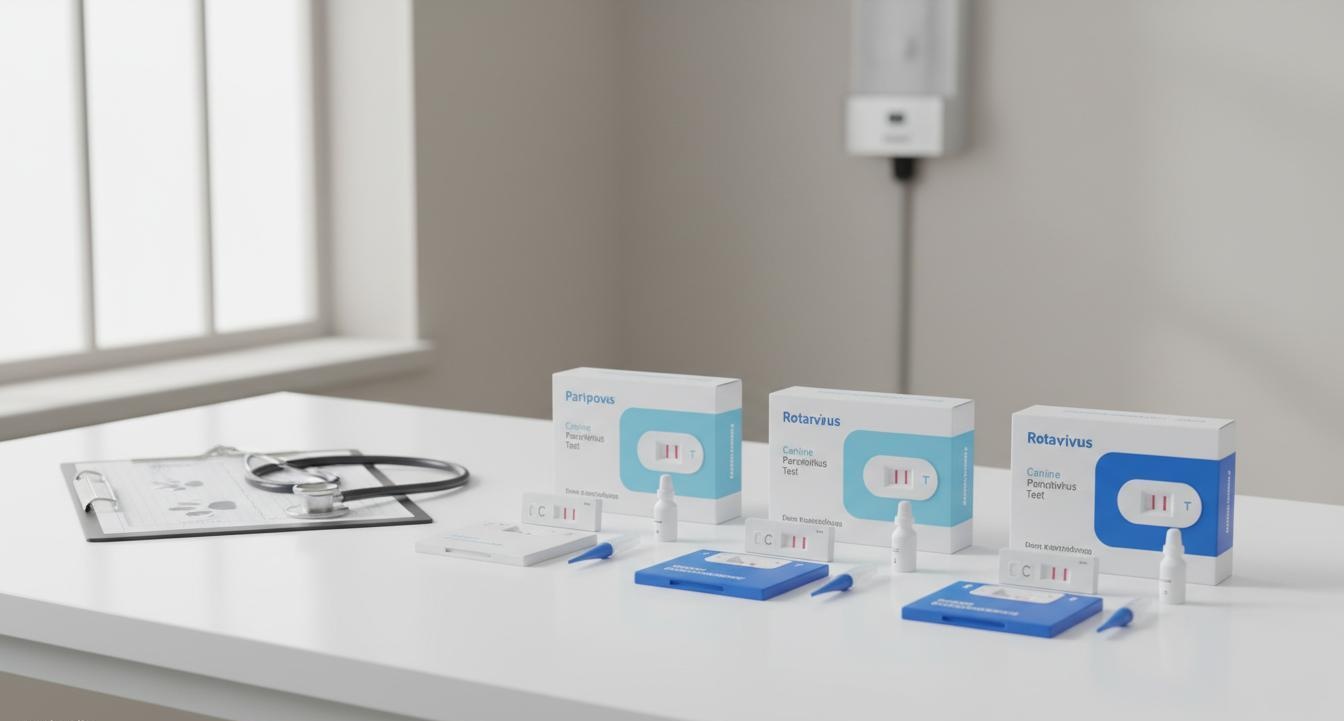
A 14-week-old Labrador puppy arrives at the clinic at 8:30 PM on a Saturday evening — lethargic, vomiting, and producing bloody diarrhea. The owner says the puppy was from a shelter, had received one vaccination at 8 weeks, and the other vaccinations were due at 12 weeks but the owner had not brought the puppy back. The emergency veterinarian’s differential diagnosis list has parvovirus enteritis at the top. Without a rapid test result, the treatment protocol for a potentially parvovirus-positive puppy requires isolation, aggressive IV fluid therapy, and broad-spectrum antibiotics — a significant emergency treatment commitment for a clinic with limited out-of-hours staff. With a positive CPV rapid test result, that commitment is confirmed as appropriate. With a negative CPV rapid test result, the veterinarian can pursue other differential diagnoses and avoid the unnecessary isolation and treatment costs.
This clinical scenario — urgent, time-sensitive, and high-stakes — is exactly what veterinary rapid diagnostic tests are designed to address. The test result changes clinical management in real time. But the value of that clinical decision depends entirely on the test’s reliability: a false negative CPV test in a parvovirus-positive puppy means the puppy receives inadequate treatment because the isolation protocols are not followed; a false positive CPV test in a puppy with hemorrhagic gastroenteritis from another cause means the clinic commits resources to isolation and treatment protocols that are not needed, and the owner incurs costs that may lead to financial euthanasia decisions.
In this article, I explain the clinical and operational framework for veterinary rapid test wholesale procurement: which tests belong in a pet clinic’s core inventory, how to evaluate test performance beyond the datasheet, what certifications matter, and how to plan inventory to balance cost and clinical availability.
The Core Infectious Disease Panel for Small Animal Clinics
Canine Parvovirus (CPV): The Emergency Priority
Canine Parvovirus enteritis is the single highest-priority infectious disease diagnostic for any small animal emergency or general practice clinic. CPV-2 (and its variants CPV-2a, CPV-2b, CPV-2c) causes severe hemorrhagic enteritis in puppies and young dogs, with mortality rates of 10–50% without aggressive treatment. The virus is shed in extremely high concentrations in the feces of infected dogs — up to 10^9 viral particles per gram of feces — making fecal testing an extremely sensitive detection method when a high-quality test is used.
The critical performance requirement for a CPV rapid test is sensitivity in naturally infected animals at various stages of infection. The virus shedding pattern in CPV infection means that the optimal testing window is days 3–5 post-infection, when viral load in the feces is highest. Tests validated only against experimentally infected animals (where infection timing is known and controlled) may perform differently from tests evaluated against naturally infected clinical cases where the stage of infection is variable. Ask the manufacturer for sensitivity data from field studies in naturally infected dogs, not just from controlled spike-and-recovery laboratory studies.
The other critical validation is cross-reactivity with modified-live vaccine strains. The CPV vaccine (a modified-live virus) replicates briefly in the intestinal tract after administration and is shed in the feces for 3–10 days post-vaccination. A CPV rapid test that detects vaccine-strain virus will produce false positive results in recently vaccinated puppies for up to 2 weeks after vaccination. This is a well-documented problem with some CPV rapid tests — the test is designed to detect all CPV strains but the vaccine strain happens to share enough antigenic epitopes to be detected. The manufacturer should provide data on the test’s cross-reactivity with the vaccine strains (typically CPV-2, CPV-2b, CPV-2c vaccine strains) and should recommend a post-vaccination waiting period for screening if cross-reactivity is present.
Canine Distemper Virus (CDV): Isolation and Management
Canine distemper is a morbillivirus that causes systemic disease affecting the respiratory, gastrointestinal, and nervous systems. The classic presentation — nasal discharge, coughing, fever, followed by neurological signs — is clinically recognizable, but early distemper can mimic other respiratory infections. A rapid test for CDV antigen (from conjunctival or genital mucosal swab) allows the veterinarian to confirm the diagnosis and initiate isolation protocols before the dog is housed in the general ward population. CDV is highly contagious through respiratory droplets, and a confirmed positive in a shelter or multi-dog household triggers significant biosecurity requirements. The CDV rapid test’s clinical utility is primarily in differentiating distemper from other causes of acute respiratory disease and in protecting other patients in the clinic or shelter environment.
Feline Calicivirus (FCV) and Feline Panleukopenia (FPV)
Feline calicivirus is one of the two most common causes of feline upper respiratory infection (the other being FHV-1). While FCV is rarely fatal, it causes painful oral ulceration and chronic stomatitis that significantly impacts cat welfare. Rapid FCV antigen detection from an oropharyngeal swab allows targeted antimicrobial therapy and isolation of affected cats from the shelter population.
Feline Panleukopenia Virus (FPV) is the felid parvovirus — antigenically closely related to canine parvovirus, which means some CPV rapid tests cross-react with FPV and can be used for feline panleukopenia screening. FPV is highly lethal in kittens, and an outbreak in a shelter is catastrophic. A rapid FPV test that can be used on both feline and canine patients allows a single inventory item to serve two testing algorithms — the veterinarian should verify this cross-reactivity in the manufacturer’s validation data.
Rotavirus and Coronavirus: Enteric Differential Diagnosis
Canine rotavirus and coronavirus cause acute enteritis that is clinically indistinguishable from early CPV infection — diarrhea, vomiting, and lethargy. While neither virus is typically life-threatening in healthy adult dogs, both cause significant morbidity in puppies and kennelled dogs. A rotavirus/coronavirus rapid panel — combined or separate — allows the veterinarian to rule out the non-parvovirus causes of enteritis in a sick puppy, which narrows the differential diagnosis and reduces unnecessary isolation time for non-parvovirus cases. The clinical value of these tests is primarily in herd health and shelter medicine settings where knowing the exact pathogen affects cohort management decisions.
Evaluating Rapid Test Performance Beyond the Datasheet
Sensitivity and Specificity: Where the Data Comes From Matters
Veterinary rapid test datasheets quote sensitivity and specificity figures that are averaged across the study population — but the study population matters as much as the number. A sensitivity of 92% for a CPV test that was validated in a population of dogs with clinical signs (vomiting, diarrhea, lethargy) where CPV prevalence was 60% is a very different data point from a sensitivity of 92% in a mixed population including subclinical carriers. The positive predictive value (PPV) — the probability that a positive test result is a true positive — depends heavily on the disease prevalence in the population being tested. In a low-prevalence population (screening healthy dogs before boarding), even a test with 92% sensitivity and 98% specificity will produce more false positives than true positives because the true positives are so rare. In a high-prevalence population (sick puppies in a parvovirus outbreak), the same test will have excellent PPV.
When evaluating test performance, ask the manufacturer for: the study population characteristics (natural vs. experimental infection), the stage of infection in confirmed positives (early vs. late), the prevalence in the study population, and the confidence intervals on the sensitivity and specificity estimates (a point estimate of 92% with a 95% CI of 85–97% is a much less certain result than 92% with CI 90–94%).
The Limit of Detection: Why It Matters for Clinical Use
The limit of detection (LoD) is the minimum concentration of the target analyte that the test can reliably detect. For CPV rapid tests, the LoD determines whether the test can detect low-level viral shedding in subclinical carriers or in the early stages of infection when viral load has not yet peaked. A test with an LoD of 10^4 TCID50/mL may miss infections where the fecal viral load is 10^3 TCID50/mL — below the test’s detection threshold but clinically significant. Per ISO 23907 (In vitro diagnostic tests — Information to be supplied by the manufacturer), the LoD should be stated in the kit insert and should be established using the same specimen matrix that will be used in clinical practice (fecal slurry, not diluted buffer).
Specimen Collection and Handling: The Variable That Clinicians Control
The quality of the specimen is the most significant controllable variable in the rapid test result. Fecal specimens for CPV and rotavirus testing must be collected fresh (within 30 minutes of defecation or from the rectum using a gloved swab), stored at 2–8°C if testing is delayed beyond 2 hours, and processed according to the kit insert’s specimen preparation instructions. A well-designed rapid test includes a built-in procedural control (the C line) that confirms the specimen was applied correctly and the test ran correctly — but it cannot confirm that the specimen was of adequate quality when collected. Clinic staff training on proper specimen collection is as important to test accuracy as the test’s intrinsic sensitivity and specificity.
Wholesale Procurement: The Distributor and Clinic Inventory Framework
The Minimum Stock Level Calculation
For each rapid test in the clinic’s inventory, the minimum stock level (MSL) is calculated as:
MSL = (Average weekly usage × Supplier lead time in weeks) + Safety buffer
For a clinic using 10 CPV tests per month (approximately 2.5 per week) with a 3-week supplier lead time: MSL = 2.5 × 3 + 2 = 9.5 → round to 10 units. The safety buffer accounts for demand spikes (seasonal parvovirus peaks, outbreak situations, weekends when orders cannot be placed).
Seasonal Inventory Planning
Canine parvovirus has a pronounced seasonal pattern in temperate climates: the peak incidence is in late summer and autumn (August–October in the Northern Hemisphere), coinciding with the peak puppy acquisition season in spring. Puppies acquired in spring are unvaccinated or partially vaccinated when they arrive in summer and encounter the virus in high-exposure environments (dog parks, boarding facilities, puppy classes). The inventory build-up for the parvovirus peak should occur 6–8 weeks before the expected peak — in June/July for August–October peak — to ensure the clinic has adequate stock when demand peaks. Build up to 40–60% above the normal stock level during this window.
Wholesale Volume Pricing
Veterinary rapid tests are typically sold in pack sizes of 1, 5, 10, 20, or 50 tests per box. Wholesale pricing for veterinary distributors follows volume tiers:
- 1–24 units (1–5 boxes): catalog price, no discount
- 25–99 units (5–20 boxes): 8–15% discount from catalog
- 100–499 units: 15–25% discount from catalog
- 500+ units: 25–35% discount, with potential for consignment arrangements
For clinic chains and veterinary group purchasing organizations, the 500+ unit tier unlocks meaningful cost reductions and opens the possibility of consignment inventory (where the supplier holds the stock and the clinic pays as used, reducing the clinic’s working capital commitment). The consignment arrangement is particularly valuable for slow-moving tests (such as FIV/FeLV in low-prevalence regions) where the cost of expired inventory is a genuine financial risk.
The Veterinary Rapid Test Procurement Checklist
- ☐ ISO 13485:2016 certification: verify the certificate scope covers the specific test kits being ordered — not just a general company certificate
- ☐ Clinical performance data: request sensitivity and specificity data from naturally infected clinical cases, not just spike-and-recovery laboratory validation — include confidence intervals and study population prevalence
- ☐ Cross-reactivity data: for CPV tests, request data on cross-reactivity with modified-live vaccine strains — identify the recommended post-vaccination waiting period for screening
- ☐ Limit of Detection: request the LoD established in the relevant specimen matrix (fecal slurry for CPV/rotavirus; whole blood/serum for CDV/FeLV/FIV)
- ☐ Specimen collection protocol: verify the manufacturer provides clear specimen collection, storage, and preparation instructions — and that these are included in the clinic staff training materials
- ☐ Shelf life and storage conditions: confirm the shelf life at the clinic’s storage temperature (most veterinary rapid tests require 2–30°C; some require refrigeration)
- ☐ Regulatory status in target market: for EU sale, verify CE marking under EU MDR 2017/745; for US sale, verify FDA registration status; for export markets, verify the free sale certificate covers the destination country
- ☐ Sample evaluation: request 20–50 evaluation units before committing to volume — test side-by-side with the current clinic stock and record the comparison results
- ☐ Lot consistency data: request Lot Release QC data from the most recent 3 production lots — this is the manufacturer’s own quality gate and the best indicator of ongoing production consistency
- ☐ Post-market surveillance process: confirm the manufacturer’s process for handling field complaints and adverse event reports — a responsible wholesale supplier will have a documented investigation and reporting procedure
Conclusion: Clinical Value Depends on Test Quality
The veterinary rapid test is only as good as its performance in the clinical scenario that matters most — the sick puppy that arrives at the clinic on a Saturday evening with bloody diarrhea, where the test result determines whether isolation protocols are activated and aggressive treatment is initiated. The datasheet specifications — sensitivity, specificity, accuracy — are the starting point of the evaluation, not the complete picture. The clinical history of the test in real-world use, the manufacturer’s cross-reactivity data, the Lot Release quality data, and the clinic’s own specimen collection practices are the factors that determine whether the rapid test delivers its clinical promise.
The procurement discipline for veterinary rapid tests should mirror the clinical discipline of the veterinarian: verify the performance data, understand the limitations, and use the test within the context of the clinical presentation and the epidemiological situation. A wholesale supplier who provides comprehensive performance data, transparent cross-reactivity information, and responsive technical support is the long-term procurement partner that protects the clinic’s clinical reputation and its financial performance.
Testsealabs (Hangzhou Testsea Biotechnology Co., Ltd.) manufactures Feline Calicivirus rapid diagnostic tests and a complete range of veterinary rapid test products including feline and canine infectious disease panels, CE certified and ISO 9001/13485 registered. Angela Qin and the Testsealabs international sales team support global distributors, veterinary clinic chains, and animal health procurement organizations with product selection, regulatory documentation, and volume pricing. Contact the Testsealabs team to discuss your clinic or distribution network’s veterinary rapid test requirements.
Disclaimer: This article provides general industry guidance for veterinary clinics and wholesale distributors sourcing veterinary rapid diagnostic tests. Performance specifications (sensitivity, specificity, limit of detection), regulatory requirements (ISO 13485, EU MDR 2017/745, FDA registration), and clinical use guidance are based on general industry knowledge and publicly available WHO and ISO standards. All performance data should be verified against the specific manufacturer’s product technical file and regulatory registration documentation. Clinical decisions based on rapid test results should be made by qualified veterinarians in accordance with applicable clinical protocols and regulatory guidance for veterinary diagnostics. The cross-reactivity characteristics of CPV tests with modified-live vaccine strains should be confirmed with the specific manufacturer before use in recently vaccinated puppies.
Post time: May-26-2026