
World Hepatitis Day 2026: Early Testing Saves Lives
Global Hepatitis Burden

Hepatitis is known as the “silent killer” – the liver has no pain receptors, so infections often go unnoticed for years until they progress to cirrhosis or liver cancer.
According to the latest WHO data:
- 287 million people live with chronic hepatitis B or C – roughly 3% of the global population.
- 1.8 million new infections occur each year.
- 1.34 million deaths annually, mainly from cirrhosis and liver cancer.
- Among chronic hepatitis B patients, less than 5% are diagnosed and receiving treatment.
What Is Hepatitis?
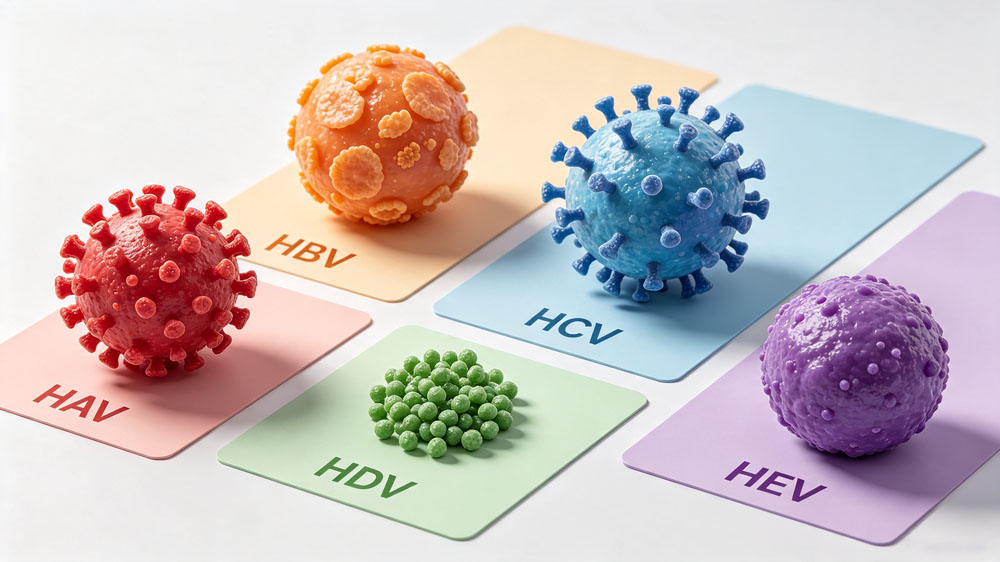
Viral hepatitis is an inflammatory condition of the liver caused by a group of hepatotropic viruses. Five main types have been identified: hepatitis A (HAV), B (HBV), C (HCV), D (HDV), and E (HEV). They differ in transmission routes, clinical course, and severity, but all can cause liver damage to varying degrees.
Hepatitis A (HAV)
HAV is transmitted primarily through the fecal‑oral route, via ingestion of contaminated food or water. It typically causes acute, self‑limited illness and does not progress to chronic infection, though rare cases of fulminant hepatitis can be fatal. HAV is endemic worldwide, particularly in areas with poor sanitation.
Hepatitis B (HBV)
HBV is one of the most serious infectious diseases worldwide. It is transmitted through blood, mother‑to‑child, and sexual contact. HBV can cause both acute and chronic infections. The risk of chronicity is up to 90% in infants infected perinatally, compared to 5‑10% in adults. Among chronic HBV carriers, approximately 25‑30% will develop cirrhosis or liver cancer. HBV is the leading cause of hepatocellular carcinoma globally.
Hepatitis C (HCV)
HCV is transmitted primarily through blood exposure (e.g., sharing needles, unscreened blood transfusions). Due to its high genetic variability, approximately 80% of acute HCV infections become chronic, and of these, about 20‑30% progress to cirrhosis or liver cancer within 20‑30 years. There is currently no vaccine for HCV, but highly effective direct‑acting antivirals (DAAs) are available, with cure rates exceeding 95% – provided that patients are diagnosed first.
Hepatitis D (HDV)
HDV is a defective virus that requires HBV co‑infection to replicate and cause disease. Thus, HDV infection occurs only in individuals already infected with HBV. Transmission routes are similar to HBV, but HDV/HBV co‑infection leads to more severe liver disease, with significantly higher risks of hepatic failure and hepatocellular carcinoma.
Hepatitis E (HEV)
HEV is primarily transmitted through the fecal‑oral route, similar to HAV, often linked to contaminated water sources. HEV usually causes acute, self‑limited illness, but pregnant women infected with HEV face a mortality rate of up to 20‑30%, making it a significant cause of maternal mortality in endemic regions. Vaccines exist but are not yet widely available globally.
Who Should Get Tested?

WHO recommends hepatitis screening for the following high‑risk groups:
- Individuals with a family history of hepatitis or close contact with infected persons
- Healthcare workers, first responders, and those exposed to blood or bodily fluids
- People with multiple sexual partners or those engaging in unprotected sex
- Intravenous drug users and recipients of blood transfusions or organ transplants
- Pregnant women (routine prenatal screening)
- Travelers to regions with high endemicity
- People living with HIV and immunocompromised individuals
If you fall into any of the above categories, please arrange a hepatitis test – it may be one of the most important decisions you make for your health.
Prevention and Care
Prevention
- Vaccination – Safe and effective vaccines are available for hepatitis A, B, and E. The hepatitis B vaccine is hailed by WHO as the “first anti‑cancer vaccine” – since its introduction in 1982, it has prevented countless liver cancer cases worldwide.
-
Breaking transmission routes
Regular screening – High‑risk individuals should test for hepatitis markers at least annually. Early detection means earlier intervention and better outcomes.
- For HAV/HEV: Ensure food and water safety – avoid raw or undercooked shellfish/meat, do not drink untreated water, and separate raw and cooked utensils.
- For HBV/HCV/HDV: Never share needles, razors, or toothbrushes; use condoms; ensure safe blood transfusions and medical procedures.
Care
- Scientific treatment and disease management – Chronic hepatitis B requires long‑term antiviral therapy to suppress viral replication and delay disease progression. Hepatitis C can now be cured with short‑course oral medications. Regardless of type, patients should receive proper medical guidance and treatment.
- End stigma, offer compassion – Hepatitis is not transmitted through casual contact (e.g., sharing meals, hugging, shaking hands). We call on all communities to offer understanding and respect to those living with hepatitis, helping them face the disease with dignity and return to normal life.
- Raise health awareness and take initiative – Knowledge is the best protection. Understanding how hepatitis spreads, how to get tested, and what treatments are available helps not only to protect yourself but also to support those around you. Taking the initiative to get tested is a responsibility to yourself and others.
Testsea’s Hepatitis Test Solutions
As a professional in vitro diagnostic manufacturer, Hangzhou Testsea Biotechnology Co., Ltd. is committed to providing high‑quality, rapid, and reliable hepatitis test kits to global markets. All products are manufactured under strict quality control and comply with internationally recognized standards. They are easy to use, deliver results in just 15 minutes, and are trusted by healthcare professionals worldwide.
Our Hepatitis Test Series
|
Category
|
Products Available
|
Format / Specimens
|
|---|---|---|
|
HBV
|
HBsAg, HBsAb, HBeAg, HBeAb, HBcAb (individual tests)
|
Strip / Cassette, 25/40/50T, WB/S/P
|
|
HBV 5‑in‑1
|
All five markers in one cassette
|
Cassette, 25T
|
|
HAV
|
HAV IgM; HAV IgG/IgM
|
Cassette, 25T, Serum/Plasma
|
|
HCV
|
HCV Antibody
|
Strip / Cassette, 25/40/50T
|
|
HEV
|
HEV IgM
|
Cassette, 25/40T
|
|
Multiplex
|
HIV/HBsAg/HCV/SYP 4‑in‑1; HIV/HBsAg/HCV 3‑in‑1; HBsAg/HCV Duo
|
Cassette, 25T
|
All tests are simple to perform, require minimal equipment, and deliver rapid, reliable results – ideal for point‑of‑care settings, clinics, and field screening programmes.
Our Call to Action
On this World Hepatitis Day, Testsea calls on global partners, distributors, healthcare institutions, and everyone who cares about health:
“Let more people learn about hepatitis, let more people get tested, and let more people receive the care they deserve.”
Early testing leads to early treatment – and early treatment saves lives. Together, let us break down barriers, eliminate stigma, and move toward a future free from the threat of viral hepatitis.
Post time: Jul-28-2026