
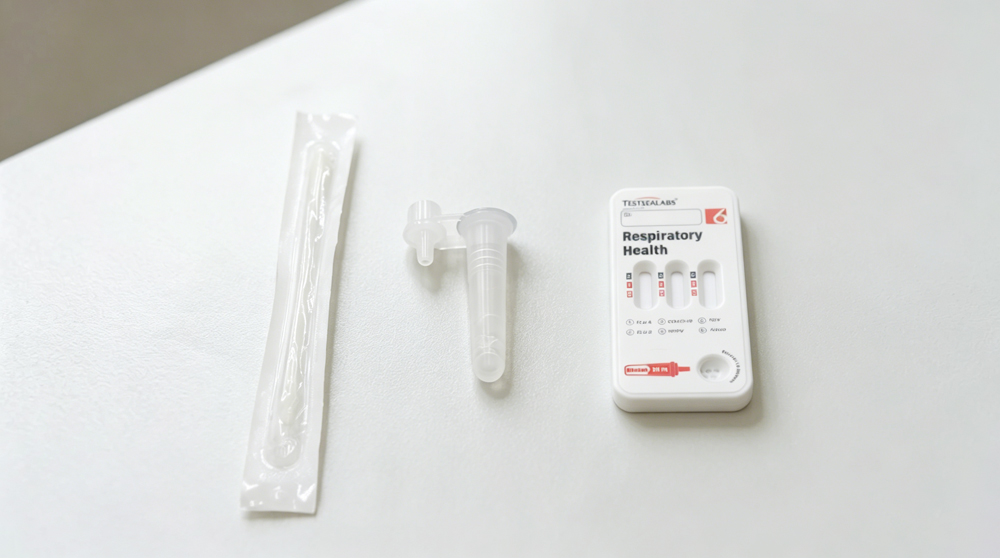
Introduction
As Australia heads into winter, families face a familiar problem: early symptoms of COVID-19, influenza A/B, RSV, HMPV, and adenovirus often look the same, making quick decisions about school, work, and care harder. This article explains how Testsealabs’ TGA-approved 6-in-1 home nasal swab test, listed on the ARTG as 525693, addresses that gap with broader at-home screening in a single cassette. Readers will learn why multi-target testing matters during periods of overlapping viral circulation, how TGA approval supports confidence in over-the-counter use, and where this type of test fits into practical household preparedness for the winter virus season.
TGA 2026-2027 Compliance Focus
The regulatory landscape for in vitro diagnostics (IVDs) in Australia is undergoing significant tightening as authorities prepare for future respiratory seasons. The Therapeutic Goods Administration (TGA) has established a rigorous framework for 2026-2027, focusing heavily on post-market surveillance and the clinical validation of over-the-counter (OTC) self-tests. To maintain market access, manufacturers must demonstrate sustained clinical sensitivity exceeding the baseline 80% threshold for rapid antigen screening tools, alongside strict adherence to quality management systems.
For diagnostic manufacturers, this means evolving beyond basic compliance to offer highly reliable, multi-target screening solutions. The shift prioritizes diagnostic tools that can accurately differentiate between overlapping viral symptoms without compromising the sensitivity of individual assay targets.
Winter 2026 Risk Overview
As the Southern Hemisphere approaches its traditional respiratory peak between June and August 2026, public health models anticipate a complex season of overlapping viral activity. The co-circulation of SARS-CoV-2, Influenza A/B, Respiratory Syncytial Virus (RSV), Human Metapneumovirus (HMPV), and Adenovirus poses a significant diagnostic challenge. Clinical presentations for these six pathogens are virtually indistinguishable in their early stages, driving the need for comprehensive home screening.
Without accessible OTC self-tests, the burden on primary care networks increases exponentially during these winter months. The TGA’s regulatory foresight emphasizes the deployment of multi-pathogen cassettes that empower families to conduct initial screenings at home, thereby accelerating appropriate isolation protocols and reducing community transmission vectors.
Key Compliance Priorities
Under the updated framework, the TGA has prioritized manufacturing quality and batch-to-batch consistency. Hangzhou Testsea Biotechnology Co., Ltd. (Testsealabs) addresses these priorities through a robust quality infrastructure governed by ISO13485 and Medical Device Single Audit Program (MDSAP) dual standards. This ensures that every production lot is strictly controlled from raw material sourcing to final assembly.
Achieving formal recognition, such as the ARTG 525693 registration, signifies that a product has met these uncompromising safety and efficacy benchmarks. For Australian distributors and healthcare providers, selecting products with this level of verified compliance mitigates regulatory risk while ensuring end-users receive dependable diagnostic data.
Key Takeaway: The TGA’s stringent 2026-2027 compliance framework demands rigorous ISO13485 and MDSAP adherence, making ARTG 525693 approval a critical benchmark for diagnostic reliability.
Australia Winter 2026 Respiratory Outlook
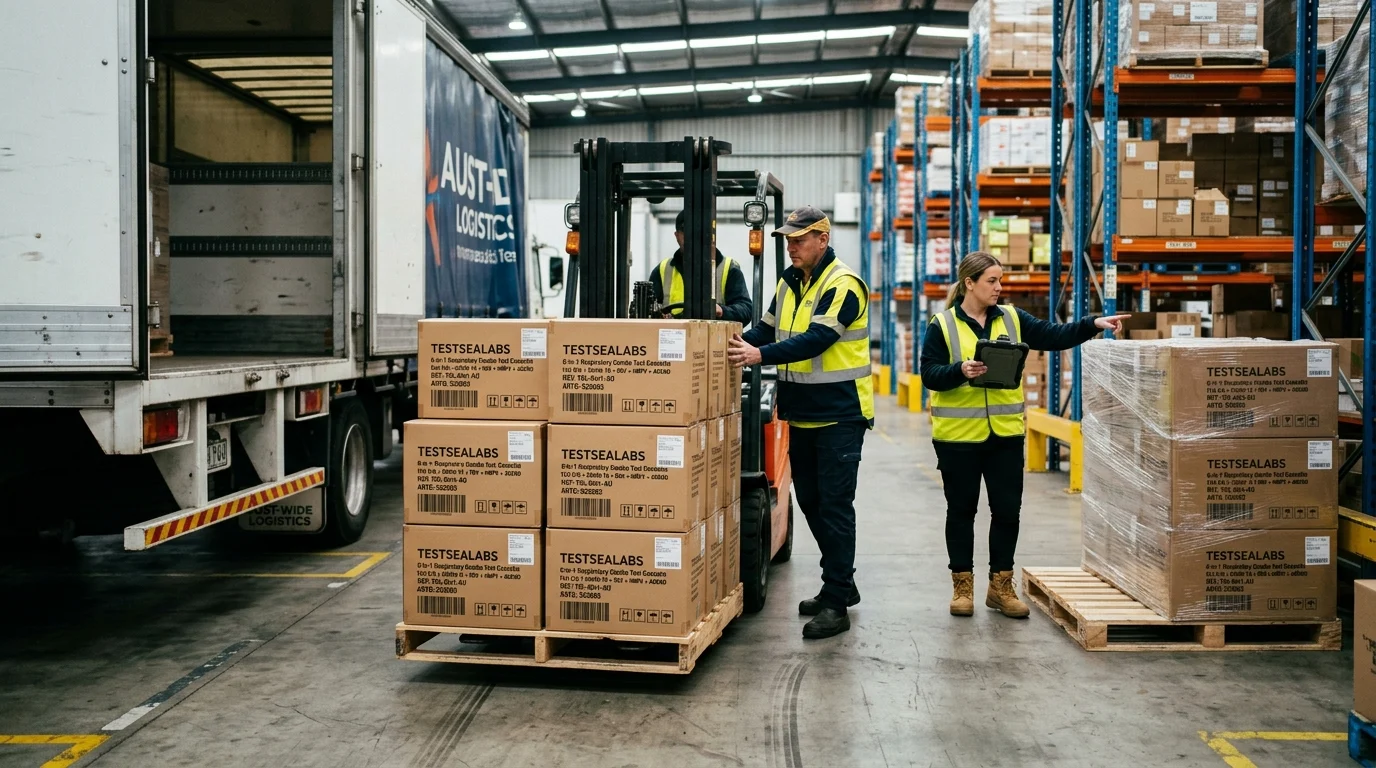
The ability to screen for six distinct respiratory viruses using a single anterior nasal swab represents a major advancement in public health management. By deploying multiplex technology, families can rapidly identify the specific pathogen responsible for household illness, enabling more precise medical consultations and targeted therapeutic interventions.
Influenza Trends and Family Impact
Influenza A and B historically drive significant absenteeism in schools and workplaces, creating a cascading economic and social impact on families. When combined with sudden spikes in RSV or COVID-19, parents often struggle to determine whether a child requires simple rest or urgent medical attention. Early screening empowers families to make informed decisions regarding school attendance and household quarantine measures.
A comprehensive 6-in-1 self-test directly addresses this uncertainty. By identifying the exact virus within 15 minutes, parents can swiftly communicate accurate information to pediatricians, facilitating faster access to antiviral medications if appropriate, and minimizing the risk of spreading highly contagious pathogens to vulnerable family members.
Decision Aids and Comparison Table
To understand the clinical value of multiplex screening, it is essential to compare the characteristics of the targeted pathogens. The table below outlines the general parameters for the six viruses detected by the combo cassette.
| Pathogen | Typical Incubation | High-Risk Demographic | Primary Concern |
|---|---|---|---|
| COVID-19 | 2-14 days | Elderly, Immunocompromised | Severe respiratory distress |
| Influenza A/B | 1-4 days | All ages | Rapid onset, high fever |
| RSV | 4-6 days | Infants, Toddlers | Bronchiolitis, pneumonia |
| HMPV | 3-6 days | Young children, Elderly | Lower respiratory tract illness |
| Adenovirus | 2-14 days | Children | Prolonged fever, conjunctivitis |
This data underscores why symptom-based guessing is inadequate. A structured decision aid, grounded in rapid antigen testing, is necessary for navigating the complexities of the 2026 winter season.
Key Takeaway: With overlapping viral peaks expected between June and August, utilizing a comprehensive Flu A/B + COVID-19/HMPV+RSV/Adeno Antigen Combo Test enables precise family health management.
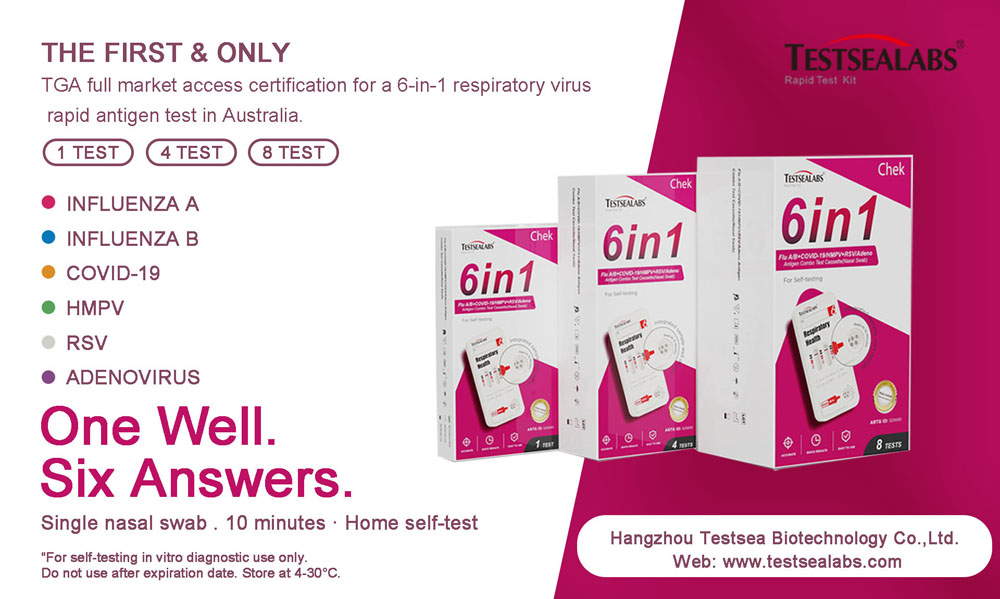
Evaluating the technical efficacy of a multiplex rapid test requires an understanding of fluid dynamics and immunochromatography. Traditional single-target tests are straightforward, but combining six distinct assays into one cassette introduces significant engineering challenges. The device must accurately process a standard sample volume—typically around 3 to 4 drops, or 80 to 120 microliters—without causing cross-reactivity or reagent dilution.
Advanced combo tests must overcome these physical limitations through specialized internal architectures. The evaluation of such devices hinges on their ability to maintain the exact same sensitivity and specificity profiles as their standalone counterparts, ensuring that the convenience of a multiplex format does not come at the expense of diagnostic accuracy.
Comparison With Single-Target Tests
When compared to single-target tests, a 6-in-1 combo cassette offers profound advantages in both user experience and diagnostic yield. Running separate tests for COVID-19, Flu, and RSV requires multiple nasal swabs, causing significant discomfort, especially for pediatric patients. Furthermore, purchasing individual kits for each potential virus drives up the cumulative cost and generates excess medical waste.
A unified testing cassette eliminates these redundancies. By utilizing a single anterior nasal swab, the patient experiences less trauma, and the testing process is streamlined. This consolidation is particularly vital for OTC self-tests, where minimizing the complexity of the procedure directly correlates with fewer user errors and more reliable screening outcomes.
Product Selection Criteria
The Testsealabs Flu A/B + COVID-19/HMPV + RSV/Adenovirus Antigen Combo Test Cassette incorporates critical engineering advantages that set it
Key Takeaways
- The most important conclusions and rationale for Flu A/B + COVID-19/HMPV+RSV/Adeno Antigen Combo Test Cassette(Nasal Swab)
- Specs, compliance, and risk checks worth validating before you commit
- Practical next steps and caveats readers can apply immediately
Frequently Asked Questions
What does Testsealabs’ 6-in-1 home test detect?
It screens for Flu A, Flu B, COVID-19, RSV, HMPV, and Adenovirus from one anterior nasal swab, with results in about 15 minutes.
Is this Testsealabs combo test approved in Australia?
Yes. The product listed on Testsealabs Australia is TGA-approved and included in the ARTG under number 525693.
Why is a 6-in-1 test useful for Australian families in winter?
Winter viruses often share similar early symptoms. One home test helps families quickly identify likely causes and decide on isolation, school attendance, or when to contact a doctor.
Who may benefit most from using this nasal swab test at home?
Families with school-aged children, older adults, or immunocompromised members can benefit most, especially during June to August when multiple respiratory viruses circulate together in Australia.
What should I do if the test is positive or symptoms worsen?
Follow the kit instructions, limit contact with others, and contact a GP or local health service for advice. Seek urgent care for breathing trouble, dehydration, or severe symptoms
Post time: May-14-2026