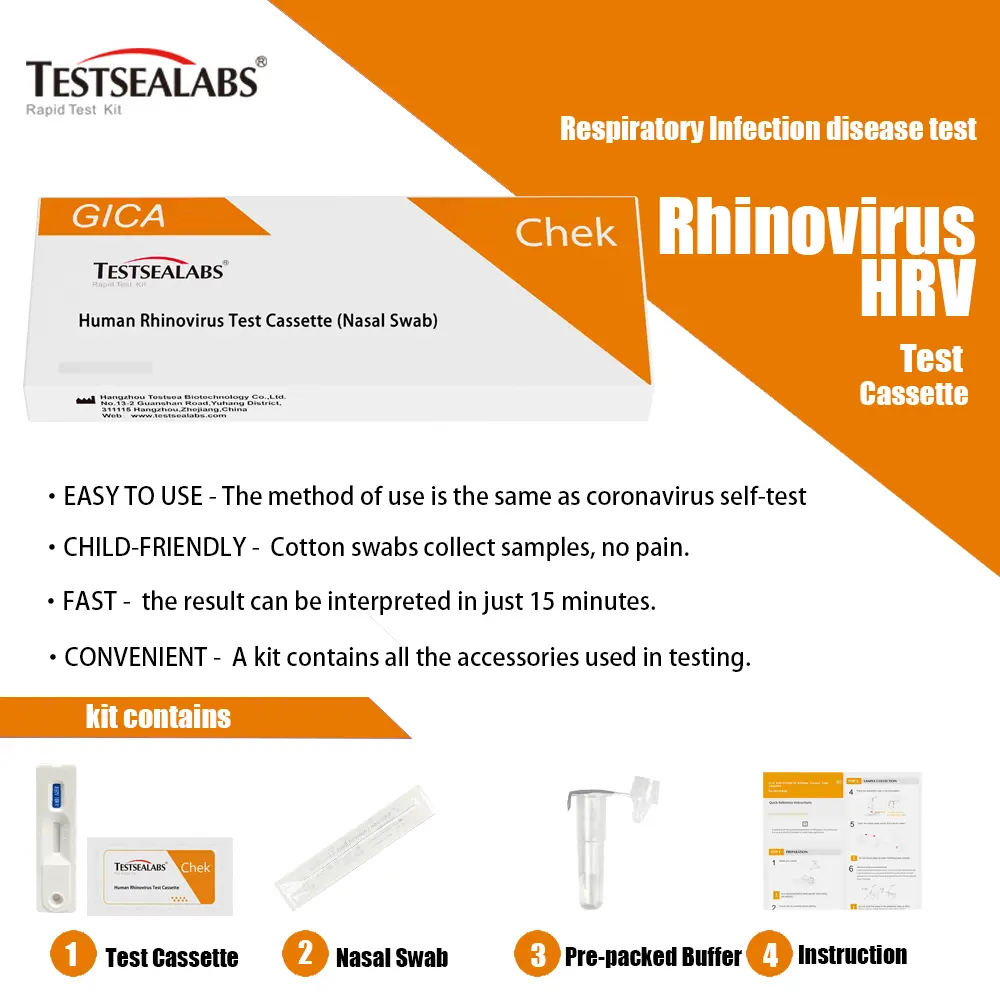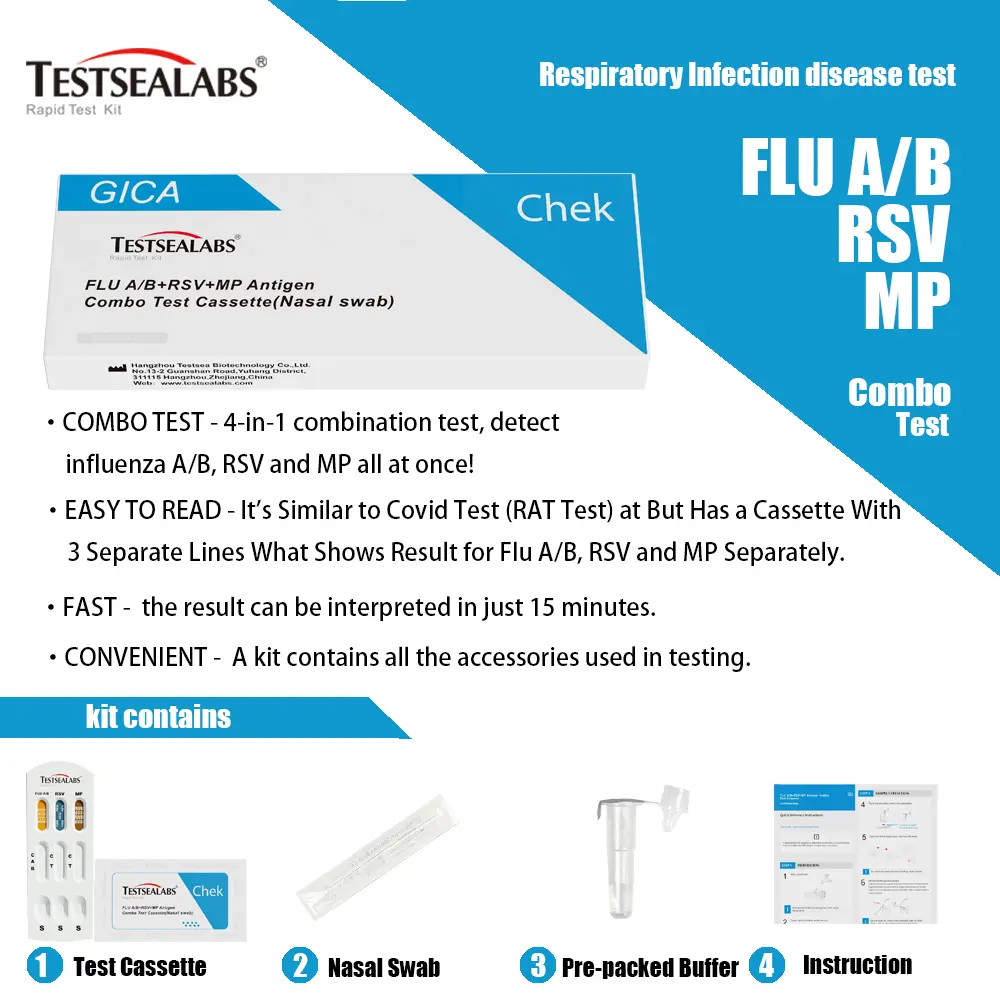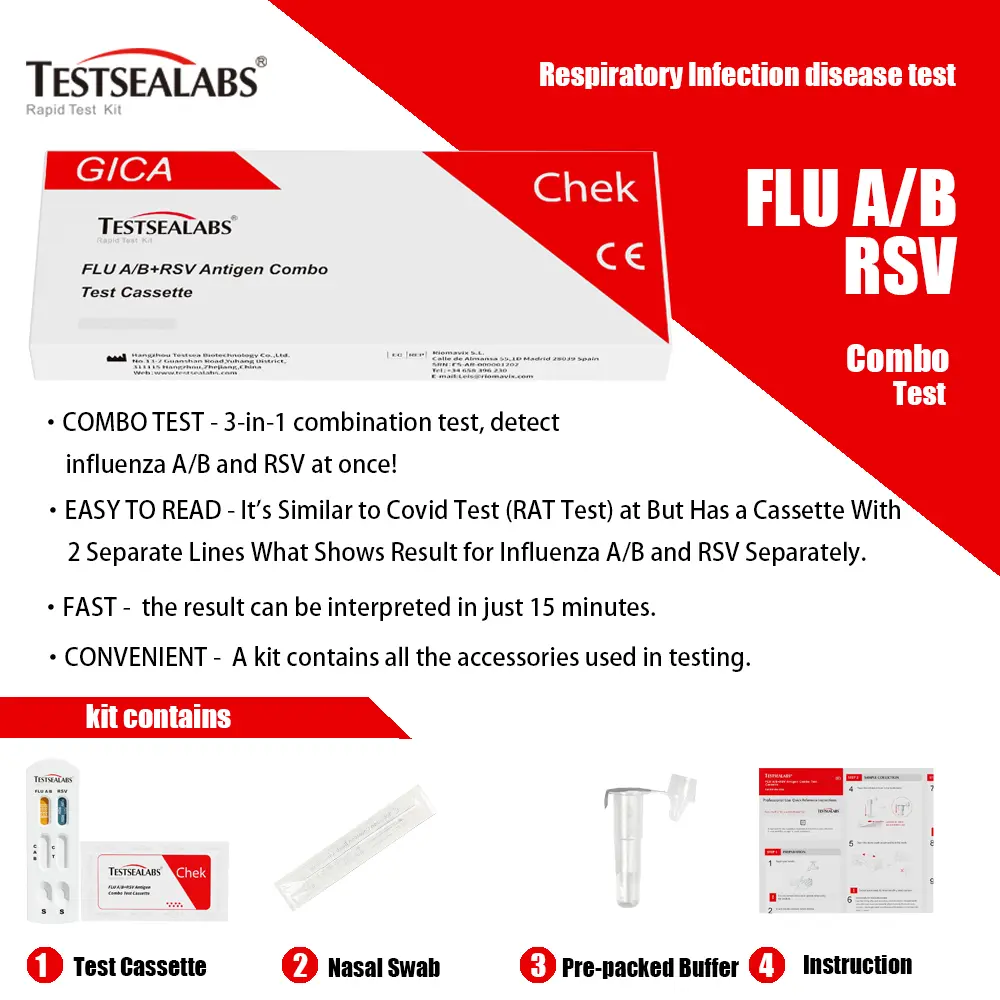
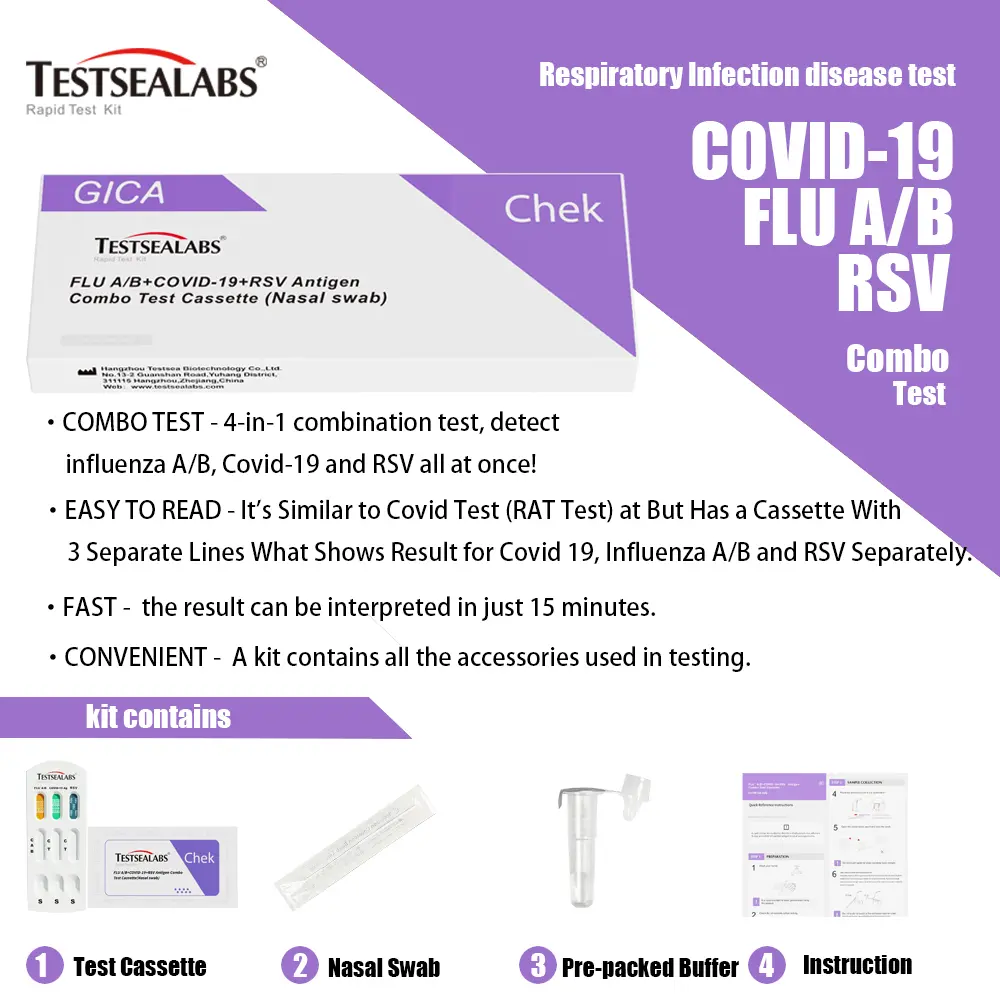
Testsealabs RSV Respiratory Syncytial Virus Ag Test (Nasopharyngeal Swab)

Short Description:


RSV Respiratory Syncytial Virus Ag Test is a rapid chromatographic immunoassay for the qualitative detection of respiratory syncytial virus antigen in nasopharyngeal swab specimens.


gouFast & Accurate:Achieve reliable results in minutes.


gouSimple Operation:No complex equipment required.


gouHigh Accuracy:Lab-grade precision you can trust.


gouClear Visual Readout:Results are easy to read and interpret.


gouCertified Quality Systems:Compliant with ISO 13485 and MDSAP.


gouRoom-Temperature Stability:No cold chain needed—easy to transport and store.


Product Detail

Product Tags

Product Specification

Principle Chromatographic Immunoassay Specimen Nasopharyngeal Swab
Reading Time 15 minutes QMS Certification ISO 13485 and MDSAP
Storage Temperature 4-30°C  Shelf life 2 years
Format Cassette Specification 25T

Intended Use

RSV Respiratory Syncytial Virus Ag Test is a rapid chromatographic immunoassay for the qualitative detection of respiratory syncytial virus antigen in nasopharyngeal swab specimens.


Summary
Respiratory syncytial virus (RSV) is amongst the most important pathogenic infections of childhood and is associated with significant morbidity and mortality. Although there have been extensive studies of epidemiology, clinical manifestations, diagnostic techniques, animal models and the immunobiology of infection, there is not yet a convincing and safe vaccine available.
The major histopathologic characteristics of RSV infection are acute bronchiolitis, mucosal and submucosal edema, and luminal occlusion by cellular debris of sloughed epithelial cells mixed with macrophages, strands of fibrin, and some mucin.
There is a single RSV serotype with two major antigenic subgroups, A and B. Strains of both subtypes often co-circulate, but usually one subtype predominates. In temperate climates, RSV infections reflect a distinct seasonality with onset in late fall or early winter. It is believed that most children will experience at least one RSV infection by the age of 2 years.
There are several key animal models of RSV. These include a model in mice and, more importantly, a bovine model; the latter reflects distinct similarity to the human disease.
Importantly, the prevalence of asthma is significantly higher amongst children who are hospitalized with RSV in infancy or early childhood. However, there have been only limited investigations of candidate genes that have the potential to explain this increase in susceptibility. An atopic predisposition appears to predispose to subsequent development of asthma and it is likely that subsequent development of asthma is secondary to the pathogenic inflammatory response involving cytokines, chemokines and their cognate receptors.
  • Send your message to us:

    Send your message to us:

    Write your message here and send it to us